
In 1996, Geraint Anderson was selling trinkets on a beach in Goa when his brother tricked him into trying out a job as an equity analyst at an investment bank.
Ten years later, despite his best efforts to self-destruct, he found himself heading the second highest-ranked equity research team in London.
After a decade of watching the Square Mile degenerate into a Wild West casino, Anderson suffered a crisis of conscience and began exposing the dubious behaviour he witnessed via an anonymous newspaper column called ‘Cityboy’ – read by a million Londoners every Friday.
In early 2008, after a near-fatal motorbike accident, he left banking to publish an account of the madness he had witnessed and (only occasionally, he assures us) participated in; Cityboy – Beer and Loathing in The Square Mile went on to sell over 400,000 copies and was translated into numerous languages.
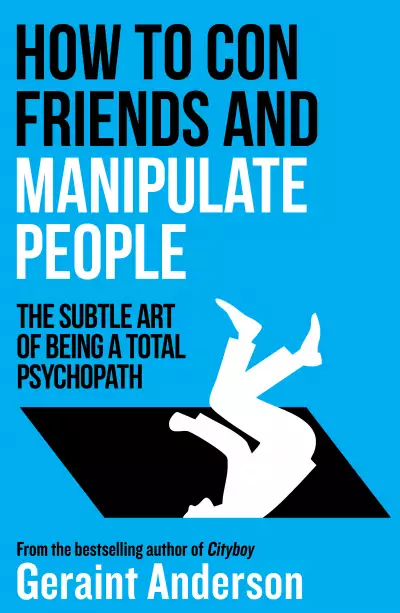
Anderson then became a columnist for Square Mile and a regular commentator on the financial world. He now lives in the Black Mountains with his wife and two children. We caught up with our erstwhile colleague ahead of the launch of his latest book, How to Con Friends and Manipulate People.
Ethics, empathy and a conscience are simply impediments to success in today’s post-shame, post-truth world.
Square mile: Why did you decide to write this book now?
Geraint Anderson: Mainly because I kept looking around at politicians, corporate bigwigs and manosphere influencers, and noticed that the people doing best often seemed to possess the ‘qualities’ we once associated with Josef Stalin or, worse still, a hedge fund manager circa 2007. I wanted to use my personal City experience to humorously explore a dangerous trend that many people seemed disconcertingly relaxed about.
SM: Why the voice of a psychopath?
GA: For years, my agent had been telling me to write a corporate self-help book off the back of Cityboy and a fairly successful career in banking, but the idea always sounded unbelievably dull. Then one day it occurred to me that the only worthwhile self-help book left to write was one narrated by a person with absolutely no conscience whatsoever.
So, I cut through the namby-pamby cobblers offered by all the other self-help books to unashamedly advocate ruthless self-interest as the only path to success. Once I found the voice of this deranged, alpha-male corporate ‘guru’, the whole thing poured out so easily I had to ask myself some deep, searching questions.
The worrying thing is that although the book is, I hope, a laugh-out-loud parody, I know that a lot of readers will underline sections and think: “Actually… that would definitely work.”
SM: What books inspired it?
GA: Apologies in advance for some extreme pretentiousness, but my biggest influence was a 1729 satirical pamphlet called ‘A Modest Proposal’ by Jonathan Swift, which argued in a horribly ‘reasonable’ way that starving Irish people should sell their babies to the English for food. Swift did this to expose the English people’s shocking lack of sympathy for their neighbours’ appalling plight.
Likewise, my book’s narrator convincingly argues that the reader should behave like a psychopath to illustrate that ethics, empathy and a conscience are simply impediments to success in today’s post-shame, post-truth world.

Geraint Anderson in his City days
SM: Is the book a sequel to Cityboy?
GA: Yes. It’s the first non-fiction book I’ve written since Cityboy, and I think of it as a kind of spiritual follow-up – except instead of exposing the reckless greed of the City during the ‘age of financial irresponsibility’, I’m examining the vicious mindset currently displayed by certain politicians, CEOs and manosphere bros.
Back in 2009, after the crash, there was a brief moment when it felt as if decency and accountability might return to public life. Corporate social responsibility was quite a big thing and some politicians even talked about ethics and ideals. But those days now seem like a distant memory.
SM: If somebody followed the book’s advice, would they succeed?
GA: Disturbingly, yes! Obviously, the book is exaggerated for comic effect, but beneath the jokes sits an uncomfortable truth: confidence is rewarded more than competence, and optics matter more than reality. Today’s life lesson: you’ve got to manipulate to accumulate.
A 2016 study found that 21% of senior US execs exhibited ‘clinically significant’ levels of psychopathic traits – and this is probably because guilt, self-doubt or empathy are inconvenient if you’ve got to fire 6,000 people before breakfast.
Politics also undoubtedly attracts psychos because it uniquely combines ego, manipulation, performance, an appetite for power and constant lying
SM: Have the psychopaths taken over the asylum?
GA: To some extent, yes. People seek desperate solutions in desperate times and are attracted to ‘strong men’ (AKA authoritarian nutjobs) to guide them through chaos – Trump, Xi Jinping, Piers Morgan, etc. The ‘trickle-down theory’ means that their ruthless, remorseless mindset can enter all walks of life.
SM: Is Trump a psychopath?
GA: He strikes me more as a malignant narcissist because he’s too needy, thin-skinned, impulsive and emotionally reactive. A true psychopath doesn’t spend all night rage-posting because somebody mocked the size of his, ahem, hands. A true psycho would calmly destroy his rival’s career in silence and sleep beautifully afterwards.
SM: Which careers best suit your average psychopath?
GA: Banking obviously has a strong historical claim here, with some research suggesting 10% of front-office brokers exhibit psychopathic tendencies. Psychos love high-stress, high-reward careers that rely on glib charm, guile and manipulation – it’s still a total mystery to me why I thrived in that snake pit.
But surgery is another obvious one because emotional detachment can be useful if somebody’s chest cavity is open in front of you and their heart is literally in your hands. Special forces soldiers, intelligence operatives and assassins benefit from remaining calm under pressure and not caring about ethics – as well as lawyers and traffic wardens.
Politics also undoubtedly attracts psychos because it uniquely combines ego, manipulation, performance, an appetite for power and constant lying. It’s basically showbiz for ugly psychos.

Christian Bale as Patrick Bateman in American Psycho – the dead-eyed embodiment of corporate psychopathy.
Entertainment Pictures / Alamy Stock Photo
SM: How do you identify a psychopath in the work place?
GA: They’re often superficially charming and socially confident. The majority aren’t lunatics trying to eat your liver with a nice chianti, though, admittedly, like Hannibal Lecter they tend not to blink very often.
But over time you may notice certain tells: their emotions are artificial, as if they learned empathy by watching Oprah. They are likely to be selfish, emotionally cold, ruthless, deceitful manipulators but they can ‘mirror’ people really well to conceal these traits. Colleagues exist to them only as useful allies, obstacles or prey… visualise a dead-eyed management consultant calmly telling you how many people need to die to improve EBITDA.
SM: What have you been up to since your days writing the Cityboy column?
GA: After leaving the City, I moved to the Black Mountains in Wales, got married and had a couple of kids – which was about as far removed from snorting coke in the back room of Metropolis as it is possible to get… without actually becoming a mindfulness guru. I’ve written novels, made films, done journalism, and increasingly retreated into a rural life involving vegetable patches, chickens and muttering to myself about the woeful state of civilisation. More recently, I started writing satirical articles on Substack, which helped me rediscover the voice that led to this book.
SM: Do you miss the City?
GA: I sometimes miss the buzz of the trading floor. But mainly I just miss the expense accounts.
Emotions Scupper Promotions: extract from How to Con Friends and Manipulate People
There are four emotions that you should never display at the office: anxiety, depression, confusion and, of course, love. All of them suggest severe mental weakness, which, along with being poor and drinking decaffeinated coffee, is the cardinal sin of contemporary corporate culture. However, there is one intense feeling that combines the first three of those emotions in a sudden and overwhelming way that will do to your career prospects what a ‘wardrobe malfunction’ did to Janet Jackson’s: panic.
There is nothing that screams, ‘I am beta male who should never be given a senior role’ more than losing your shit during a stressful situation, apart perhaps from boring everyone about the stripper you have fallen in love with.
A calm head in every emergency situation is what is needed if you are to be trusted with authority and fortunately for us psychos, we laugh in the face of fear and tweak the nose of terror while fruit-pickers get the turtle’s head if someone spills coffee on the photocopier.
So, if there is any kind of emergency – be it a hostile takeover by Goldman Sachs or hordes of antifa pinkos invading the foyer of your headquarters – you need to behave even more calmly than normal. Indeed, five seconds after a terrorist bomb takes out your entire corporate finance division, I advise that you calmly shout out, “Anyone watch the game last night?” while you nonchalantly file your nails.

Geraint Anderson enjoying life sans suit
Unfortunately, there are not that many genuine emergencies that occur in the workplace, which is why I recommend manufacturing one, wholly in order to give you the opportunity to show your colleagues the breathtaking weightiness of your huevos.
So, why not introduce a seemingly unbeatable computer virus into your firm’s IT system just minutes before your AGM, and then sit around calmly observing all the worriers run around like headless chickens? Only when the collective panic has reached such a level that people are sprinting to the bogs clenching their butt cheeks should you casually stroll towards your boss’s office and quietly offer to solve the problem you yourself engineered.
Manufacturing ‘false flag events’ so that you can be the ‘fireman-arsonist’ is the oldest trick in the book – whether it’s Putin pretending that coke-snorting Ukrainian Nazis are about to invade Mother Russia or Boris Johnson claiming that the European Union was on the verge of banning circus dwarves to con people into voting for Brexit. Admittedly, BoJo did eventually redeem himself somewhat by stating that regulation-size EU condoms were way too small for we Brits – which is probably the only truthful thing he’s said this century.
Optimising ‘human resources’
Every ambitious psycho requires two guides to help him down the path to becoming CEO: a ‘guru’ and a ‘sponsor’. As difficult as it will be, you must try your best not to blackmail or frame either of these two guys (unless it’s absolutely necessary), as you’re going to benefit from their guidance every step of the way. It should go without saying, of course, that both should be fired with minimal benefits the very second you become chief exec.
The corporate guru is typically an experienced degenerate who teaches you what you actually need to do to in order to maximise your bonus, as opposed to the hypothetical bullshit newbies are told in the induction course. While interns are instructed that they will succeed through being a team player, blah blah blah, a guru will reveal that the real keys to success lie in procuring weapons-grade coke for your FD, or filming your unsuspecting CEO while he entertains two trannies at a ‘team-building exercise’ in Vegas.
My own guru taught me about using breath spray to disguise the aroma of a boozy lunch, and which local strip joints gave punters a restaurant receipt so I could claim my visit as a legitimate client expense. Frankly, what more did I need to know?

Ryan Gosling’s nameless Driver brought a cooler, understated strain of screen psychopathy – less boardroom shark, more neon-lit menace.
Maximum Film / Alamy Stock Photo
The sponsor is different. Generally, this person is a lonely, divorced middle manager with a minor drinking problem who champions your promotional aspirations in the vain hope that it will somehow make up for the mistakes he made with his own estranged children.
Once you’ve identified a suitable candidate and humbly asked him out for a ‘quiet drink’, the correct image to portray is that of an eager-to-learn ingénue who hangs on his every word.
Another trick is to start engaging in what I call corporate cosplay, i.e. dress like your quarry in order to cement your bond. You can even begin using his idiosyncratic phraseology – though, if he hails from Norfolk, you’ll subsequently have to make peace with everyone thinking you’re an inbred imbecile. (See: Alan Partridge.)
This man will put your name forward when there are high-profile projects or promotions because he believes in you – so for God’s sake, don’t ever reveal your genuine personality.
Pitches For Riches
The other principal method to convince your boss that you are a vital employee, rather than the feckless time-waster you actually are, is to ensure that you are a key speaker in every high-profile presentation where the CEO will be present. In fact, going forward, your chief exec’s presence should be the only consideration when you’re choosing which presentations to lead on. Once you’ve had ChatGPT prepare your PowerPoint pack in 4.5 seconds there are only five things you need to remember:
1. Be sure to leap up onto the stage as if your feet are on fire. Then proceed to glare at your audience in total silence for 32 seconds, like an insane hyena daring someone to talk.
2. Every single presentation, even if it’s about minor changes to the third-floor fire drill, must by law start with one of two openers: either ‘THE WORLD HAS CHANGED’ or ‘THE FUTURE IS NOW’. It is imperative that you shout this meaningless phrase as loudly as you possibly can.
3. It is absolutely vital to make up a pointless acronym that encapsulates your ‘key message’ e.g. Collaborate, Reintegrate, Accelerate, Pivot – C.R.A.P. It doesn’t really matter what it means as no one will be listening anyway.
4. Pause dramatically every three minutes and say, ‘Let that sink in’, no matter how insubstantial the point you’ve just made is.
5. Finish the presentation with an inappropriately profound proclamation like ‘We are not just creating a new fire drill… WE ARE CREATING A NEW FUTURE.’ Your presentation will then fade to black as deafening applause breaks out.
There has never been a correlation between hard work and remuneration, but there has always been a perfect one between psychopathy and Winning, so focus on the latter and not the former.
Follow my guidance and, when Andrew Tate next asks you his hilarious catchphrase question, ‘What colour is your Bugatti?’, you will be able to respond with the only appropriate response:
‘Which one?’
Buy How to Con Friends and Manipulate People by Geraint Anderson from geni.us/YsMum