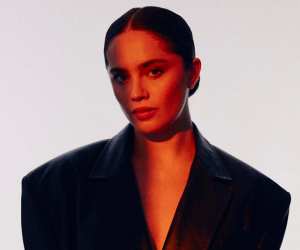
Everybody has a moment in their life that feels like divine intervention. Sarah Shahi experienced her first in her early 20s. She was studying at a Texan college during the day and dancing for the Dallas Cowboys cheerleaders at night when a Hollywood production rolled into town.
Shahi was cast as an uncredited backup cheerleader in the 2000 rom-com, Dr T and the Women, directed by Robert Altman. The Gosford Park director spotted Shahi – and suggested she move to Los Angeles to pursue a career in acting. Those words ultimately changed her life.
Shahi has since established herself with prominent roles in series such as The L Word, Person of Interest and Sex/Life. Now she reprises her role as Dr Gabriela Torabi in the next season of Paradise. The Apple TV series proved a breakout hit last year, receiving multiple Emmy nominations.
In January, she also released her first book: Life is Lifey: The A to Z’s of Navigating Life’s Messy Middle.
Square Mile: Congratulations on your first book. What inspired you to write it?
Sarah Shahi: When I was on Sex/Life, it was one of those situations where art was imitating life. I was married for a long time and have three incredible children and somewhere in that journey, I lost myself.
I succumbed to dinner on the table every night at six with the perfect amount of carbohydrate-to-protein portions, and I buried myself and my needs and my wants. When I was on the show, my character was questioning the same things that I was questioning. When the show came out, it happened to coincide with my divorce.
My inbox was flooded by women from all over the world asking me how I had the guts to start over, especially with children. I was giving out advice so much that I thought, “What if I take this and put it in one place?” There is a real audience for it – and I was handed this platform that I didn’t even ask for but I became the poster child for unhappily married women.
I had always wanted to write. I am one of those people who don’t want my pain to be for nothing. Whatever it was I have been through in my life, I feel like I need to do it justice by passing on that wisdom.
SM: Have other roles had this effect on your real life, or was this unique?
SS: I feel like it was divine intervention at its finest. There is a large portion of me in everything I portray but back when I was in Person of Interest, I wasn’t riding motorcycles and beating up on boys. But this [Sex/Life parallel] truly was fate.
SM: Does writing about your feelings come naturally or was it a challenge?
SS: I’ve always been a big advocate of journaling, ever since I was a child. I always found my peace within the words on the page. I have a great relationship with my ex and I have nothing but love for all of my past partners. So, I am very careful when I talk about relationships; I’m not talking about anyone specifically in my life. If anything, it’s from the perspective of what I’ve learned and what worked for me. I’m also very careful not to tell people what to do because I know there isn’t one prescription for everyone.
My goal for the book was to get people to trust their own gut and intuition. We live in an age where Netflix tells us what to watch, the algorithm tells us what to buy, so we’ve lost the ability to check in and think for ourselves. It was really when I was able to shut out the noise the most that I was able to make the changes for myself.
Growth is not a linear process; it’s two steps forward and three steps back. As I’ve learned, one of the things I talk about in the book is that the mess is the magic. It’s inescapable so let’s try to have fun whilst we are splashing around in the puddles rather than avoiding it so much.

SM: Season two of Paradise is coming up. What can people expect?
SS: Well, the thing I’ve learned about working on a Dan Fogelman show is that you get really good at saying absolutely nothing – because I can’t say anything.
But, what I can say, as the trailer has already come out, we do explore the world outside of the bunker and there are new characters that are introduced in season two that become very important to Paradise. At some point, the two worlds collide: the people outside of the bunker and inside of the bunker.
It’s coming out at the end of February and everything that the fans really loved about the first season, there’s more of it. There are more of those unexpected twists and just when you think you know what direction the show is going in, the writers pull the rug right from underneath you and do something completely different that puts you on your head.
SM: What drew you to the character of Gabriela when you were offered the part?
SS: She’s a therapist. I feel like my whole life, I have been in therapy. I really related to her as this beacon of hope. She was the light amongst this world of darkness. That resonated with me because, as a child, I had an abusive father; he held a gun to my head when I was little. I was in and out of women’s shelters when I was five with my mum. But I look back on my childhood and I had the best time – because of my mum.
So, to play someone who represents light amongst so much dark is a role that I have found myself in ever since I was little. Plus, the writing. Dan Fogelman is such an incredible writer, it really is his superpower. To be part of something that he’s created has been a goal of mine for such a long time.
SM: Your career has been such a ride. Does it feel surreal to look back from your humble beginnings as an extra on Dr T and the Women to now starring in a Hulu series?
SS: You know what? I still feel like I’m at the very beginning of my education in this business. I have such a sense of wonder every time I step into a role and onto a stage, I am filled with the most excitable nerves.
I enjoy what I do so much that it’s not like I look back and give myself a pat on the shoulder, I look forward and see all of the things that I want to accomplish.
SM: You were introduced to Robert Altman on Dr T and the Women. What were your conversations like with him?
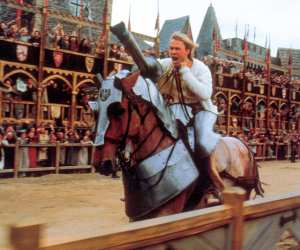
SS: I was 19 or 20 when I met him and I was a cheerleader for the Dallas Cowboys – and he came to Texas to film Dr T and the Women and used our rehearsal facilities as his set for two weeks. In the movie, we were the background dancers, and Kate Hudson and Liv Tyler were cheerleaders. I had no idea who he was.
I didn’t even know what a film director was, let alone realise that I was standing next to the most legendary filmmaker in Hollywood. For whatever reason, again, this is one of those divine moments that I had nothing to do with orchestrating, he took a liking to me and we hung out every day for two weeks.
I had a chair at Video Village next to Robert Altman; that’s how much of a liking he took to me that I had my own chair next to him. We would eat lunch together and we would talk about everything but the business. He told me about his nephew, we talked about our families and he asked about what I was studying.
It was coming towards the end of his time there and he asked, “What is it you want to do?” I told him that I wanted to become an actress but didn’t know how to make it out here. He told me, “I think you have something. I think you have what it takes – and you need to move to LA.”
I still didn’t know who he was [as a director]. I was thinking, “Who is this yahoo telling me I have a chance in Hollywood? What does he know?” I went home and Googled him and of all the movies he did, I didn’t know any of them except for the movie that almost tanked his career, Popeye. I told my mum, “The guy who directed Popeye told me I’ve got a chance.”
That was it. I packed up my bags, I quit cheerleading, I quit Southern Methodist University, and jumped in my cherry red pickup truck and drove West.
SM: Do you have a new appreciation of Robert’s work since then?
SS: He gave me his cell and office number and said, “When you come out, I want to help you, so call me.” He and I played phone tag for about four months after I moved to LA. Within that time, I was very lucky and got a manager very quickly and started to audition and get bookings. People would ask me, “How long have you been acting?” and I’d say, “I don’t know… since Tuesday?” They would ask how I started and I’d reply, “Do you know Robert Altman?” Jaws would just hit the ground.
People said I need to educate myself on his work so I started watching his films and reading up on him. By the time he called me back, I was so intimidated that I never returned his call and then he died four months later. That was my Robert Altman education. Now that I look back, he was an angel for me. He was the catalyst for all of this; it was Robert Altman.
SM: That’s fascinating. Someone who was so nice and instrumental in your career became almost an intimidating figure because his work had such an aura…
SS: They say, “Ignorance is bliss.” I had no problems talking to him and connecting with him on a personal basis when I didn’t know who he was. Then, the moment I started watching his films and seeing the awards and started reading about him, I just didn’t even know what to say to him anymore. What was I going to say to this man? I just felt so intimidated.

SM: Being a Dallas Cowboys cheerleader is still a glitzy experience but going into the wilderness of Hollywood is another thing entirely. What were those early days like?
SS: Being a cheerleader, I was a good girl. I was told we weren’t allowed to fraternise with the players but there were tonnes of girls who did. I was a college kid, I was going to school by day and cheerleading by night. I stayed true to that path. I was never a partier and I was never a big drinker, so I didn’t really milk that for everything I could have.
When I came to LA, it really was like moving to the wild, wild west because I had lived a very sheltered life when I was in Texas. I was just so enamoured with every turn here in LA. I remember driving down Sunset Boulevard and looking at the lights and billboards and picturing myself on them. There was such a buzz that the city had in the early 2000s – and I don’t know if it’s the same anymore. I don’t feel that buzz anymore. It was electric.
It was something I’ve never experienced before, and it got into my veins and I was so determined to succeed that I didn’t even know what failure could be. People would ask, “What’s your plan B?” I truly didn’t understand what that meant. I was like, “What do you mean, plan B?” I felt like I was a dog with a bone. I came here to accomplish something and by hell or high water, I was going to do it.
SM: What’s driving you and motivating you as an actor going forward?
SS: I’d love to do a Western! Lonesome Dove was one of my favourite shows. I loved Cormac McCarthy’s books; my dad introduced me to them. I never had a great relationship with my dad but he gave me a couple of gems that have helped shape me as an adult so I would love to do a Western.
I have a Christmas movie which I wrote and I’d really love to produce and get it out there. I think it has the potential to be a classic. I would love to do Broadway, a period piece… the list is endless.
I am also enjoying this voice that I have found as a writer, to be able to help people feels like a mission. In anything that I do, even in Gabriela, there are times I find in the dialogue that this is a moment where I can teach something, open somebody’s heart or show a different side.
My spiritual practice is very important to me. I put that into everything that I do by trying to connect with people and help make their lives better in any way that I can.
SM: Is producing and directing something you see in your future?
SS: I would love to direct a play. I don’t know about directing a film or TV show because I’m not very good with shots but when it comes to acting and actors, I would love to direct in that sense. [In regard to] writing and producing films, I have another project which I’ve set up with Greg Berlanti over at Berlanti Productions that is a TV project called Texas Tornado. Producing and creating my own stuff is high up there.
SM: You were inspired to write a book because people were reaching out over social media. Is this when you first discovered your voice as a writer?
SS: That’s exactly how I discovered my voice. There were so many people who were writing in and my press at the time started to sound like advice columns and then it was the actor’s strike. I’ve learned about myself that I need to be a creator in some ways in my life; if I don’t, then I just go batshit crazy.
I wrote this article titled ‘Why desire is not a dirty word’ for Glamour magazine and it went viral. That was my entry into the realisation that I have a voice as a writer and people are listening. It was that article that did it for me.
The second series of Paradise is out on Apple TV+ now.