In a trade often obsessed with provenance and prestige, Matt Tipping talks about wine in refreshingly human terms.
Since taking the helm at Jeroboams in 2020, he has overseen one of the most impressive growth stories in London wine retail – expanding the business from £25m to more than £40m in turnover, opening new neighbourhood stores, and strengthening its private client and wholesale arms through smart, well-timed acquisitions. Yet for all the strategy and scale, Tipping’s instincts remain rooted firmly on the shop floor.
With more than two decades in the trade – spanning Majestic Wine, Berry Bros. & Rudd and now Jeroboams – his leadership philosophy is built on curiosity, patience and people first. Independence, he believes, allows him to think in decades rather than quarters, evolving the business without sanding away its soul.
In our latest Tastemakers interview, he reflects on formative bottles, defining moments in management, and why great wine – at any level – should always feel approachable, transparent and a pleasure to share. Cheers to that.
Square Mile: What was your first ever experience of wine?
Matt Tipping: My dad drank wine at home, so it was always part of the background growing up. He mostly gravitated toward southern French reds – Corbières was a particular favourite. As I moved into my teens, he’d occasionally let me taste whatever he was having.
Looking back, what really sparked my interest wasn’t the wines themselves but the way he talked about them. They were humble bottles, but he explained why he chose each one, what he expected from it, and how where it came from shaped its character. It was the first time I realised that wine could be understood, not just consumed – that a bit of curiosity could unlock a lot of enjoyment, regardless of price or pedigree. That idea stayed with me and ultimately set me on my path.
SM: When did you decide ‘I want to get into the wine trade’?
MT: The degree I chose was a four-year course in Retail Management, and the third year was spent working in industry. When the process of finding a job began in my second year, I headed over to the notice board where options were being advertised – and I spotted a Majestic Wine poster. I was enjoying my time at university and the thought of spending my year drinking wine appealed.
However, what I discovered during that year was an industry packed full of people who were passionate about both food and wine. I loved my time there so much that when I left to return to my final year, I was determined to return once I'd qualified.
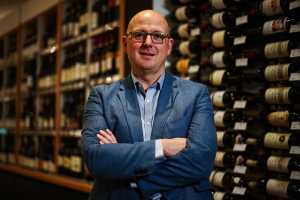
SM: What was the first wine you tasted which really caught your attention?
MT: In 2000, I joined Majestic as a trainee manager – starting in their Southampton branch – and was very fortunate to have their inhouse wine trainer as my first manager. It was a constant series of lightbulb moments, mainly focussed around the wines we would drink on a Sunday afternoon in store alongside a platter of meats and cheeses from the nearby Waitrose.
One of those wines shone more brightly than the others: a 1993 Prado Enea Gran Reserva Rioja. It was the first time I had drunk a wine that had any character other than fruit. It was spicy, savoury, with tobacco and leather – and was an absolute revelation to me.
SM: Your background spans Berry Bros. & Rudd, Majestic and now Jeroboams. How did your earlier chapters shape your leadership today?
MT: I've progressed from being an inexperienced manager to being a business leader during my career with many, many learnings on the way. The path I have followed is within a premium sector of the market and that is a huge influence on the way I lead Jeroboams.
We are a family-owned company, and our independence allows me to think in decades, not quarters. I can really shape how we can best serve our retail customers, collectors and restaurants alike.
I saw the importance of that approach at BBR, but those early years on the shop floor taught me that wine retail only works when you stay curious and stay close to customers. That’s still how I lead today, combining long-term focus with a willingness to modernise and try new things.
Our independence allows me to think in decades, not quarters
SM: Jeroboams’ turnover has grown from £25m to over £40m under your tenure as CEO. What have been the key strategic decisions that unlocked that scale?
MT: When I stepped into the role, the most important shift was cultural. I wanted the team to feel that taking calculated risks was not only acceptable but necessary. We’d become a little too afraid of failure, and that was limiting our ambition. I wasn’t asking anyone to be reckless – the discipline around evaluating risk remained – but once we changed the mindset, the team flourished and the results followed.
That cultural shift paved the way for thoughtful modernisation. We’ve worked hard to evolve the business without losing our soul: preserving what makes Jeroboams special – the joy of the finer things shared with genuine knowledge and zero pretence – while staying restless enough to keep moving forward.
Underlying all of this is a commitment to helping customers feel more clarity and confidence in the world of wine. Whether they’re drinking, learning or collecting, our aim is to make great wine more transparent, more approachable and more enjoyable for everyone.
SM: You’ve opened four new sites across some of London’s most competitive neighbourhoods. What defines the ‘Jeroboams location’, and how do you decide where to grow next?
MT: We look for London's villages – places where people actually live their lives. Jeroboams works best when the shop is part of someone’s weekly rhythm, not a destination they feel they need an occasion to visit.
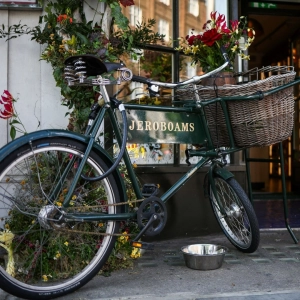
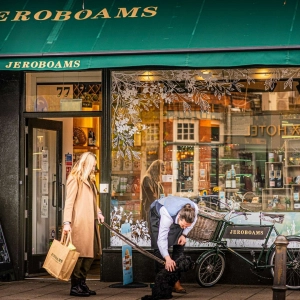
SM: The acquisitions of Davy’s private client division and Hayward Brothers were major moves. What gaps did each fill – and how have they shifted the group’s capabilities?
MT: While we are best known for our shops, we have had a private accounts team and a wholesale division for more than 25 years. We've recently invested in our website and the Davy’s move was well timed to offer their customers an opportunity to buy and sell wines through our new platform.
On the wholesale side, we have significant customers who have partnered with us for over 20 years. We know that our wine and service offering is really strong. Haywards allows us to now bring that offering to a wider customer base across the whole of the UK.
Both moves strengthen our ability to support our customers over the long term whether they’re building a collection, simply wanting trusted advice or looking for a wine offering which differentiates them from their competitors.
SM: What’s the most important lesson you’ve learnt in your career?
MT: The biggest lesson is that everything comes down to people. If you build the right culture – one where people feel trusted, supported and encouraged to take thoughtful risks – the business will inevitably move in the right direction. And you have to think long term.
Quick wins come and go, but every truly meaningful outcome in my career has come from choosing the patient path.
If you build the right culture, the business will inevitably move in the right direction
SM: Tell us about a great memory from your career…
MT: In early summer 2004, I was working for Majestic in their Exeter shop. It was a sunny Thursday – one of the busiest weeks of the year – and I was on my own because two colleagues were off sick. Eight pallets from the depot had arrived first thing, the stockroom was full, and half the pallets were still sitting on the shop floor. I had a queue of customers at the till, and the weekly beer delivery had just turned up with an impatient driver waiting. To say I was stressed is an understatement.
Then another car pulled into the car park. Out stepped Tim How, our CEO. He walked in, frowned at the chaos, and my heart absolutely sank. I was convinced I was about to get a dressing down. Instead, he took one look at the queue and simply said, “You keep serving your customers, I’ll sort the delivery.”
He rolled up his sleeves and proceeded to load cases of beer off the lorry himself. No fuss, no performance, just genuine support when it mattered.
Twenty years on, I still remember that moment vividly. It made me a huge advocate for Tim and for Majestic, and it cemented something I’ve believed ever since: wine is fundamentally a people business. The humility and leadership he showed that day still influence the way I try to lead today.
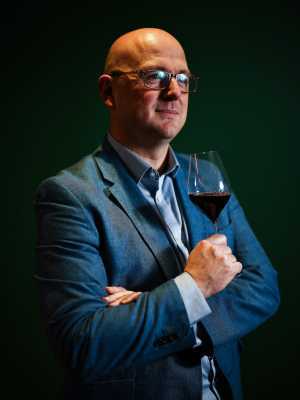
SM: Who is your winemaking hero – and why?
MT: I’ve had the great pleasure of working with Nicolas Potel’s wines throughout my career, and over that time I was fortunate enough to get to know him personally. His passing earlier this year was devastating. Nicolas had extraordinary energy and an unrivalled passion for Burgundy. His Domaine wines remain profound examples of what can be achieved when old vines, instinct and sheer talent come together.
His son and daughter plan to continue his legacy, and we’ll be supporting them wholeheartedly. If you ever see a bottle of Domaine de Bellene on a shelf or a restaurant list, I’d encourage you to raise a glass to one of the true characters of the wine world.
SM: If you could only drink one grape for the rest of your life, what would you choose and why?
MT: I'm someone who thrives on variety and so the thought of this dystopian scenario sends shivers down my spine. With that in mind it must be a grape variety that is incredibly versatile, and top of that list for me is Riesling. It can be dry, medium or sweet. You can drink it young or with serious age and you can find great examples from many countries.
SM: What’s the single best wine you’ve ever tasted?
MT: 2001 Ch. d'Yquem – I've been lucky enough to drink this wine 15 or so times since it was first released. What sets it apart from the other incredible wines I've been fortunate to drink over the years is firstly, it’s absolutely gorgeous, just perfection in a glass, rich and sweet, yet with such a vibrant acidity it never feels cloying.
Secondly, it's not just a specific moment in its life that makes it great. You didn't have to wait 20-plus years and then drink it in a 10-year drinking window, for example. It was incredible in its youth, full of vibrancy and character and now at over 20 years old, it’s evolved – and its joy is starting to move to a more mellowed power. It's not better, just different and in my mind a wine that has that versatility is an incredibly rare beast.
See more at jeroboams.co.uk