Vienna is a quiet city. So quiet that I wondered if we’d arrived during a national holiday, or a city-wide evacuation. It’s a Thursday night at the end of January and the streets are still, save for snow settling gently on parked cars.
Look closer, though, and the city is very much alive. The Viennese aren’t sheltering from the cold, waiting for the winter to pass; they’re gathered inside chic, understated spaces, participating in the city’s distinctly elegant social life.
We’ve arrived in the lull between the Christmas market rush and the start of Ball season (which runs January-February) – a pocket of calm when tourists thin out and Vienna reclaims its natural rhythm. On Saturday morning, the Naschmarkt flea market hums gently before spilling into the always-on, sprawling Naschmarkt market, a narrow gourmet stretch packed with immaculate fresh produce and food stalls.
Whether bar, restaurant or café, Vienna’s social spaces share an effortless refinement. Much like the Viennese people, the city is classic and classy, without trying too hard. This is true of Gasthaus Wolf, a popular neighbourhood restaurant in the city’s 4th district, serving traditional Viennese offal cuisine. On the menu is calf’s brain quiche, black pudding dumplings, and chopped veal liver in a buttery onion sauce. Calf brain has no particular flavour, it turns out – maybe it depends on the IQ of said cow – but the dishes are balanced and flavoursome. The room is simple but warm, like an elevated gastropub with an excellent natural wine list; Vienna’s answer to St. John.
Vienna pulses with café culture. Recognised by UNESCO as an Intangible Cultural Heritage in 2011, coffee is embedded in Viennese DNA
Walking around the elegant 4th district – Vienna is split into 23 districts, circling outward from the Innere Stadt in a snail’s shape – warm pools of light spill from bars and restaurants as you pass by. They don’t shout about their presence; they lure you to peek inside frosted windows.
By day, Vienna pulses with café culture. Recognised by UNESCO as an Intangible Cultural Heritage in 2011, coffee is embedded in Viennese DNA. Coffee and cake doesn’t get more fun than at Vollpension, an ‘intergenerational’, superbly kitsch café that employs retirees looking for some diversion and a strong sense of community. The homemade cakes are voluptuous; many a grandma’s recipe has been injected into the menu. Famed for its eccentric, mismatched décor and irresistible sense of nostalgia, this café holds a special place in Viennese identity.
The ritual of eating coffee and cake – at a luxurious pace, alone or in company – is as Viennese as it gets. Ideally, it’s an apple strudel or a Sachertorte, made famous by the timeless, five-star Hotel Sacher in the 1st district. A trip to Hotel Sacher – which celebrates its 150th anniversary this year – is essential. By day, visitors can sample that chocolatey delicacy, and by night they can marvel at the plush interiors with a nicely balanced dirty martini in hand. The hotel bar, like much of its clientele, is glamorous to its core.
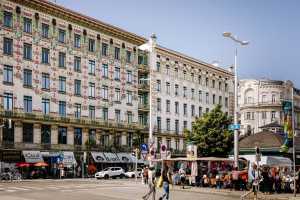
Austria
Vienna’s cafés aren’t all coffee stops; locals favour bistro-style institutions such as Café Prückel for long lunches. Designed by architect Oswald Haerdtl in the 1950s, the pink-hued room is flooded with natural light. Despite its scale, Prückel remains intimate, buoyed by multigenerational families, sophisticated elderly diners, and convivial staff. Come for the bubbly, perfectly salty Wiener Schnitzel with cranberry sauce and stay for the dinky digestivo coffees and formidable dessert cabinet.
For a deeper dive into Viennese comfort food, an appointment with Vienna’s “Queen of Dumplings” at Zur Herknerin is mandatory. Stefanie Herkner, daughter of a renowned French chef, opened her restaurant as an ode to heritage cooking. Guests can take classes during the week or dine at leisure; the menu is elevated yet deeply authentic.
Here, Tafelspitz becomes a two-course ritual: prime beef rump simmered slowly into a rich, clear broth. First, the consommé is served soup-style, crowned by a large semolina dumpling and topped with chives. At Zur Herknerin, the beef consommé is so flavoursome it silences the table. Then the main course arrives, accompanied by apple horseradish, chive sauce, spinach and potatoes. We try our hand at making Topfuknödel: sweet and savoury dumplings made from cream cheese. Once hand-rolled, the dumplings are boiled and finished in breadcrumbs as a means of reusing stale bread. To serve, they’re sprinkled with cinnamon and a helping of plum compôte. Fluffy, meltingly soft, and utterly moreish.
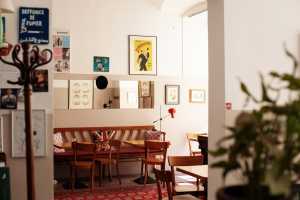
Zur Herknerin
Further out, in the largely residential 15th district, is Rosi, a standout of Vienna’s modern culinary renaissance. Nestled on a cosy street corner, this pub-restaurant would rival any trendy Hackney small plates and natural wine haunt. The menu is mostly vegetarian and designed to be shared: white asparagus in almond beurre blanc, chilled tomatoes posing as ‘oysters’, Jerusalem artichoke dumplings with crispy artichoke peel. Pork head meat dumplings in XO sauce provide a punchy, innovative counterpoint.
Vienna’s restaurant scene oscillates easily between the quintessential and the contemporary. Local hotspot Zum Schwarzen Kameel – in business since 1618 – captures both moods under one roof. Downstairs, the atmosphere feels something akin to a City pub on a Thursday evening. Drinks are flying, as are trays of their famous open sandwiches. Upstairs, the dining room has been recently revived in another love letter to Art Deco; most notable are the large, jewel-toned copper chandeliers which hang dramatically from the ceiling.
At Zum Schwarzen Kameel, classics are celebrated and elevated with flair: velvety black radish soup finished with bacon, egg and truffle; hyper-aerated Schnitzels; Tafelspitz paired with bone-marrow-topped bread and its proper side dishes. And then, the sweet course – because in Vienna, pancakes are not merely dessert but a matter of cultural pride. Here, a delicate crêpe arrives with a refreshing apricot sorbet and stewed apricots. Comfort, as ever in Vienna, is taken seriously.
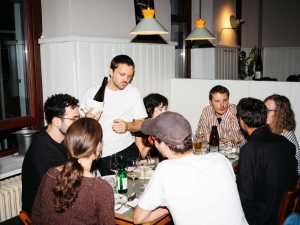
Rosi
For those flirting with sobriety, bottleshop Kein&Low is an eye-opener – pouring kombucha, sparkling and fermented black teas, and persuasive wine proxies. Working closely with many of the city’s Michelin-starred kitchens, it reflects a shift in Vienna’s dining scene, as low-to-no is no longer an afterthought.
And now for the culinary dénouement: Doubek, tucked away in the relaxed 8th district. Opened in 2023 by Stefan Doubek and Nora Pein – head chef and sommelier-powerhouse respectively – it picked up two Michelin stars within eighteen months. In a city where slow-simmered broths and sweet-leaning mains take centre stage, Doubek offers something different, relying on fire to produce minimalist, deeply flavoured plates.
The interiors feel like a cross between a cave and a spa – black walls, no windows, and a cocooning darkness that makes you forget the outside world. Nora guides you downstairs to the intimate dining room, past the open-fire kitchen. There’s the steady crackle of wood, the dramatic flare of flames, and a faint, comforting scent of smoke in the air. The chefs’ performance is completely absorbing.
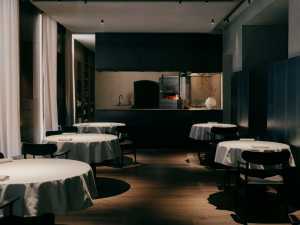
Doubek
Doubek’s tasting menu stretches to ten to fifteen courses, drifting between European technique and Japanese restraint. Beef consommé is reimagined as “Beeftea” with galangal and laced with chives – served in a thimble-sized pour, deep and glossy. Hamachi crudo, sharpened with wasabi, comes tucked into a crisp almond shell; alongside it, a crunchy roll of lobster and red fermented chilli mousse topped with flame-licked spalla cruda.
Then comes the carabinero prawn – a dish so theatrically prepared it’s worth leaving the table for. Grilled over charcoal, the sweet flesh is barely touched, and its head pressed by Stefan into an intensely rich sauce. The prawn-head emulsion is smoky, saline, and unapologetically indulgent. The prawn arrives whole, Japanese-style, with a spoon of sauce and egg yolk cream that has been preserved in tamari for six months. Umami levels are off the charts.
A Norwegian scallop is boldly charred, perched in a nutty foam atop a tangy XO sauce made from 26 ingredients that have been simmered down over six days. It’s rich with onion, crunchy, smoky, sharp and sour all at once. One particular dessert course has my heart: after a citrus palate cleanser – kefir lime grated on lemon sorbet with sansho gratin – comes hazelnut and dark chocolate in a pool of Stefan’s silky signature salted caramel.
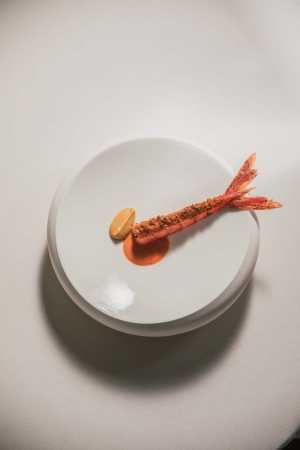
Doubek
A playful, often unexpected wine pairing travels the globe – an Italian Muscat with the scallop, for example – and accompanies the meal in a creative, musical synchrony. Many restaurants also highlight Viennese wines, produced within the city limits on its 600–700 hectares of vineyards, including the traditional white field-blend, Wiener Gemischter Satz DAC. Natural wine offerings are notably strong across the city.
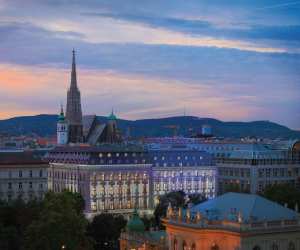
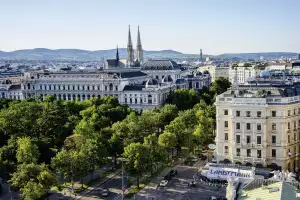
Of course, between meals, there’s the enormity of Vienna’s culture. One weekend isn’t nearly enough to explore the vast array of exquisite architecture and historical sites. Some standouts are the Austrian National Library, celestial in its grandeur, and the palatial Kunsthistorisches Museum with its collection of Habsburg artefacts and works by artists from Rembrandt to Pieter Bruegel the Elder.
For lovers of vintage shopping, the 6th and 7th districts are hard to beat. A dense cluster of shops sells genuinely curated second-hand clothes, often at astonishingly good prices. Next time, I’ll take an empty suitcase. It helps that Vienna is compact and easy to navigate, with most neighbourhoods lying within a thirty-minute walk; the trams are a handy and wildly efficient alternative.
Our hotel for the weekend is Die Josefine, tucked away from the main high street in the buzzy 6th district. The hotel is ludicrously cosy; dim lighting embraces you, the beds are sink-worthy, and velvet furnishings abound. Its interiors play on a 1920s, art deco theme. The star feature is its intimate phonotèque, where 3,000 vinyl records wait to be picked up and played.
Equal parts comforting and impressive, Vienna suits all seasons. You’ll leave well-fed, slightly in awe, and faintly resentful. They really do have good taste around here – and they make it look irritatingly easy.
View on Instagram
For more information, Vienna