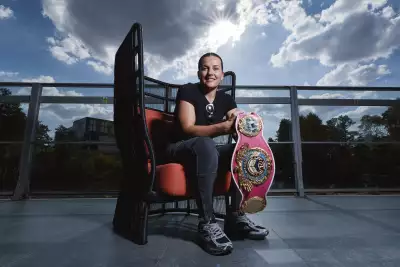
If you don’t know Chantelle Cameron, allow me to happily correct this error.
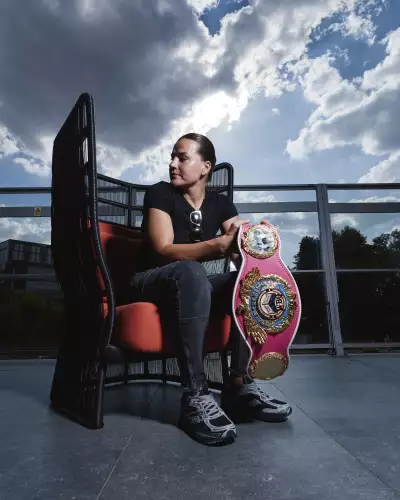
The Northampton-born boxer has already amassed enough accolades to cement her place in boxing history. In 2022, Cameron defeated Jessica McCaskill to become Britain’s first female undisputed world champion, holding all four major belts at super-lightweight. Six months later, she walked into Katie Taylor’s backyard in Dublin and handed one of the greatest female fighters of all time the first professional defeat of her career, a distinction Cameron still holds today. Now a two-weight world champion, she holds the WBO super-welterweight title and is once again on the hunt for undisputed.
Her road to legend status has been anything but straight. Cameron has overcome confidence struggles, sexism, a heartbreaking near miss at Olympic qualification, and nearly lost her leg to sepsis on the way to becoming a world champion. For her, it has all been worth the struggle.
There is no doubt in my mind that Chantelle Cameron was put on this planet to fight. She was born with an unusually high pain tolerance and an innate fighting instinct. If you took away all the smoke and mirrors in this industry, all the money and flashing lights, she’d still be in the gym pursuing excellence in her craft.
There is perhaps no greater evidence of this than Cameron’s decision to vacate her WBC super-lightweight world title to campaign for three-minute rounds in women’s boxing. For Cameron, equality at the highest level means being given the opportunity to compete at the highest level. This weekend, she heads into her next major challenge, going toe-to-toe with American Mikaela Mayer in Birmingham in a blockbuster super-welterweight world-title unification.
We sit down with the champion to discuss her childhood beating up boys in the neighbourhood, the challenges she’s overcome to become world champion, and what she believes still needs to change in women’s boxing.
Square Mile: What inspired you as a young woman to go into fighting?
Chantelle Cameron: I grew up on a council estate in Northampton. There were no parks and nothing to do. We used to play 50/50 in or Kerby, but there was nothing else to do. I wasn’t into football, but I loved play-fighting. I used to watch Buffy the Vampire Slayer, and I was obsessed. I used to make everyone be vampires, and I’d be Buffy, and I’d slay them. It got to the point where lads were going to their mums crying and their mums were coming to my house to complain. I went to a summer camp where one of the counsellors told me to do kickboxing, and then I went home to my mum and dad and begged them to take me. It took weeks because at first they were like, “You’re never doing it. Absolutely no.” They finally came around because I didn’t let it go.
SM: Did they believe that women shouldn’t be fighting?
CC: I was always play-fighting, so I think they thought it would make it worse. But it didn’t. It made me better. Also, my family isn’t sporty either. They thought I’d get bored and stop asking, but I never did.
SM: Tell me about that first kickboxing class. Did you immediately fall in love?
CC: Immediately. I went with a boy I used to play with. My dad took me, and we had to spar on the first day. I’d never sparred in my life and didn’t have a gum shield or anything. I had never sparred, and I was absolutely wild, just wild. I fell in love with it. The boy I came with never came back because I made him cry. Then my dad got me a gum shield, and it went from there.
SM: What was it about combat sports that you fell in love with?
CC: It was the one-on-one. I’m not a team player. I’m a bit of a control freak. I want it all in my hands. I’m not a sporty person, but I love fighting. It was being hit as well. It was hitting and being hit back. I really enjoyed it.
I had my first tournament in like four weeks of training, so it was really fast. I got absolutely battered. The worst. I was 10 years old, crying my eyes out, fighting a 15-year-old who was way bigger than me. My dad kept saying to the coach, “No. She’ll be fine,” because the trainer wanted to pull me out. I was sobbing my heart out, getting my head literally kicked in. She was kicking my head everywhere. My dad said, “No, no, no. Keep her in there. It will be good for her.”
It was the best thing that ever happened to me because it made me love it even more. I hate losing. And to this day, I’ve never been beaten up that bad. I tried playing one football match, and it didn’t go well. I got a red card.
SM: What did you get a red card for?
CC: These girls were bullying my friends because they were smaller. They kept attacking her and being bullies, so I went up to the biggest one and started booting her in the leg. Immediate red card.
SM: Would you describe younger you as having aggression or untamed energy?
CC: I think it was more aggression. I just loved fighting. I was very aggressive, and I didn’t know how to control it.
SM: But what a beautiful thing to find martial arts and have a container for everything you were feeling.
CC: Boxing is my safe space. I’d never bully anyone. I was never a bully. But I loved play-fighting.
SM: Can you tell me a little more about your family? Do you have siblings?
CC: I’ve got a brother and a sister. I’m the youngest. We were from a council estate. We found our own fun. My dad worked as a carpenter. My mum was a cleaner. Just a standard upbringing. We lived day by day.
SM: What do you remember most about your childhood?
CC: We never went on holiday, but we’d go to Skegness. It’s the worst place, the worst beach you could go to. We really didn’t do much until I started kickboxing. That was my dad’s and my hobby. My dad travelled with me all over the country to competitions. I wouldn’t be here without him. We would go with no food and would go skint so my dad could let me go kickboxing. It was the same with boxing. He’d work a full day and then drive me to places like Kent for competitions. I wouldn’t have achieved half of what I have if it weren’t for him.
SM: How do they feel now that you are a world champion?
CC: They are super proud, but it’s also tough love; they never tell me that. They always come to my fights. I’m older now. I stay up in Manchester for training, and I travel a lot. Financially, I’ve set myself up for my future. I’ve been smart and sensible. Boxing helped me achieve that.
SM: I was reading that you struggled with confidence growing up. Where do you think that came from, and when did that start to shift?
CC: I still feel low confidence, or maybe it’s just that I’m really hard on myself. I always want more for myself. I used to be painfully shy in school, though. At college, you’d have to walk into a room and speak and do role-play. I physically couldn’t do it. I would go sit down, and the teachers were mad, but I refused to do it. I just couldn’t do it. I couldn’t speak out loud.
SM: What were you afraid of happening?
CC: I think it was fear of being mocked by someone. It was the social aspect. I’d get so worked up, really badly worked up. Even when I was in college doing fitness instruction, like having to teach a class, I just couldn’t do it. The fear of people judging me.
But now I’m not too bad. I can speak in front of people. I don’t care as much. If you’re going to judge me, you’re going to judge me. Just get out of the room. That’s my attitude to it now.
SM: What are some of the things people say about you online that really frustrate you?
CC: That I’m hard work, because I’m definitely not hard work. Out of the majority of boxers, I can tell you I’m probably the easiest to deal with. All I want to do is fight, and I don’t make anything difficult. But if I know right from wrong, I’ll say it. I’ve missed out on so many opportunities because of it. That I’m a moaner, I’m a whinger, I’m a brat. They don’t see the ups and downs you have to go through. They don’t know the heartbreak I’ve had to endure for the love of this sport.
SM: You narrowly missed qualification for the 2016 Olympics. Can you tell me about that time period?
CC: It was heartbreaking. Everyone had high hopes I would qualify. I beat everyone who medalled in that Olympics previously. I don’t know if the pressure got to me, but I’d never been on that kind of stage before. There were two rings. The opposite ring’s bell went, but the bell in my ring hadn’t gone. I carried on fighting and hit my opponent, and the referee took a point off me. That made me lose the fight.
That was my Olympic dream over. All I’d ever done was box. It was my life. For six years, all I did was dream of the Olympics. I had no life. I gave everything to the amateurs. In that one moment, it all came crashing down.
SM: Did you consider quitting the sport?
CC: My family convinced me to stay. They told me not to quit, to not let the world get the best of me. And I didn’t, and then I went pro.
SM: How long did it take for you to go pro?
CC: It took six months because I had a leg injury. I had sepsis in my leg. It was really bad. They had to operate, and I had a pump attached to my leg for three or four months. It was the only time I’d been out of boxing.
SM: How did you get sepsis?
CC: I have no idea. I got this spot on my leg, and it just kept swelling and swelling, and then it started to pus. I ignored it for as long as possible, and then I showed a picture to a GP, and she said, “You need to get to A&E immediately.”
I was out of the country at the time, in Dublin for New Year’s, and I was like, “Absolutely not. I’m not going to A&E right now.” My stubbornness. I flew home to Newcastle and drove home to Northampton, and I don’t know how I did it because I could barely sit down. I was in so much pain.
I drove for four hours and got rushed to A&E, and the specialist was like, “This is really bad. You could have lost your leg.” They operated immediately. I was in the hospital for a week. I had a pump strapped to my leg, and every three months I went to the hospital to get my leg pumped. It took me months to get back because I wasn’t allowed to sweat because of the pump.
SM: So your pain threshold sounds extremely high.
CC: Maybe too high for my own good. Like, non-existent.
SM: Has that always been the case?
CC: So apparently, when I was a little girl, my family was worried because I’d come off a skateboard or fall and wouldn’t react. They thought I was a weirdo. They were like, “What is wrong with this girl?”
SM: Do you think that’s a physical reality, that you feel it less, or is it a mental process?
CC: I think it’s always been my mind. I put myself in a place where it doesn’t hurt. I get tunnel vision. I zone out and don’t react.
SM: You believe everything happens for a reason. Why is that?
CC: 100%. Everything. Do you know the sliding door theory?
SM: Yes, but explain what it means to you.
CC: There’s always going to be doors that are open for us, whether we realise it or not. Everything we do has a purpose. It’s all about lessons in life. All the wrongs that happen, there’s a reason. All the good that happens, there’s a reason. You just have to learn through them. We’re all on our own path, going different directions. But each of us gets moments where we have to decide which door we’re going through and take opportunities when they open to us. It’s all a choice.
SM: What door do you feel is currently opening to you?
CC: The opportunity to prove that I am one of the best female fighters in the world again. Doors closed on me for a long time. They’re opening again.
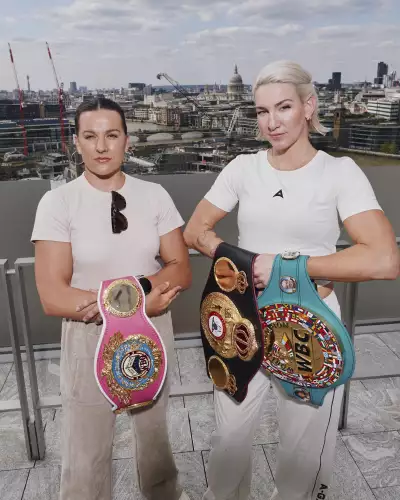
SM: Did you always want to fight Mikaela Mayer?
CC: Always. We were in the amateurs together, but we never got the chance to fight each other. I’ve always wanted to fight her in the pros. I have a hell of a lot of respect for her. She’s a great fighter. I know this is a fan-friendly fight, and that’s what I want to be remembered for. I want young girls to see these fights and see what’s possible.
SM: What do you mean by a fan-friendly fight?
CC: War. Toe-to-toe entertainment. Fans gripped at the edge of their seats and can’t get up to make a cup of tea.
SM: When you look at Mayer as an opponent, what’s the biggest challenge to overcome?
CC: Our styles are quite similar. I know she’s going to come at me and give me the fight that I want. We’re going to go to deep waters, but I just genuinely believe I’m better. I’ve got more heart and will to win. I’m built different. They'd have to put me down to beat me.
SM: In the Taylor fight you lost, did you feel like something was different preparation-wise?
CC: The morning of the second Taylor fight, I was crying in my room. It’s never happened to me before. I knew something was off. I just knew it wasn’t my night. I didn’t want to go back for the rematch in Dublin because it was all on her terms again. She wouldn’t do three minutes. She wouldn’t put her lightweight belts on the line. Nothing was in my favour, even though I’d won the first fight.
Imagine you ran a marathon, and then someone asks you to run another one in the exact same place. It made no sense. What’s the motivation to go back and do the exact same thing?
During the fight, I’ve never felt how I felt that night. It was like the whole room was suffocating me. There was blood everywhere. She kept head-butting me. I wanted out of the ring. I’ve never felt that before. I didn’t want to be there.
SM: Do you think you were having a panic attack?
CC: I think it may have been, yeah. I was suffocating. The sound was deafening. I was desperate to get through and be done. It was all emotions. I’ve never watched the fight back.
SM: Was anything else going on contextually during that fight that was weighing on you?
CC: About five or six weeks before that fight, my dad had a health scare. My family comes before any sport, before anything. It was brutal. His results came back all clear. But for two weeks, I was going to pull out. My priority is my dad. I went to Northampton and lost two weeks of my camp to be near him. I didn’t tell anyone because I didn’t want to be a sore loser. They thought he had mouth cancer. But luckily, he was okay.
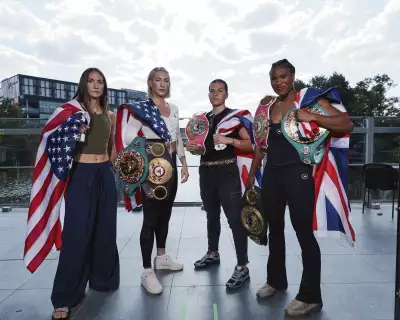
SM: You’ve watched women’s boxing transform over the course of your career. What still needs to change?
CC: There is so much talent in women’s boxing, but it’s got a long way to go. There have got to be changes made. The two-minute rounds are holding women back. We can’t be crying out for equality if we’re doing less work. I think if we’re going to get respect, we have to do what the men are doing. We need to get better, get used to the rounds. If the men can do it, why can’t the women?
Novice female fighters can do two minutes, but at world-title level, we should have three-minute rounds. Two-minute rounds don’t make me feel elite. It’s easy work. To take women’s boxing to the next level, we should do exactly what the men do.
SM: What do you want to be remembered for?
You can watch Mikaela Mayer vs Chantelle Cameron live on Sky Sports on Saturday, August 29, from the bp pulse LIVE arena in Birmingham.