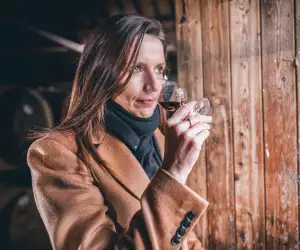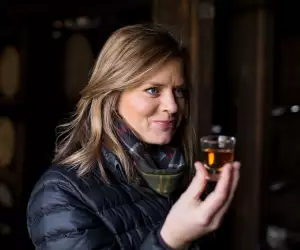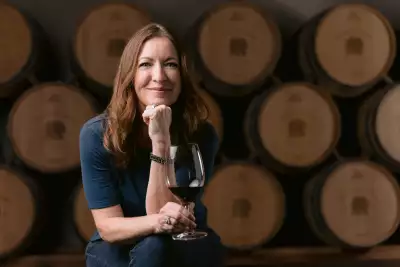
Few winemakers arrive in Napa by way of the National Institutes of Health. Before crafting cabernet sauvignon at some of California’s most respected estates, Kristy Melton was a research scientist in Washington, D.C., supplementing her income by bartending and working weekends at a Maryland winery.
That unlikely combination of laboratory precision and hospitality proved transformative, ultimately leading her to UC Davis before senior winemaking roles at Clos Du Val, Kendall-Jackson and now the historic Freemark Abbey.
Widely recognised for producing wines of structure, balance and longevity, Melton has built a reputation for combining scientific rigour with an instinctive respect for nature – believing that great American cabernet is shaped as much by patience and place as it is by technique.
We caught up with the Freemark Abbey winemaker to discuss champagne celebrations, the bottle that changed her life, and why the vineyard should always have the final say.
Square Mile: What was your first ever experience of wine?
Kristy Melton: My first memory of wine is tied to my grandfather. He had served in the US Navy, and for birthdays or Father's Day we'd always take him to his favourite seafood restaurant – an admittedly curious choice considering we were in El Paso, Texas, in the 1980s. Without fail, he'd order a plate of raw oysters and a glass of chablis.
Looking back, I'm guessing that 'chablis' probably came from a box, but to him, it was perfect. He loved it, and I adored him, so I naturally assumed that wine must be something wonderful if it made him that happy. What stayed with me wasn't the wine itself, but the ritual of it – the anticipation, the first sip, the way it transformed a simple family lunch into an occasion.
I didn't understand wine then, but I think that's when I first learned it was about much more than what was in the glass. Wine has a remarkable ability to bring people together and create lasting memories. It's a lesson I still carry with me every time I open a bottle.
Wine has a remarkable ability to bring people together and create lasting memories.
SM: What was the first wine you tasted which really caught your attention?
KM: The first wine that truly changed the way I thought about wine was a 2001 Château Rieussec Sauternes. I was 24 years old and living in Washington, D.C. It had been named Wine Spectator’s Wine of the Year in 2004, and at that point in my life, it was certainly not a bottle I could afford to buy on my own.
A group of us who had met through a local wine shop decided to pool our resources and purchase one bottle to share. We gathered together for the evening, opened the bottle, and spent hours enjoying the wine and getting to know one another. I still remember that first sip – it was completely unexpected. The layers of complexity, the balance, the way the wine seemed to evolve in the glass… it was unlike anything I had experienced before.
But what made that bottle so memorable wasn't just the wine. It was the experience around it. The generosity of sharing something special with people who were equally curious and passionate. That evening was the first time I really understood that great wine could be both profound and deeply human. It could create a sense of wonder, but it could also bring people together. That realisation changed the way I viewed wine forever.
SM: When did you decide ‘I want to make wine!’?
KM: I was still living in Washington, D.C., working in science and bartending to pay the bills. I loved both worlds, but balancing the two was becoming increasingly challenging. When there was a brief downturn in my research work, it gave me an opportunity to step back and think about what I really wanted my future to look like.
I remember sitting at a bar with a friend, complaining about yet another snowstorm, when he told me about his time at UC Davis and how it seemed like the people in the wine program were having an incredible time. That conversation sent me down a path of research, and I quickly realised winemaking brought together everything I loved: agriculture, science, great food, and the opportunity to build lasting friendships. It felt like the perfect intersection of all my passions, and I knew I had found my path.
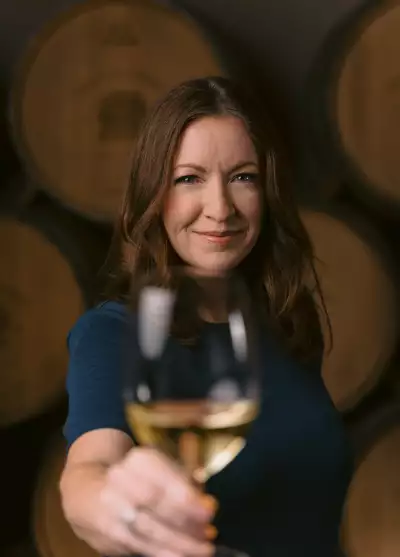
SM: You started out as a research scientist at the National Institutes of Health. How much of that scientific mindset still shapes the way you make wine today?
KM: Science still plays a major role in my everyday life and certainly influences the way I approach winemaking. My scientific background taught me to be curious, to ask questions, and to make thoughtful decisions based on observation and data.
But wine is not made by science alone. It requires a balance of science, nature, and creativity. The vineyard is a living system, and every vintage presents new challenges and opportunities. Science helps us understand what is happening, but experience, intuition, and a deep connection to the land are equally important in making great wine.
SM: Where and when was the first wine you made? And was it any good?
KM: The first wine I helped make was at Loew Vineyards in Maryland. I was fortunate to meet an incredible couple there who took me under their wing and invited me into their winemaking process. We were making mostly hybrid varieties and sweeter wines, very different from the style of wines I make today, but I was completely captivated by the experience.
I was so proud to be included – harvesting grapes, being part of the decisions, and seeing the transformation from vineyard to bottle. Looking back, it wasn't about whether those wines would stand alongside the great classics of the world, it was about discovering the magic of making something from the land and sharing it with others. That experience confirmed that winemaking was where I wanted to be.
Wine is not made by science alone. It requires a balance of science, nature, and creativity.
SM: What’s the most important lesson you’ve learnt in your career?
KM: Patience. As humans, we naturally want to control outcomes, but working with nature is a constant reminder that we are not always in charge.
Winemaking requires us to observe, adapt, and trust the process. The vineyard has its own rhythms, and our role is not to force nature to do what we want, but to understand it and work with it. Some of the greatest lessons come from stepping back, paying attention, and allowing time to reveal what is possible.
SM: What’s been one of your best memories from your career?
KM: The 2011 harvest in Napa Valley. It was an incredibly challenging vintage: a cool growing season followed by significant rain during harvest. I felt like I was either completely soaked or walking through mud for weeks, and every day brought a new challenge.
In November, when we finally crushed the last grapes, I was standing on the crush pad when someone handed me a bottle of champagne to celebrate. I think they intended for us to share it, but at that moment, I was so relieved and exhausted that I just picked it up and drank straight from the bottle. Everyone burst out laughing as the rain continued to pour down around us. It was one of those unforgettable moments of accomplishment and gratitude, the kind that reminds you why you do this work and how special it is to share it with a team.
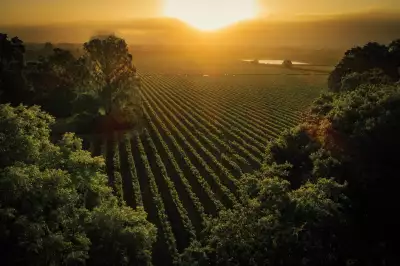
Sycamore Vineyard, Freemark Abbey
SM: How do you preserve a sense of place when working with a grape as internationally recognised – and widely planted – as cabernet sauvignon?
KM: Cabernet sauvignon may be one of the world’s most recognised and widely planted grape varieties, but it still has an incredible ability to tell the story of where it comes from. The grape is the language, but the vineyard is the voice. The character of a wine is shaped by its environment – the climate, soils, topography, and the people who care for the land. That connection to place is what makes each vineyard and each vintage unique.
Preserving a sense of place begins with listening to the vineyard. Our role as winemakers is not to make every vineyard conform to a particular style, but to understand what makes each site unique and allow that character to shine through. Great wine comes from balancing knowledge and experience with humility, working with nature rather than trying to control it.
SM: When you take over the winemaking at an historic estate such as Freemark Abbey, how do you balance respect for its legacy with the desire to leave your own mark?
KM: Taking over winemaking at a historic estate is both an honour and a responsibility. When a winery has a legacy like Freemark Abbey, you are not starting with a blank canvas, you are becoming part of a much larger story. The goal is not to erase what came before, but to understand what has made the wines meaningful for generations.
I believe the best way to honour that legacy is to continue asking questions and striving for excellence. Every generation of winemakers brings its own perspective, and my role is to respect the foundation that was built before me while continuing to evolve. Ultimately, I hope my contribution is measured not by changing the identity of the winery, but by helping ensure that its character and quality continue for the next generation.
Some of the greatest lessons come from stepping back, paying attention, and allowing time to reveal what is possible.
SM: How has the industry changed since you started?
KM: The wine industry has evolved quite a bit since I started, but the fundamentals of making great wine remain the same. When I entered the industry, wine was perhaps a little more focused on tradition and personal connections, while today we have more tools, technology, and opportunities to share our stories with consumers around the world. I think that increased access and engagement has been a wonderful evolution for the industry.
Winemaking has become more sophisticated and data-driven, but I hope we never lose the curiosity, creativity, and relationships that drew so many of us to wine in the first place. We are also navigating a changing climate, evolving consumer preferences, and a greater need to be thoughtful about every decision in the vineyard and winery.
Through all those changes, I believe the most important things remain constant: healthy vineyards, respect for the land, attention to detail, and the ability of wine to create meaningful experiences for people.
SM: You’ve been recognised as one of the industry’s leading young winemakers. What ambitions do you still have left to fulfil?
KM: It always makes me smile when I’m described as a “young” winemaker. I’ve been doing this for more than 20 years now! I’m incredibly grateful for the recognition, and my ambitions have evolved over time. Early in my career, they were focused on learning, improving, and proving myself. Today, I’m more interested in creating wines that have meaning and continuing to grow as a winemaker and steward of the land.
At this stage, one of my greatest ambitions is to find a deeper sense of balance, to be more connected to nature, more present in the moment, and more at peace with whatever lies ahead. I want to continue making wines I’m proud of, but I also want to appreciate the journey and the people who make this work so rewarding.
SM: Who is your winemaking hero – and why?
KM: I think there are heroes all around us in the wine industry. They are the people who show up every day in the vineyard and cellar, regardless of the weather, the long hours, or whether it’s a holiday. They are the people quietly dedicating their lives to this craft.
I’m inspired by the growers, vineyard workers, cellar teams, and winemakers in small cellars who are taking risks and working tirelessly to create something meaningful. Everyone who plays a role in bringing a bottle of wine to life is part of that story, and their passion and commitment are what continue to inspire me.
SM: When you drink wine purely for pleasure rather than professionally, what do you tend to reach for?
KM: Bubbles, usually champagne.
SM: What’s your favourite bottle (and vintage) from your own line-up?
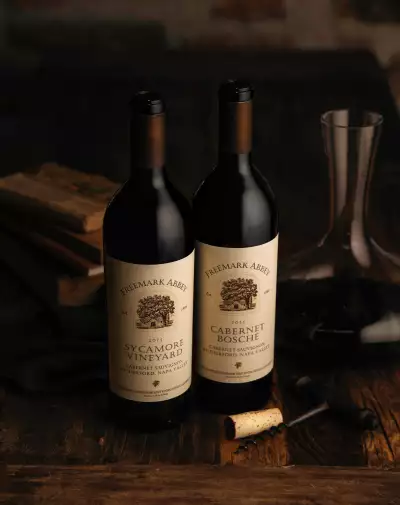
KM: Our Freemark Abbey 2021 Napa Valley Cabernet Sauvignon. We survived COVID-19 and wildfires in 2020 and it was so rewarding to be able to craft an incredible wine in 2021.
SM: What’s the single best wine you’ve ever tasted? Where and when did you try it, and what made it so special?
Most recently, it was the 2020 Château La Conseillante. I tasted that at the winery with colleagues on a work trip. It takes a lot for the group of us to be stopped in our tracks by a wine, and this one did it. We were all speechless, especially having been made in the middle of COVID-19, it was transformational.
See more at freemarkabbey.com