Do you have a bedroom voice? Perhaps more than any other room, the bedroom remains an intimate business: to design, to live in and to love.
It is, after all, the only space in the house where one is expected to spend a third of one’s life, which rather raises the stakes.
Luxury for this kind of interior, then, is no longer about how things look at a dinner party, but how well they perform at 2am.
There is a particular stillness to a well-designed bedroom, but it has to be a place that speaks to your sensibilities and ways of being. In other words, it needs your distinct voice.
The bedroom has expanded in function: a sanctuary from hyperactive kids, part of a daily dressing space or simply a haven of sleep.
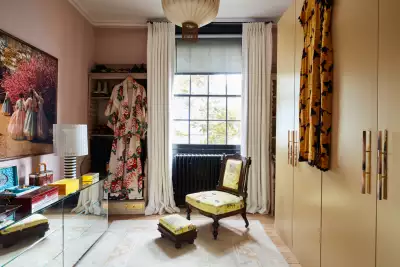
Studio Ashby creates a relaxed and personalised dressing room complete with antiques.
Bed behaviour
If there is a defining principle of the modern bedroom, it is tactility. Finishes shouldn’t be chosen purely for their aesthetic appeal, but for their feel.
So let’s start with an obvious one: bedding. Linen, cotton, wool and newer plant-based fibres have become the unsung overachievers of the design world, regulating temperature, wicking moisture and generally getting on with things without fuss. If you turn into a furnace at night, it is worth investing in some decent bed linen. The thread count arms race has (mercifully) slowed, so we’re no longer bombarded with claims of 50,000 counts. Keep details to a minimum – those patterns and stitching details feel frustratingly fiddly at 3am if you’re not a natural at getting your recommended 40 winks.
Texture does much of the heavy lifting in any interior scheme and the bedroom is no different. These layered environments – incorporating upholstered headboards, swathes of curtains, and outsized rugs underfoot – favour softness, absorbing ambient sound. Rounded edges and padded finishes are welcome, as they remove any risk of sharp encounters in low light; we’ve all smacked a shin on brutal but gorgeous-looking beds over the years. The aim is simple: to create a space that feels insulated from the outside world, both visually and acoustically. This is not minimalism in the austere sense, just simplicity to encourage well-being through some visual decluttering (dogs, kids or a late night create enough chaos in their own right, frankly).
Colour me calm (or happy)
For some, a cool, calming space is defined by the absence of colour. Many an idyllic, if neutral, scheme responds to the room’s aspect, making best use of natural light and how that changes throughout the year.
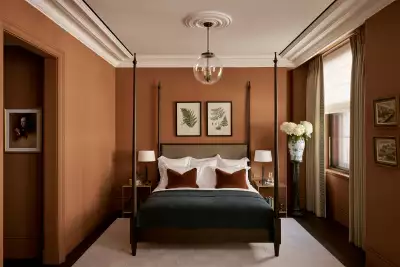
For others, it’s the opposite, and darker, earthy tones like clay or deep plum – often applied with commitment – can create a cocoon that envelops for reassurance and comfort.
Walls, ceilings and joinery are colour-drenched, for a seamless envelope that gently lowers the pulse; though it’s less about making a statement and more about avoiding one. Light or dark, high contrast has given way to tonal harmony, and the overall effect is one of relaxed persuasion rather than visual insistence.
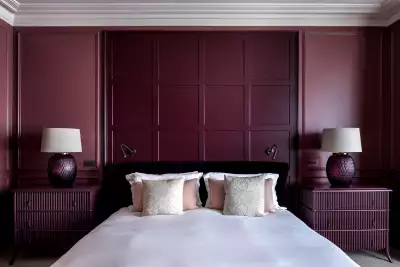
Mia Karlsson’s confident colour application across walls and furniture creates a calm cocoon to frame the bed.
Dressed to impress
Clutter, to no one’s surprise, is not particularly conducive to wellbeing and complete rest: I can personally attest to this, by my lack of a good night’s sleep. Contemporary bedroom design addresses this with a degree of efficiency, though: built-in wardrobes; concealed storage and furniture that serves more than one purpose; incorporating a dressing room and walk-in wardrobe to take the pressure away from ‘the main event’ next door. They can be as private and organised as you feel comfortable with, reserving the bedroom area for more pleasant activities.
Designer Mia Karlsson has seen a shift in what her clients now need in terms of storage: “There is a big move towards everything being bespoke joinery that goes beyond just wardrobes. We now wrap it around the walls to give opportunities for layered mood lighting, unique bespoke upholstery, built-in side tables and AV controls. In dressing rooms, central island units are tailored for each client for additional storage space.”
Finishes needn’t feel soulless: bespoke means any finish, even reclaimed and antique, so your personality is truly reflected in every facet of the design. The result is a space that feels calm not because it’s empty, but because everything has been accounted for. It’s less show home, more functional retreat that responds to your life and needs.
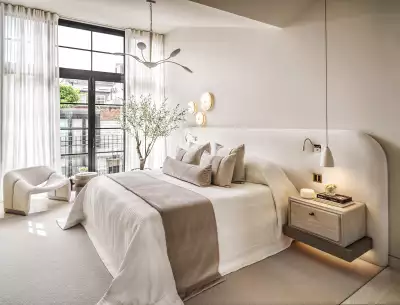
Kelly Hoppen showcases a calm, neutral scheme, softened with multiple lighting options and layered textures.
Lights (almost) out
Technology has, somewhat sheepishly I might add, re-entered the chat after the blue light screens-are-bad exodus. Gone are the intrusive gadgets and televisions; in their place are integrated systems that work quietly in the background. Temperature regulation, air purification, sound and lighting that can be pre-programmed to your specifications, all contribute to an intuitive environment. Like all good design, these innovations are barely noticeable: switches and automation are all but invisible.
Lighting in particular has become a far subtler, more flexible affair. Warm, diffused light in the evening encourages the body to wind down, while the absence of glare reduces the temptation to scroll or stare at the ceiling contemplating life choices.
Kelly Hoppen explains: “Technology should enhance how a space feels, rather than take over. For me, lighting is key. It needs to be flexible, layered and considered, allowing you to shift the ambience from uplifting and energising in the morning to calm and restful in the evening. I also suggest incorporating SAD lighting where possible, so you can wake up gently with a soft, gradual sunrise that supports your natural rhythm. When it’s done well, everything just feels in sync, and that’s what creates that sense of tranquility.”
When we find our bedroom voice, what emerges is a redefinition of luxury that feels both delightfully understated and, frankly, rather sensible. No longer ostentatious gilded excess, but a well-intentioned space that speaks to you and your, ahem, personal bedroom habits.
Ultimately, a bedroom’s success isn’t measured by how it looks at midday, but by how little one notices it when the lights are off. Night, night.
Find out more at studioashby.com; miakarlsson.co.uk; albion-nord.com; kellyhoppeninteriors.com