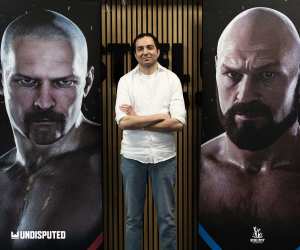
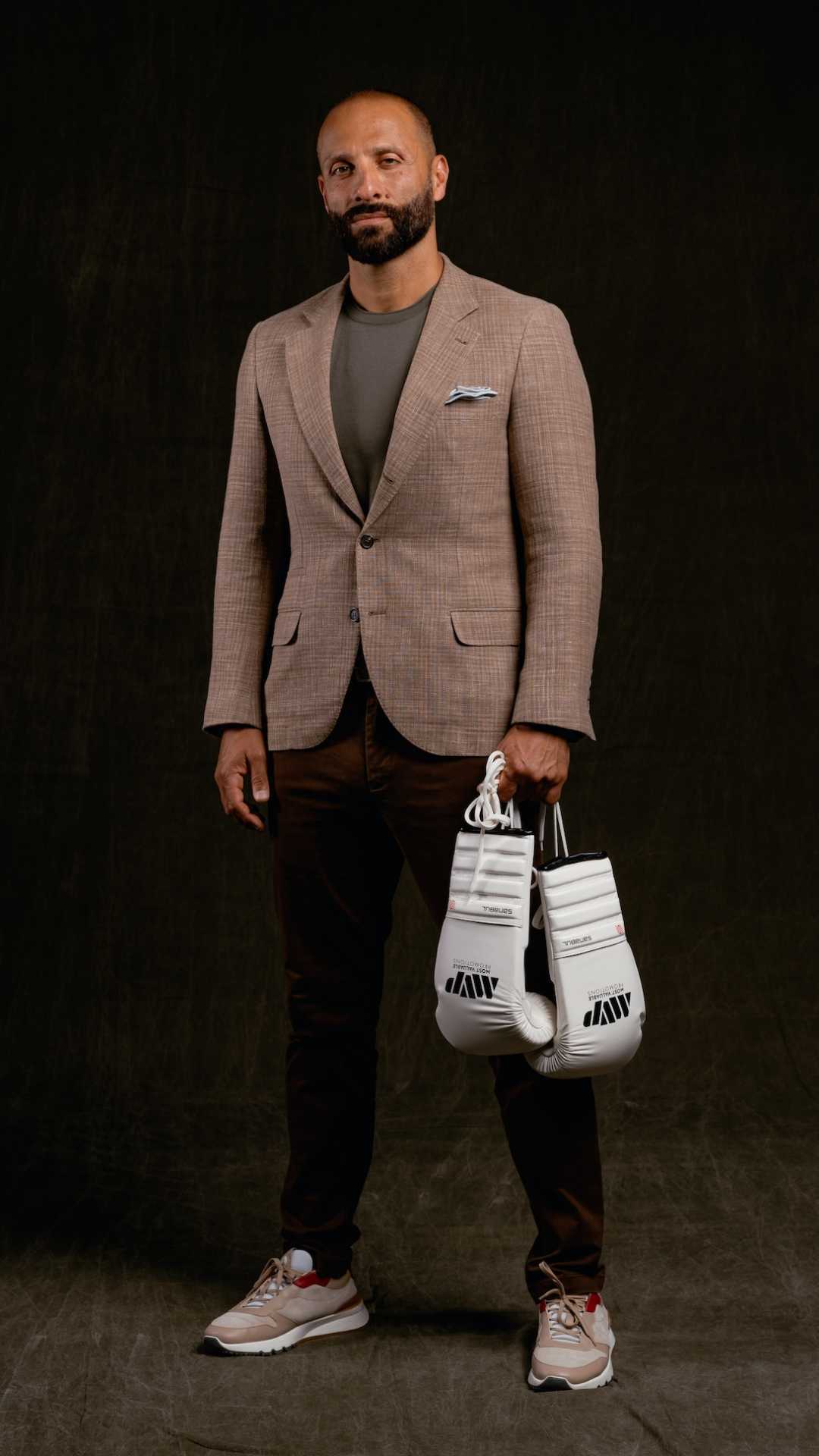
Nakisa Bidarian holds himself with a level of professionalism that is almost impenetrable. He isn’t cold, just collected. He has the kind of presence that suggests nothing is accidental. His success would confirm as much. Bidarian takes his work very seriously. I wanted to understand why.
His accolades are undeniable: a graduate of the University of Waterloo, his career has taken him across the globe. He started on Wall Street, left to get his MBA at Dartmouth College and by 28, was sitting in boardrooms in Abu Dhabi as a part of a nine-figure investment fund. He would go on to become Chief Strategy Officer—and later CFO—of the Ultimate Fighting Championship. (UFC) But after speaking with him, it's clear the CV only scratches the surface.
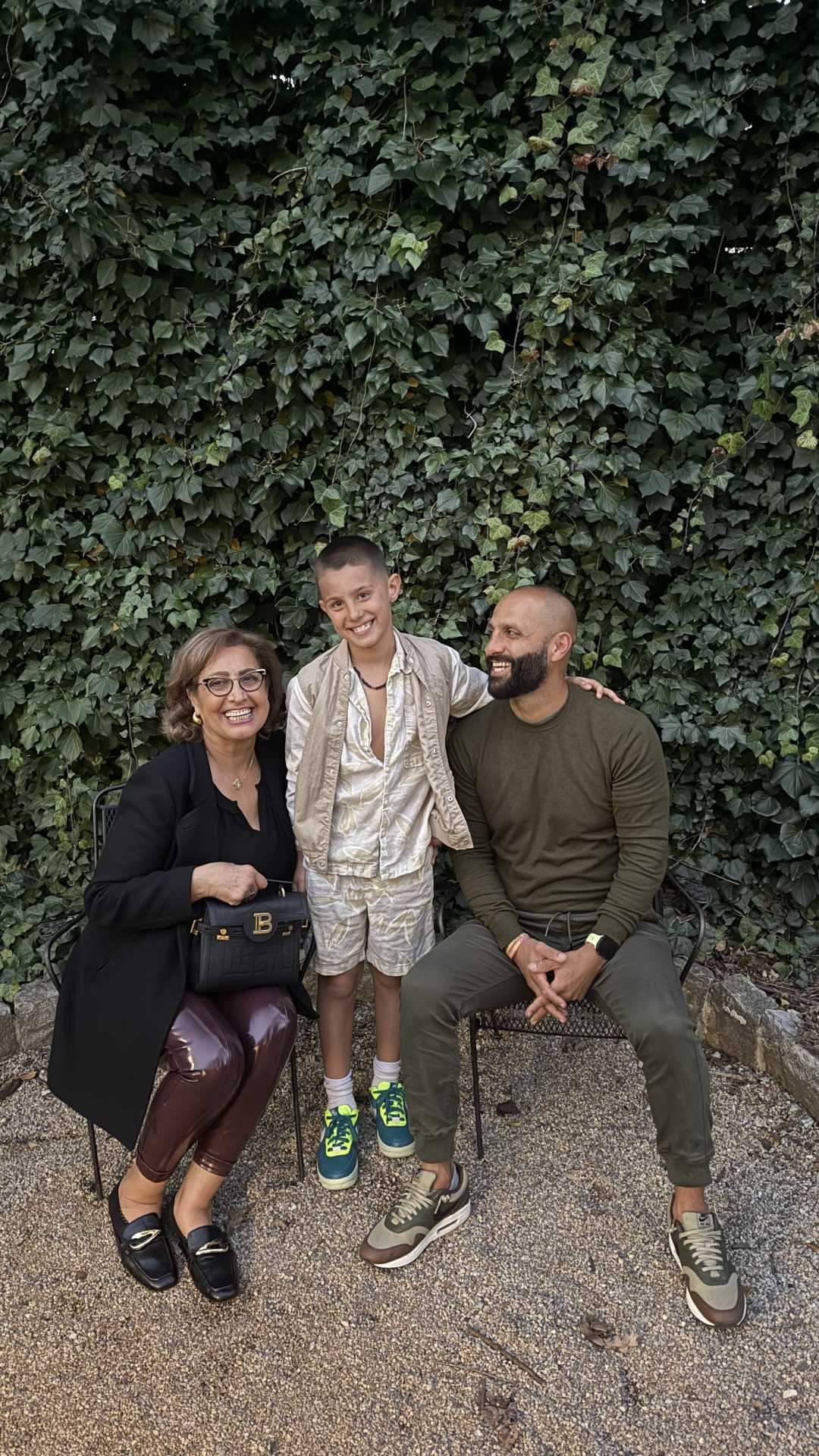
Nakisa Bidarian’s motivator has been very clear to him from the beginning. Born in Iran in 1978, he fled with his mother, brother, and sister as the revolution broke out. He recalls wearing motorcycle helmets and hiding in the basement when bombs were being dropped. When his brother, Barbad, was at risk of being drafted at age 12, they fled. When they reached the United States, the life his family had known disappeared overnight. His mother, who had once lived a life of wealth in Iran, was suddenly a single parent, working multiple jobs to keep three children afloat in a foreign country.
Years later, as a teenager, Bidarian’s brother would pass away in an incident of gun violence. The tragedy would quickly become a catalyst to apply himself to his fullest capacity. He set out to live enough life for the both of them. His son is named after his late brother.
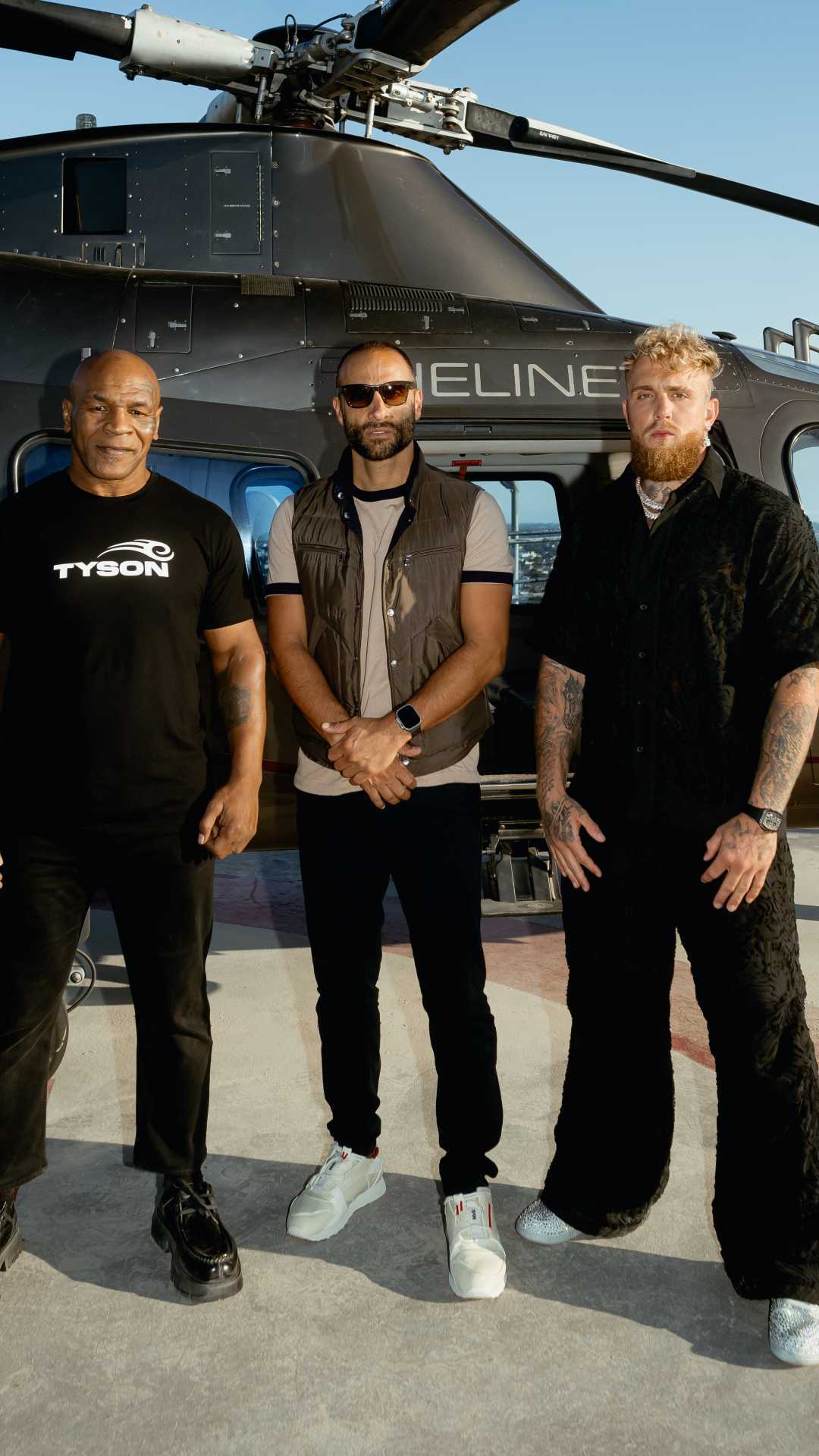
It is no surprise to me that Bidarian and Paul were destined to meet. Both are disruptors; both are men of vision. Bidarian is the strategy behind Paul’s untethered imagination. It is, in many ways, a business match made in heaven.
Together, through Most Valuable Promotions (MVP), they have reshaped the economics of combat sports. Most notably, delivering the first seven-figure payday for a female fighter, Amanda Serrano, and elevating female athletes onto a global stage.
With the recent announcement of MVP’s partnership with SkySports, one thing is clear: there is a new king in the kingdom, but the dynasty he is building is female.
We sit down to discuss the MVP vision, his journey from war-torn Iran, and how he fulfilled his lifelong goal of retiring his mother.
SquareMile: Do you know why your mom named you Nakisa?
Nakisa Bidarian: I do. My brother’s name is Barbad. My son is named after my brother. I’m Nakisa, and my sister is Barbat. If you go back to the Persian empire, Barbad was a musician. Nakisa was also a musician, and an instrument used at the time was the barbat. That was based on my father's love for the arts and music. It resonates true to who we are. We love music, the arts, and we love culture.
SM: Would you say you were connected to your culture when you were younger, then?
NB: No. I was a music lover, but I certainly wasn’t connected to my culture. I was born in 1978, right around the time the Iranian revolution happened, and the current regime, who is now at war with the US, came into place. We fled the country when I was five and a half years old. I wasn’t raised within the culture. I was raised mostly in the US.
SM: What do you remember from those five and a half years in Iran?
NB: Only moments. I got to go back when I was sixteen for six months, which was great. I remember going after some fifth graders in my elementary school. I went to fight them because someone hurt my older brother. I remember going to get revenge for my brother. I remember some traumatic things around my mother's and father's divorce as well, but that’s about it.
SM: Were you conscious of the geopolitical dangers around you when you were little, or did your parents shield you from that?
NB: I was conscious of the fact that when the Iraq-Iran war started, we still lived there. There were times the sirens would go off, and we’d put on motorcycle hats and go to the basements because we didn’t know if a bomb was going to hit the house or not. I was most conscious of the fact that the desire to move to the US was because there was a period of time that the regime was sending young men into the battlefield to walk over mines to clear the way for the soldiers. My brother was 12 years old, and my family wanted to avoid my brother being called up into duty.
SM: How did you get to the US?
NB: In 1979, we first came to London for a year, then, to get to the US, went through Turkey and Germany, ultimately landing in Chicago. We didn’t live in Chicago. Our relatives picked us up and drove us to Cincinnati, Ohio. That was the first place we lived. That was 84’.

SM: When you left Iran, did you feel like you were losing everything and walking away from home, or were you excited to go?
NB: I didn’t think about it that way. But what I will say is we were very wealthy in Iran. I was too young to grasp what that meant. But going from wealth to no wealth didn’t impact my sister or me. For my mom and my brother, it was very hard. My life was fine so long as I had friends and games to play.
I always say my mom drove a Jaguar at 18, got her first job at age 31 at Naturaliser Shoes, and on the weekends, she would work a 12-hour graveyard shift at a doughnut shop for $50. That is painful, right? If you don’t have a private jet or a Ferrari, you never miss it. But if you grow up driving a Jaguar at age 18, and then you have to take the bus, work for $4 an hour, and worry about putting food on the table. It’s a very hard thing to go through mentally.
SM: When you got older, did you ever have a conversation with your mom about what she went through during that time?
NB: Her journey is the reason for my success. Myself and my brother grew up very rough. Not her fault, just the product of the environment and a single-parent home where she was working multiple jobs. I realised that if I wanted to return my mom to the life she once had, I had to, at some level, straighten myself out and focus on a clear path to financial success.
SM: It sounds like your motivation is very clear to you. Was it that clear when you were a kid?
NB: My mom would tell you there were many times when I was 7, 8, 9 years old. I always told her, ‘Don’t worry, I’m going to take care of everything.’ I recall—sorry to get emotional for one brief second—but my mom tells me the story when she came home from Naturaliser Shoes, and she was very upset because she thought she hadn’t locked the door to the store, and that she could get fired for not locking the door. I said, “Don’t worry, Mom, it’s going to be okay. I’ll come with you and make sure it’s locked,” which we did, and it was locked, from what she tells me. From very early on, I wanted to be there for my mom.
SM: Did your brother have the same perspective or motivation?
NB: My brother has a very complicated situation, as he was very close to my mom and dad growing up. He was the first son of the family. He missed my dad a lot when we came to the US. I didn’t know better. I was a happy-go-lucky kid. He passed away when he was 20 years old. He wanted to help my mom, but it didn’t happen.
SM: I’m so sorry. I didn’t know your brother passed. Can I ask how he passed?
NB: I won’t get into how he passed, but I will say, the irony of the whole trip of leaving Iran to save my brother from going to the military for him to lose his life in the US due to gun violence is a crazy mix of destiny. I owe him for my success, my focus, and my drive. He’s young forever.
SM: Why do you feel your brother is responsible for your success?
NB: The day we found out he passed, I had returned to see my dad for the first time in seven years. I got woken up by him, and he said your brother has been in an accident. They already knew he passed, and it wasn’t an accident. But he’d passed. My dad was living in Dubai at the time; he had live-in housekeepers. One of them had a dream that night of two boys going into the ocean, and a strong current comes, and the older boy saves the younger boy, but the older boy passes away. That was the fortune of my life with my brother. We were both living fast lives. I was going down a path that wasn’t positive. His passing made me worse for a while, to be honest, but it eventually made me realise I owed it to him and my mom to get my act right.
SM: That time period of your adolescence when things weren’t going right. Where were you?
NB: Everywhere. I went to 11 different schools before undergrad. I was in Cincinnati, then I went to school in Los Angeles, which was the last place my mom, my brother, my sister, and I lived together. Then I lived in Columbus, then in Toronto, and lived in Dubai during that period. It gave me the ability to interact with people from all different backgrounds, you know, race, religion, culture.
SM: At what point did you realise you had a gift with numbers or math?
NB: I don’t think I have a gift with anything other than working hard. That’s not a gift. That’s just self-discipline and desire to really apply myself. When I was growing up, teachers would say to my mom, "He’s super smart, but he doesn’t pay attention." I first got a GED, that’s how bad I was in life. Then I moved to Toronto to do OACs, which were Ontario advanced credits. I went to a high school in an area called the jungle because it was an impoverished area. In that school, I was able to apply myself and shine.
SM: What flipped for you that all of a sudden you were applying yourself?
NB: My mom. I had to do this to get her off her feet. She’d been working for 13 years at that point. Which is not a long time to work, but when you grew up the way she did, it was. It was really that realisation that I needed to be there for my mom.
SM: Where did you end up going for undergrad?
NB: I went to the University of Waterloo, which is sometimes called the MIT of the North. I went there for economics and accounting. It has the largest co-op program. There is a structure and system in place that helps you get jobs, ensuring I gain good experience in the workforce while in college.
SM: Why economics?
NB: I wanted to be in business. The idea I could go to Wall Street. My moms youngest brother, who is the most successful of her siblings, was a Wall Street banker. I got into three schools. University of Waterloo, University of Toronto and York University. No disrespect to the graduates of York University, but my uncle at the time said if you go to Toronto, we’re even. If you go to York, you got to give me 1000 bucks. If you go to Waterloo, I’ll give you 1000 bucks. I was like shit, Waterloo it is. But he was right in terms of what Waterloo offered.
SM: What did you do with that 1000 dollars?
NB: I put it towards my first car, which was a Honda Civic.
SM: I’ve read that you walked away from Wall Street cause of the hustle culture. Tell me about that.
NB: I walked away from New York, not Wall Street. My intention was to go into investment banking, but in my last year of college, I got introduced to management consulting. I realised that management consulting was like a different manifestation of my childhood, constantly working with different clients in different cities in different countries. So I went into consulting, and I loved it.
I realised that while I was enjoying myself and being treated well, the compensation wasn’t at the level I wanted. So I went back to go back to grad school and got my MBA. Once I got to Wall Street, I realised that while I liked money, I didn’t want money to be what defines me. I felt that was the culture of investment banking, and New York as a whole. I made the decision I wanted to go back to Dubai, where I lived when I was sixteen years old, where I felt the absolute mix of East and West. Where many people told me how Iran was before the revolution. My same uncle thought I was insane. He was like, you’re going to leave Wall Street in the best M&A market in history. He was like, "What are you going to do in Dubai?" I don’t know. I felt it was the right move. I went there with Morgan Stanley.
SM: That’s when you met the Fertitta brothers?
NB: Yes. I worked at Morgan Stanley for a year, and then I was recruited by a sovereign investment entity in Abu Dhabi called Mubadala. At the time, it was a 50 billion dollar fund; now it’s 300 billion. I was responsible for real estate, hospitality, and gaming investments outside the UAE. Unbeknownst to me, the owners of the UFC had developed a great relationship with the royal family of Abu Dhabi. I woke up and read a press release that Abu Dhabi had bought 10% of something called the Ultimate Fighting Championship. Six months later, I got called into a meeting with the Fertitta brothers to set up an investment fund targeting media and entertainment assets. I was going to move back to the US and run those different entities.
SM: What was so exciting about that that you were willing to give up Dubai and go back to America?
NB: I had an unbelievable experience in Dubai and Abu Dhabi. The Middle East was liquidity-plentiful. At 28, I was sitting on the boards of big companies I probably shouldn’t have been on. I wanted to get back to the US, where my mom and sister were. A fund backed by the Middle East, with two successful entrepreneurs like Lorenzo and Frank, was really interesting to me. We spent a year on it, and then the Arab Spring happened. Abu Dhabi pulled out of the deal. The Fertitta brothers still wanted me to come on board with the plan to set up an investment fund. Lorenzo Fertitta, who was really responsible for the UFC asset—which was growing exponentially around the world—was very tactical, not strategic, and wanted to start moving the business in a more strategic fashion. I knew nothing about the sport. I was not a fan. I’d been to two fights. I sat there in April of 2012 as the new Head of Strategy for the UFC.
SM: So you were in the UFC, and now with MVP, you’ve seen the demographic and numbers behind the sport over a sustained period of time. How was the audience changed?
NB: The UFC had a really strong position in the 18-to-34-year-old male demo, which is really important for advertisers. Brands want access to that demo. What I saw as the opportunity to be with MVP, driven by Jake Paul, was to really transition the focus to Gen Z and Gen Alpha for the sport of boxing. MVP, thanks to Jake Paul, has been responsible for creating popularity for the sport within that younger demo. MMA and boxing are a global language. Most people understand the sport. It’s a truly global sport.
SM: Did you have an understanding of how female fighters were doing in the UFC compared to make counter parts?
NB: Yes, the reason that MVP is involved in women’s boxing is driven singularly, business-wise, by one person: Ronda Rousey. I was there when we introduced women’s MMA into the sport. Ronda had the first women’s UFC fight in history, and in 2015, she was the most popular athlete in our sport, in every metric, both financial and non-financial. In history, there are only two female athletes who were bigger than their male counterparts: Ronda Rousey and Serena Williams.
SM: What’s your opinion on that? Why them? What was it about Ronda?
NB: She transcended the sport. She captured the imagination of the masses. She was a superhero to women around the world, the way she came in and finished her opponent. I also give credit to the UFC, driven by Lorenzo Fertitta, in providing an equal platform, not equal pay. Equal pay is driven by performance. Meritocracy means that if we do the same thing and someone sells more than I do, then they should be paid more than I am. That’s the way I view it, and that’s how the UFC was structured. Ronda was the highest-paid athlete in the UFC in 2015. She made me realise there was an opportunity in women’s boxing. It didn’t have the right level of investment and branding, and that’s what Jake Paul and I did.
SM: What was your first impression of Jake when you met him?
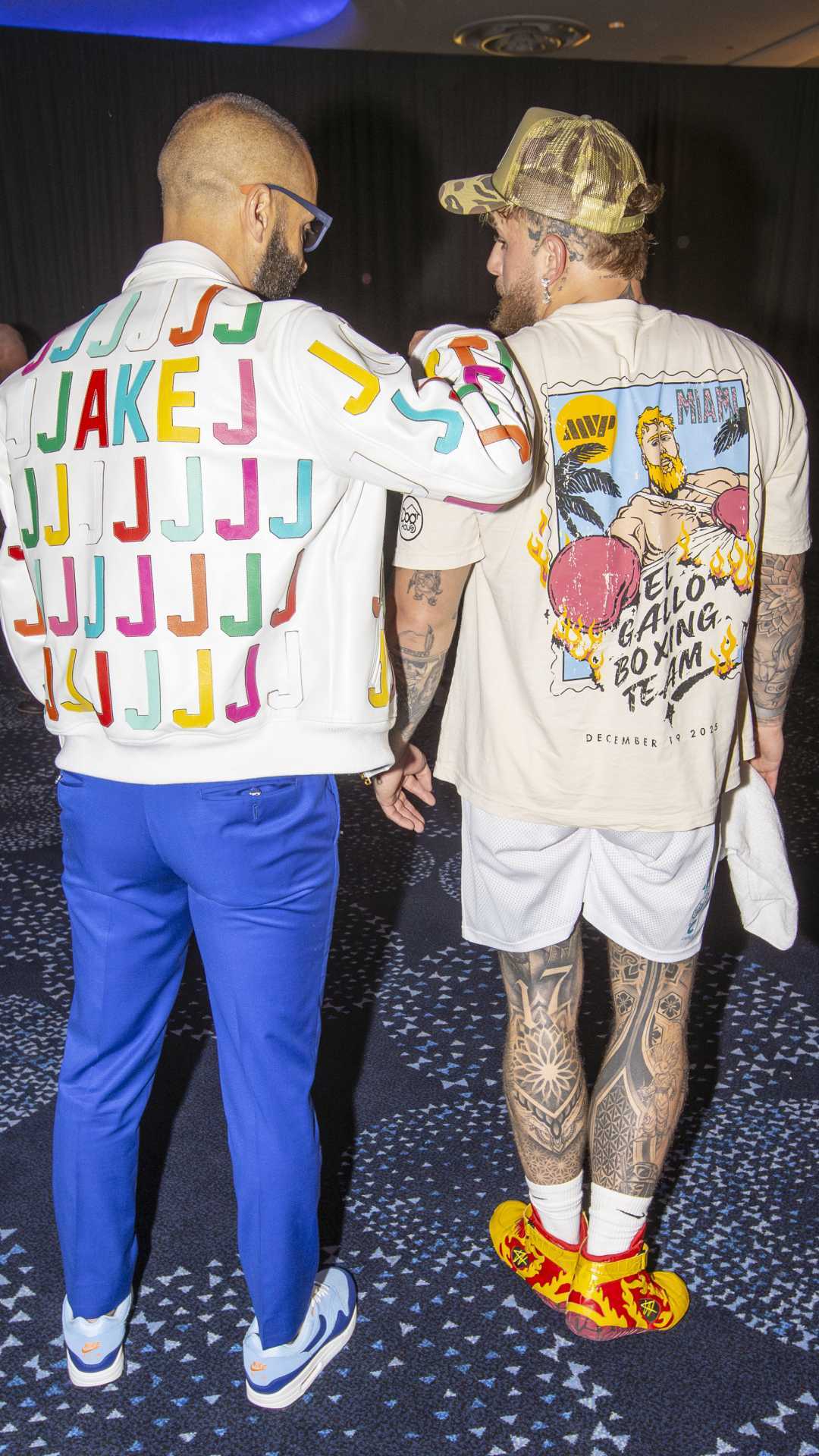
NB: I thought he was a crazy young man who, from the moment I met him, said, “I want to start a fighter’s union because fighters don’t get paid enough.” He wanted to be a boxer, a rapper, an actor, a viral content creator. He wasn’t someone I wanted to work with, but I helped him in his first boxing match, which happened in January 2020. He made an insane amount of money, and then we went our separate ways.
Seven months later, I was brought on to executive produce Mike Tyson’s return versus Roy Jones. I told them we were missing the young demographic. I said, “I have the perfect guy.” I brought Jake Paul onto that card—me as producer, him as fighter. I paid him a lot less, but I told him, “If you steal the show as part of this event, I promise you’ll make an eight-figure payday on the next fight.” He was like, “There’s no way.” He stole the show, and his next fight I got him 11.4 million dollars. On the back of that, we sat down and said we should work together. Jake came up with the name MVP.
SM: What was the vision for MVP when you first set out on the mission?
NB: We had three rules. Rule one: we’re fighter first. Fighter-first means everything we do is seen through the lens of fighters and their brands, and most of the revenue we make we put back into the pockets of the fighters. Two was giving opportunities for young fighters, because he was all about the younger demo. Three was the opportunity for women’s boxing.
SM: Why has it taken this long for fighters to be paid well? What did you guys do or figure out that other promoters haven’t?
NB: There’s been a lot of money made in boxing. On the women’s side, they weren’t getting the opportunity to display skills and make money. When we started MVP, it was Jake Paul-driven cards. That meant we had a certain amount of revenue to pay fighters well. In August of 2021, we told the network we wanted to make a women’s fight the co-main event. The network thought we were a little coo-coo. “You want to put women on pay-per-view in boxing? What?” Rival promoters were laughing at us. “Look at these novices. They have no idea what they are doing.”
SM: How did you convince the networks, then?
NB: The star of the show wanted it. Jake wanted it. Either you agree to it or there’s no show. To their credit, they supported it, and Amanda Serrano was the co-main event of MVP’s first event. She stole the show. She put on an unbelievable performance, like I knew she would. A month later, we signed her to MVP. From there, we started to really invest in women’s boxing. Not every fighter is making great pay, but every fighter has the opportunity to make great pay. This Sunday in the UK, we have four World Championship fights back to back to back on Sky Sports. We’re giving these athletes the platform to display their skills and create future massive opportunities for themselves. We can only set the platform, set the stage. It’s up to them to create more opportunity.
SM: Now, how do people respond to you with what you are accomplishing with female fighting?
NB: People recognise our strategy. There are few and far in between promoters that see our vision and share our belief. They’re stuck in the 1980s and 1990s. You can’t deny the strategy is working. We started this company 4 and a half years ago. We now have a deal with ESPN in the US for women’s boxing. We just announced our deal with Sky Sports in the UK. The two premium sports brands in each of the two of the most important English-speaking markets in the world are putting on MVP’s women’s boxing platform. So where you believed there was no appetite, the biggest distributors in sports see the vision.
SM: What most excites you about the UK audience from a business perspective?
NB: It’s totally untapped on a consistent basis. It’s pound-for-pound a better market for boxing than the US. The US is a bigger market—there’s more revenue to be had—but boxing falls lower on the totem pole of week-in, week-out interest in terms of sport. There are so many great British fighters, and the market is more concentrated here.
SM: Do you think Brits are more open to female fighters than Americans at this point?
NB: I see old-school opinions that women shouldn’t be fighting, or that women’s boxing is bullshit, on both sides of the pond. But Sky Sports saw the vision from the outset. Their support helps us change that negative perspective. It’s a fairly new sport. It only entered the Olympics in 2012. In 2028, it will be the first time women’s boxing is in the US in the Olympics. That will be a watershed moment.
SM: You walked away from New York because of that obsession with money. Does your work today fulfill you with MVP? If so, why?
NB: 100%, it’s fulfilling me. It’s driven by disruption. We are doing things that haven’t been done before. We started the company and put Amanda Serrano in a position to make a million dollars within six months of signing with us. Putting on the first women’s headlining boxing event at MSG in partnership with Matchroom in 2022. Massive. Bringing professional sports to Netflix and putting on Paul v Tyson, which is, by any metric, the biggest combat sports event since the advent of cable. Massive. Putting Amanda and Katie’s rematch as the co-main event and having 74 million people watch two women put on a performance of a lifetime to create the tailwinds to then allow us to do a deal with Netflix for an all-women’s fight card. Massive.
Then, come this Sunday, what I’m most excited about is if Ellie Scotney can win and become the youngest undisputed champion, male or female, in history. That is fucking massive. We’re about to put this amazing athlete, this amazing human being—who I’m going to church with on Sunday to pray before she steps in the ring, because it’s Easter Sunday—on a global platform. That moment. That’s fulfilling.
SM: Last question: Where is your mom now and were you able to retire her?
NB: When I was in college, I wrote her a letter, and I said, as soon as I get out of college, I’m going to start giving you this much money a month. That wasn’t to retire her, that was to supplement. As soon as I got to Wall Street, I said within a year, I’m going to pay back my school loans, and you’re going to retire. That ended up being possible, and it happened. My mom’s been retired now since 2007. The next step was buying her a place of her own. She lived with her father and mother, then my father, then we lived in a shitty place for a long time. It was in 2017 that I was able to buy her a home. That was the crowning moment of it all.
MVP’s UK debut airs this Sunday, April 5, on Sky Sports (7 p.m. GMT) and ESPN Plus (12 p.m. ET). The card is headlined by Caroline Dubois vs Terri Harper, with Ellie Scotney taking on Mayelli Flores for undisputed status.