Never in the field of human conflict – or indeed high street fashion – has the same item of clothing been popularised by such distinctly different groups of people.
First worn by US soldiers fighting in the Vietnam War, the M-65 (standing for Military-1965, after its initial year of production) was, ironically, also adopted by peace activists protesting against it back home.
While the young Americans waging war in the jungles and around Saigon would anxiously stuff their jackets’ four bulging hip and breast pockets with the paraphernalia of combat and survival, those marching and singing on the college campuses of Washington and San Francisco would adorn theirs with pacifist slogans and hippy flower badges.
In the garment’s six-decade history, the M-65 Field Jacket has gone on to spend as much time on cinema screens and fashion-show runways as it has on the military battlefields it was designed for.
Its roots can be traced back to the green (officially ‘Olive Drab’) M-41, and subsequent M-43, jackets issued to American troops in World War II, as well as to the derivative M-51 introduced during the Korean War.
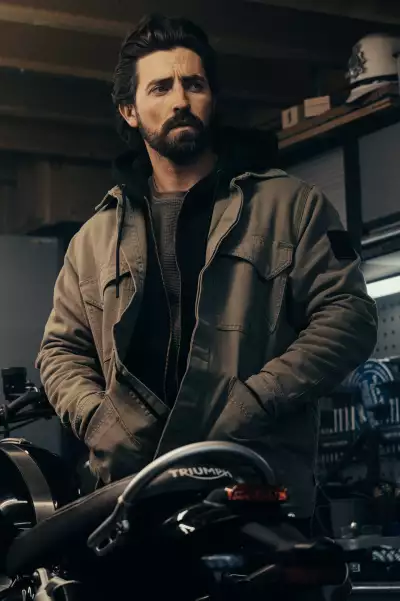
The ThruDark Dissident Canvas Jacket, £180, thrudark.com
Copied by military forces and fashion houses around the world ever since, its rain- and windproof qualities still make it the outerwear of choice, not just for survivors of history’s bloodiest conflicts, but also for the style-conscious keyboard warriors of today, whose most brutal struggle is probably battling their way onto Bank station at rush hour.
The first manufacturer of the M-65, under contract to the Pentagon’s Department of Defense [sic] in 1965, was Alpha Industries, which still produces a version to this day. Using a hardwearing blend of nylon and cotton called Nyco, the Knoxville, Tennessee-based company (which has since moved to Virginia, just down the road from CIA headquarters) updated the wind and water resistance of the M’s predecessors.
It accentuated the boxy shape, allowing room for warm layers underneath – ideal for the Cold War which was reaching its peak around that time – and added buttons inside the jacket for attaching a quilted liner (an addition that has since attracted a following of its own).
The M-65 was retired from active service by the US military in 2009, after iterations in a variety of different colourways and camouflages to suit different conflicts around the world. One of those was a rather fetching sandy hue designed for waging 21st-century war in the desert.
During its lifetime, this ruggedly versatile jacket has also established a hefty foothold in that other morally dubious and equally treacherous warzone: Hollywood.
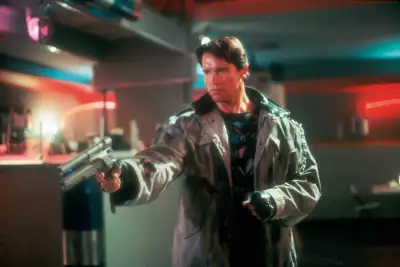
Throughout a variety of movies, the wearing of an M-65 has been used to symbolise character traits ranging from anti-establishment intellectualism (Woody Allen in Annie Hall), irrepressible machismo (Sylvester Stallone as Rambo in First Blood; Arnold Schwarzenegger in The Terminator) down to rebellious individualism bordering on psychotic ‘lone wolf’ paranoia (Robert De Niro as Travis Bickle in Taxi Driver) – possibly not the look Ralph Lauren was going for when he dressed one of his cute little trademark teddy bears in an M-65 on the front of a fluffy fleece hoodie.
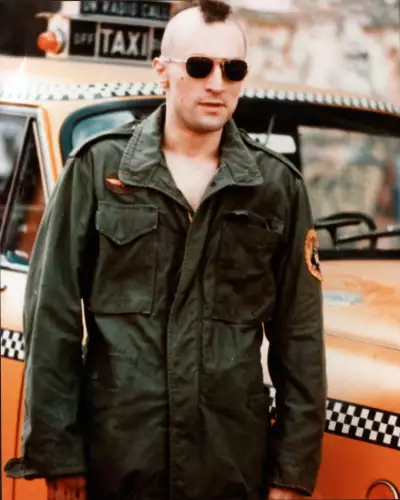
Photo 12 / Alamy Stock Photo
Professor of Fashion Design at the University of Westminster for over 30 years, Andrew Groves is also the founder and director of Westminster Menswear Archive.
Groves says: “The M-65’s countercultural weight was cemented in film. In Taxi Driver (1976), it becomes a marker of Travis Bickle’s isolation and volatility. In First Blood (1982), it speaks to the trauma and displacement of the forgotten veteran. These portrayals helped establish the jacket as the uniform of the outsider; to this day, it still signals defiance, disaffection, and cultural edge in contemporary menswear.
“The M-65 endures not just because of its utilitarian design, but because of its symbolic complexity. That tension between conformity and dissent is key to its lasting appeal.”
It’s still possible to pick up authentic, well cared for, examples in London vintage shops if you know where to look. Phil Amery is a dealer in combat and ceremonial militaria who spent 30 years working in the City before setting up shop.
As well as selling field jackets and other apparel online, he trades from stalls at Brick Lane, Covent Garden and Portobello markets. Amery has several examples in good condition for sale (both M-51 and M-65 versions), mainly in the larger sizes which he agrees they tend to look better in.
“You want one that looks a bit lived in,” says Phil. “It’s essentially a combat jacket so it looks more genuine if it’s got a couple of scars and scratches on it.”
“Strangely enough,” he adds, “you can no longer get them very easily in the States, where they originally come from.”
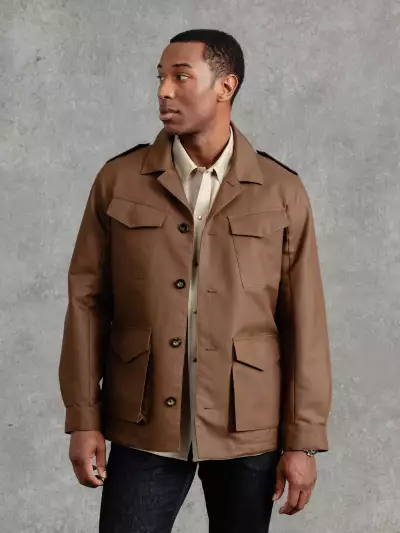
Private White VC Revere Field Jacket, £595, privatewhitevc.com
Though US military-issued examples are becoming increasingly difficult to find, the iconic garment’s legacy lives on in the form of M-65-inspired jackets by designers such as Paul Smith, Marc Jacobs and Tom Ford. Alpha Industries meanwhile produce the most accessible and authentic option, staying close to the original military spec while offering updated fits.
And there are some extremely covetable pieces available from veritable British labels Private White V.C., Hackett and ThruDark, which offer a number of variations on the theme.
They probably wouldn’t have got government approval for tactical use during ‘Operation Enduring Freedom’, had they been around back then, but they’ll more than see you right this autumn if your mission objective is ‘Enduring the Central Line’.
See more at andrewgroves.com and gocommandolondon.com