When Roland Schwertner established Nomos Glashütte in January 1990 – just two months after the Berlin Wall fell – his ambition was to revive the watchmaking heritage of a town that had been producing timepieces since Ferdinand Adolph Lange opened his first workshop there in 1845. Glashütte's tradition had been interrupted by decades of Communist rule, and Schwertner, a photographer and IT specialist with no watchmaking background, became the unlikely catalyst for its horological renaissance.
Boasting a clear design philosophy rooted in Bauhaus principles, Nomos’s inaugural 1992 collection featured four models: Tangente, Orion, Tetra, and Ludwig. While Tangente became the brand's icon, Ludwig represents the more classical side of its vision thanks to a rounded case, Roman numerals, and a small-seconds subdial.
Graphic designer Susanne Günther had drawn inspiration from a 1937 Weber & Baral dial (historically Germany’s largest dial manufacturer, which supplied A Lange & Söhne and STOWA), she found in a series of old watch brochures and magazines, reworking the typography and proportions into something distinctly modern yet still rooted in Glashütte's past. More than three decades later, it more than stands up to contemporary scrutiny.
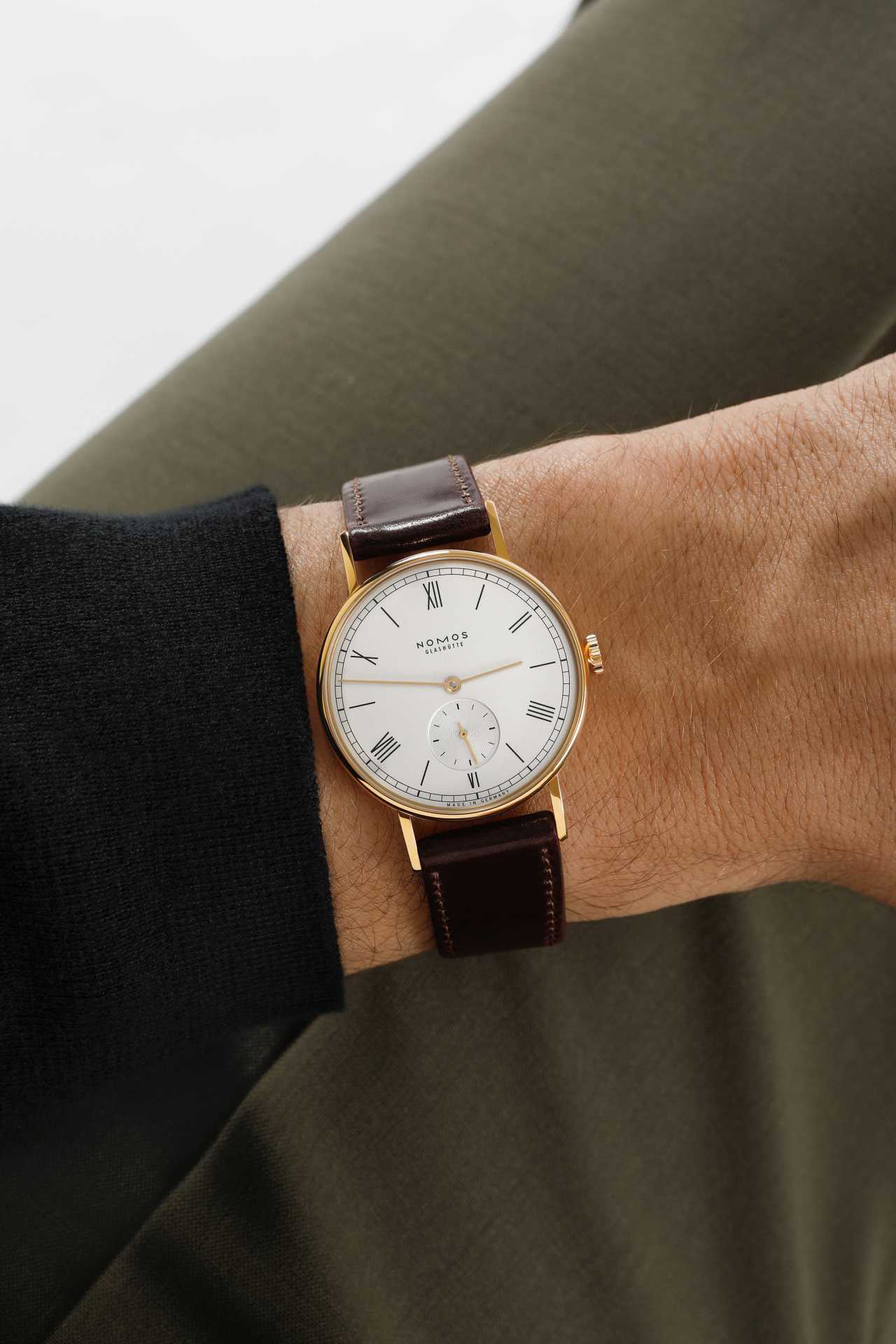
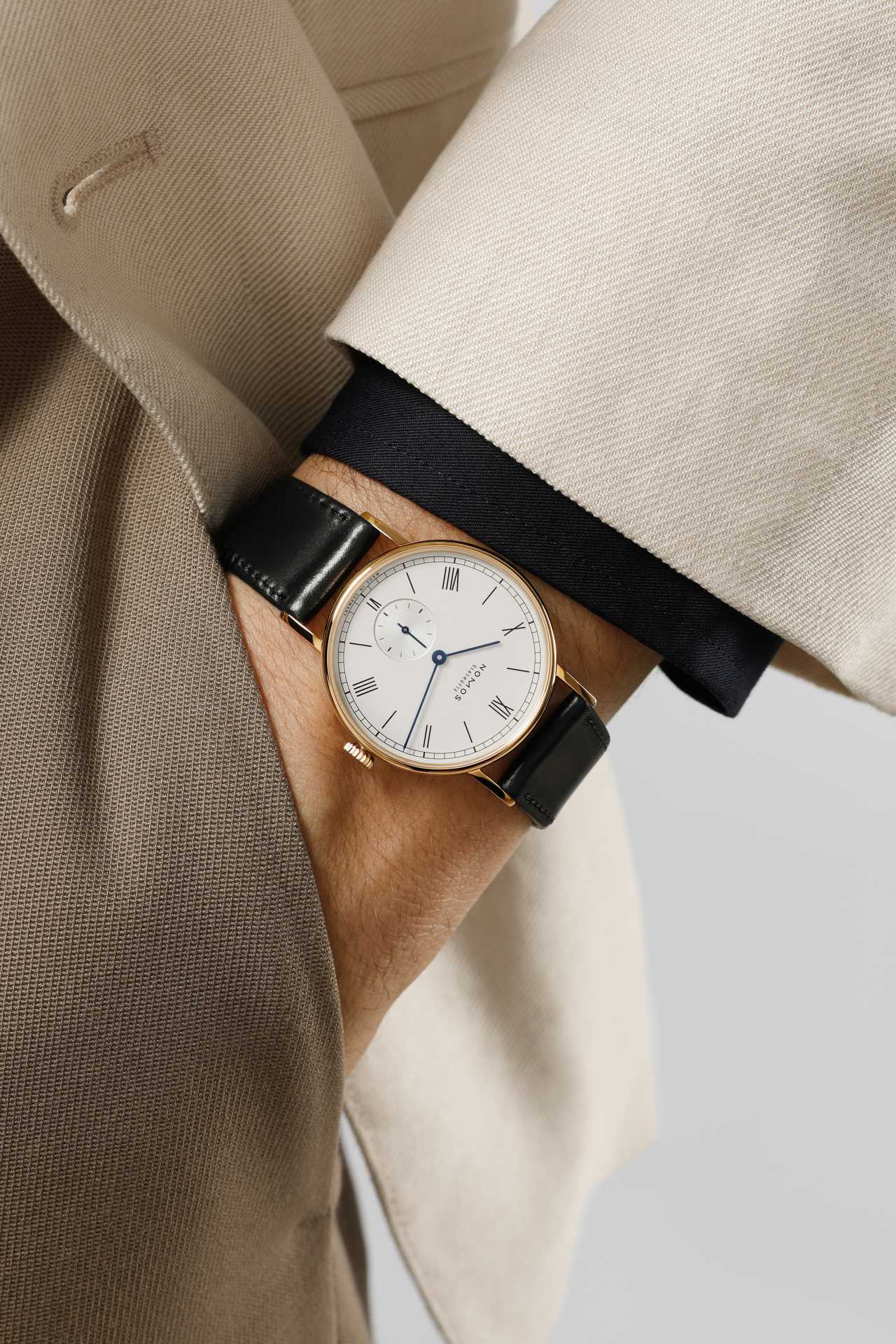
New for 2025, Nomos has released the Ludwig in 18-karat gold, adding a sprinkling of vintage charm and refinement to the brand’s most traditional watch silhouette.
First, let’s deal with the basics. There are two new members of the Ludwig watch family featuring solid gold cases and running the brand’s DUW 4001 hand-wound calibre. The movement delivers 53 hours of power reserve and features Nomos's proprietary ‘swing system’ escapement, visible through a sapphire caseback on the 33mm model or hidden beneath a solid gold back on the two 35mm versions.
The gold itself has an interesting backstory as well. Nomos exclusively uses reclaimed 18-karat gold for these pieces – material that had a previous form before being melted down and recast. It's a practical approach to sustainability that extends to the crown and clasp, both of which are solid gold as well. All three are complemented by Horween Shell Cordovan straps.
The 35mm Reference 211 and Reference 212 novelties are almost identical in composition, save for the heat-blued hands of the 211 versus the golden hands on the 212 and a different coloured strap. The 33mm variant, Reference 210, on the other hand, drops the railroad track in place of simple minute indexes, creating an overall more minimalist aesthetic.
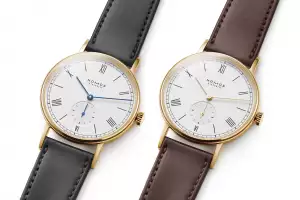
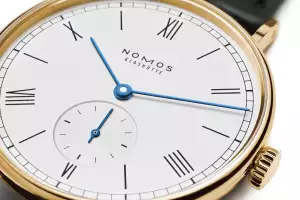
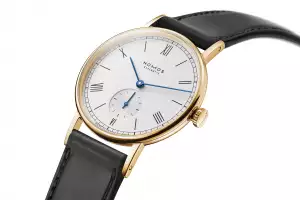
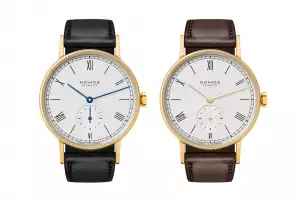
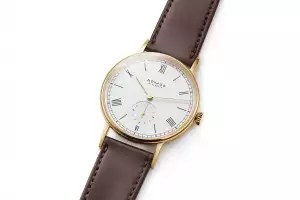
All three sit at 30m water resistance – what we colloquially call ‘kitchen sink safe’ – sufficient enough for daily wear, but this is clearly not a dive watch. The white silver-plated dial provides excellent legibility, and the execution of the Roman numerals is neat and tidy without being too austere. Nomos has always understood dial balance, and the latest rendition of Ludwig demonstrates this well.
What you're getting here is a well-made German watch in a precious metal case, priced accordingly at £8,700. The DUW 4001 movement is proudly manufactured in-house at the brand’s Glashütte facility, which matters for those of us who care deeply for a watch’s craftsmanship and its origins. At a shade more than 6mm thick, these watches are considerably slimmer than most dress watches at this price point.
The Ludwig gold occupies an interesting space in the market. It’s significantly more affordable than comparable 18k gold offerings from traditional Swiss brands, yet the gold case and hand-wound movement give it genuine occasion-watch credentials. While not revolutionary per se, it’s a golden example of Nomos's defining role in revitalising Glashütte watchmaking.
For more information, see nomos-glashuette.com