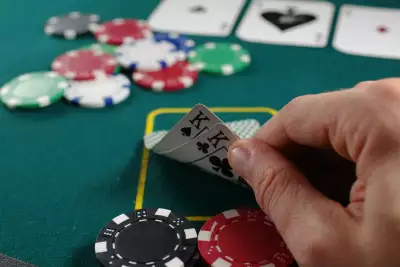
Nobody tilts quite as hard as someone who just realised the game was rigged against them before the first card was dealt. Not rigged by cheaters. Rigged by their own setup choices, made in the lobby and the cashier, weeks before they knew what they were doing.
Here are the three places new players bleed money before a single hand is played.
The Free-App Trap: You're Practicing the Wrong Game
Free poker platforms are genuinely useful for learning hand rankings and basic mechanics. The problem starts when players use them as a training ground for real-money decisions.
In free play, nobody folds. There's nothing to lose. So you get accustomed to calling wide, seeing rivers you should never reach, and treating bluffs as something that happens to other people.
These aren't bad habits in a vacuum. They are specifically the habits that real-money opponents will punish you for, repeatedly and expensively.
The fix is simple: treat free play as a mechanics tutor, not a strategy lab. Use it to understand how poker online flows - how betting rounds work, what position means. Then stop.
The moment you want to test whether your reads are accurate, you need stakes that make folding feel like something. Even micro-stakes real money is a more honest training environment than any free app, because the players across from you have a reason to play correctly.
Legal Walls You'll Hit Mid-Deposit
Online poker in the United States is a patchwork of state-by-state regulation, and it changes. States that allow licensed real-money play sit next to states where it remains restricted - and the line isn't always obvious from a casual search.
The result: players sign up, get excited, make a deposit, and discover during withdrawal that their state wasn't supported. Some find out from a declined transaction. Some find out from customer support after waiting a week.
Marketing language is broad. Licensing restrictions are buried in terms and conditions. Players reasonably assume that if a site accepted their deposit, it must be legal where they are.
Check your state's regulatory status before you deposit anything, not after. Look at official state gaming commission pages, not just the site's own FAQ. Finding out later is far more painful than confirming first.
Rake: The Cost You're Not Counting
This is the one that quietly destroys the most players, because it's invisible until you do the math.
Rake is the percentage the house takes from each pot in a cash game - typically between 3% and 10% depending on the room and stakes. At lower stakes, it can be proportionally brutal.
Picture a $0.10/$0.25 game where a contested pot reaches $8. A 5% rake pulls $0.40 off the top. That doesn't sound like much until you're playing 30 hands an hour, with a meaningful portion of every pot trimmed before you touch it.
Players focused on whether they made the right call on the river don't think about this. They should think about it first.
A solid, winning strategy in a high-rake room can become a break-even or losing strategy once the house cut is factored in. Your edge has to clear the rake before it becomes profit.
The fix has two parts:
- Compare rake structures before choosing a room. Most reputable sites publish their rake schedules.
- Factor in what the room gives back through its rewards program. A room with slightly higher rake but a well-structured rakeback system can net out better than a nominally cheaper room with no loyalty return.
GGPoker's Ocean Rewards program, for instance, scales with volume and returns value in a way that serious players factor into their site selection. That's not marketing language; it's the math of sustainable play.
For tournament players, the equivalent is the rake-to-prize-pool ratio, listed as the entry fee split - for example, $100+$10 means $100 goes to the prize pool and $10 goes to the house. The WSOP sets a useful benchmark: buy-ins across the series range from $400 to $10,000, and the fee structure at that level is publicly documented. Knowing what a fair rake looks like helps you spot an unfair one.
One More Thing Worth Saying
None of these mistakes are about poker skill. You can be a genuinely improving player - studying ranges, position, pot odds - and still lose money because you're grinding on a platform that teaches bad habits, locked out of proper withdrawals, or stuck in a rake environment that quietly eats your edge.
The lobby and the cashier are part of the game. For real money poker, the right room matters as much as the right play. Sort those decisions first, then sit down.
Quick Answers
Why does free poker build bad habits?
Free-play opponents have nothing to lose, so they rarely fold or bluff with any logic. You end up calibrating your reads against behaviour that vanishes once real money is involved. Micro-stakes real play teaches you far more in a fraction of the time.
How do I know if a poker site is legal in my state?
Check your state's gaming commission website directly. Site FAQs and marketing pages often describe availability in broad terms that don't reflect specific state restrictions. Confirm before you deposit.
What should I look for in a poker room's rewards program?
Look for a program that scales with your actual volume and returns value in a form you can use - cash, tournament tickets, or bonuses. A room with slightly higher rake but a generous, transparent rewards structure can outperform a cheaper room with no loyalty return.