Three of Mayfair's most storied gaming addresses closed within six years, and then an American casino group bought the fourth.
The Clermont Club in Berkeley Square went dark in 2018. The Ritz Club followed in 2020. Crockfords, which had been operating in some form or another since 1828, pulled down the shutters on Curzon Street in October 2023.
Genting's statement at the time was candid: high-end London was losing ground to Paris and Milan. The licence has since been earmarked for the Trocadero.
Into this gap stepped Wynn Resorts, which announced its acquisition of Crown London Aspinalls in January 2025. CEO Craig Billings described it as "an iconic asset" in "a global gateway city".
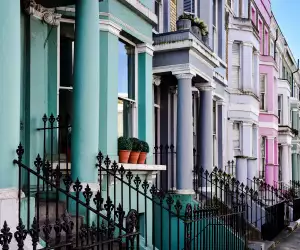
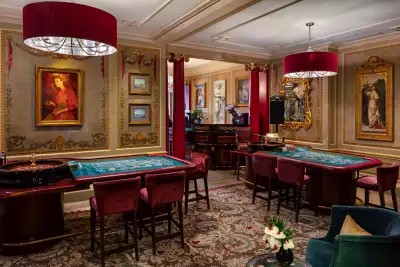
The townhouses at 27 and 28 Curzon Street reopened as Wynn Mayfair in June 2025, with around twenty tables, private salons and a rooftop terrace. What Wynn saw in a moment that had sent others packing is worth understanding.
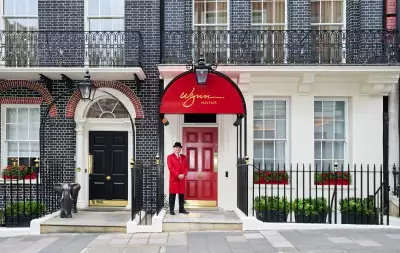
Wynn Mayfair
Andrew Beasley Photography
The Houses That Survived Understood What They Were Selling
The Mayfair private casino is not really a gambling venue. It is a members' club that happens to have a baccarat table. The ones that survived, Les Ambassadeurs on Hamilton Place, dealing cards since 1941, and the Palm Beach, understood that distinction and protected it. Reputation, discretion, swift payment of large wins without interrogation: these were the product. The room was set dressing.
The closures happened because that proposition became harder to sustain in London specifically. Middle Eastern high rollers, who had been the clientele most of these rooms were built to serve, found they preferred the atmosphere elsewhere. Paris and Milan, as Genting put it. London's regulatory and tax environment had made the margins too tight for a room that size playing at those stakes.
Wynn is betting that the brand changes the calculation. It is a name that means something in Las Vegas, Macau and, imminently, Ras Al Khaimah, and the Curzon Street address becomes part of a global network rather than a standalone club. That is a different proposition to what Crockfords was offering at the end.
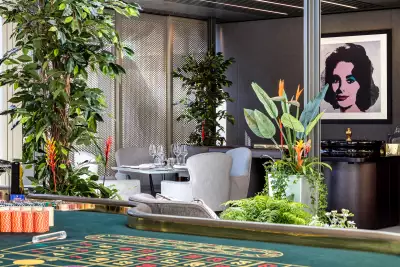
Inside Wynn Mayfair
Andrew Beasley Photography
The City Reader Now Plays in Two Rooms
While Mayfair's rooms were thinning out, a different kind of private club was filling up. Square Mile has tracked how London's casino market has been dividing between land and screen, and the numbers tell the story plainly enough: remote casino, betting and bingo now accounts for 46 per cent of Britain's gambling market by gross yield, against 29 per cent for the land-based sector. The money did not leave. It rerouted.
The City professional who once spent a Thursday evening at Crockfords is not, by and large, spending Thursday at a budget online slots site. The platforms that picked up that audience are the ones that invested in live dealer tables, proper account management and the kind of service culture that makes a large withdrawal feel routine rather than adversarial. The early years of remote casino in Britain were marked by aggressive bonus marketing and slow payouts. What survived the Gambling Commission's reform wave was a more disciplined product.
Verification Has Always Been the Point
The habit of mind that kept a serious Mayfair player returning to the same room was fundamentally one of verification. Is the house properly run? Does it pay? Are the rules consistent? Those questions did not disappear when the game moved online; they became more important, because the landscape is larger and less legible.
The no-deposit offer has become one of the more useful tools for this kind of preliminary assessment. It gives a player access to an operator's actual product before any money changes hands, and the experience of verifying no deposit bonus codes and then using them in practice tells you a great deal about how an operator behaves when the stakes are low and there is nothing to gain from performing. Terms that are clear, spins that credit promptly, winnings that process without obstacle: these are the signals a careful reader learns to look for, exactly as a Mayfair regular once assessed a new room by the quality of its croupiers and the speed of the cage.
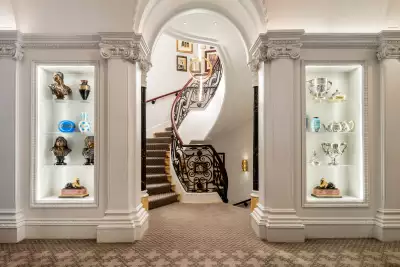
Inside Wynn Mayfair
Andrew Beasley Photography
What Wynn Mayfair Has to Prove
The reopening of Curzon Street is not a nostalgia exercise. Wynn is a hospitality business that builds large-scale resort experiences, and Mayfair is a small but strategically useful London address. The test will be whether the operational standard matches the brand promise over years rather than opening months.
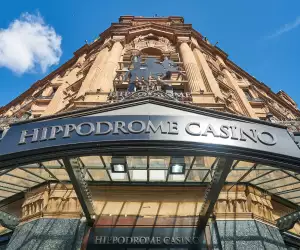
Leicester Square is making its own bid for that audience. The Hippodrome's Simon Thomas argued in 2026 that the area deserves recognition as London's casino quarter, and the Trocadero's transformation will add weight to that claim. Both will be measured on the only standard that has ever mattered in this business: whether they deliver a trustworthy, fairly run experience to the people who show up. That logic holds whether the room is on Curzon Street or a screen.