Thomas Hauser covers everything. Since leaving Wall Street to become a writer nearly 50 years ago, Hauser's extensive bibliography spans autobiography, reportage, fiction and even philosophy.
However he is best known as a boxing writer, his authorised biography on Muhammad Ali widely considered one of the finest books of the sport and the definitive account of its greatest life. He was inducted into the International Boxing Hall of Fame in 2019.
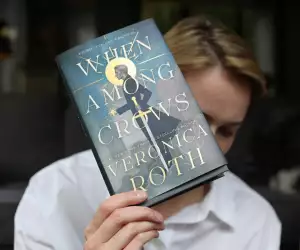
Two recently published titles showcase the breadth of Hauser's talent. There's The Vulture Sport: A Journey Through Boxing, a collection of recent essays exploring the modern sport. And then there's Sherlock Holmes and Mrs Rutledge, a novel that sees the great detective enlisted by an enigmatic widow to investigate the circumstances of her husbands death.
We spoke to Hauser about Sherlock Holmes, Muhammad Ali, the state of boxing today and his own remarkable life.
Square Mile: What inspired you to write a Sherlock Holmes novel?
Thomas Hauser: I write in different genres. I started writing 50 years ago. I left my job as a litigator with a large Wall Street law firm to write. I walked out of the office on 15 April 1977 at 6:05pm, and leaving law to write was the best fundamental decision I've made with my life.
The first book I wrote was Missing, which was a true story made into the feature film with Jack Lemmon and Sissy Spacek. I've written a philosophy on moral values, and obviously I was Muhammad Ali's official biographer. Two of my favourite genres are historical fiction and detective stories. I had written three novels that touched on historical fiction – about Mark Twain, Charles Dickens, and Beethoven. I had also written three detective stories about a New York City police detective named Richard Merritt.
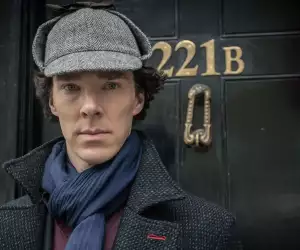
I decided to blend the two and write about Sherlock Holmes. I really didn't know where I was going when I started conceptualising the book. I knew I wanted to write about the traditional Holmes – as you know, Holmes has been recreated as everything from someone fighting the Nazis for England in World War II to a James Bond-type superhero. What I had in my head when I started was just one line: "She is a beautiful woman, Watson." Those were the words with which I was going to start the book. Very early on, I realised it worked much better as "She is an unusual woman, Watson", because it made Mrs Rutledge much more interesting if she was unusual rather than beautiful.
In terms of the love story, I knew from the start that was something I wanted to do, and then it grew as the character evolved. One of the notable things about the Sherlock Holmes stories is that, with the exception of Irene Adler in 'A Scandal in Bohemia', the women are almost all submissive creatures – victims, for the most part. Mrs Hudson was his landlady, and a landlady was a businesswoman, but still there are virtually no strong female characters in Holmes. I wanted to create a strong woman character in Mrs Rutledge. As the book goes on, Holmes and Mrs Rutledge both change enormously, and that relationship evolves each of them.
Except for Holmes and Watson, the characters are not particularly well developed, and the stories really fail as detective procedurals
SM: As a writer taking on an iconic character like Sherlock Holmes, how do you know what rules you have to follow and what rules you allow yourself to break?
TH: First, Holmes is now out of copyright. The Sherlock Holmes Trust very vigorously enforced copyrights – and actually went over the line on numerous occasions, asserting claims for certain characters long after those claims by most counts had expired. All those copyright claims are now gone, so writers can feel free to interpret Holmes and Watson the way that they want to.
Holmes is one of the most wonderful, beloved literary creations we have. When I went back and read the original Holmes canon for this book – all 56 short stories and the four novels – I was surprised at how badly written they are by today's standards. Except for Holmes and Watson, the characters are not particularly well developed, and the stories really fail as detective procedurals.
One of the fun things about reading a detective book is following along and forming your own opinions. Agatha Christie did that brilliantly: in the end, the murderer was the one person who couldn't possibly have done it, but the way she explains it makes perfect sense. With Holmes, you can't follow along. There are scattered facts, and at the end Holmes says, "I have solved the mystery," and tells you things you couldn't possibly have known.
For its time, it was brilliant writing, but it hasn't held up that well over the ages, nor has Doyle's other writing. Doyle killed off Sherlock Holmes because he considered himself a great writer – he thought he was the next Charles Dickens and felt he wasn't getting enough credit for his other fiction. But apart from the public outcry, he couldn't make any money, so he had to go back to writing Sherlock Holmes to make ends meet.
I'm actually working on a sequel now. I had so much fun writing Sherlock Holmes and Mrs. Rutledge that I decided to write a follow-up. For this new book, I'm reading most everything else Conan Doyle wrote, and to be honest, most of it is dreadful. There are some nice phrases and thoughts, but it is not like reading Charles Dickens.
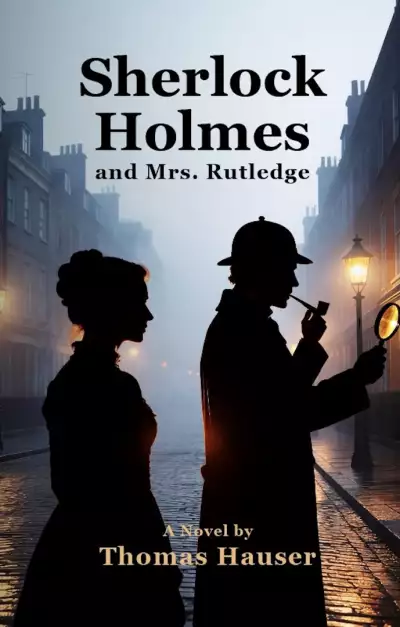
Sherlock Holmes and Mrs Rutledge
SM: Do you have a favourite Holmes story?
TH: I think my favourite Holmes story is 'A Scandal in Bohemia'. To me, that might be the best. It also has a reasonably complex female character in Irene Adler, and of course it's the introduction to Holmes for many people.
SM: You have two mysteries. The first half is a classic Agatha Christie-esque body in the study, and the second half is darker and more gothic. Was it a conscious choice to pit those two styles against each other?
TH: I had Sherlock Holmes and Mrs. Rutledge divided into two parts. The first part takes place in 1891, and the second part takes place 15 years later in 1906. I had originally written what is now Part One as a self-contained novella. When I finished it, I knew immediately that I wanted to pick up the story again and write further.
But Part Two really only made sense if a reader had read Part One, which you can't guarantee with a separate book. So I decided to join them together as one book. I'm quite pleased I made that decision because it works much better this way. They are two very different murder mysteries, and the tie that binds them is the evolution of the relationship between Sherlock Holmes and Mrs Rutledge.
SM: You've also written about Mark Twain, Charles Dickens, and Beethoven. What attracts you to these figures?
TH: I wrote a murder mystery called The Beethoven Conspiracy, which is set in the 1980s but involves a bit of historical research and recreation for the plot to unfold. Whenever I'm working on fiction, the characters are always rattling around in my brain. Most recently, it's been great fun to walk around with Sherlock Holmes and Dr Watson speaking to me constantly.
But it was also a pleasure to walk around with Beethoven's music playing in my head, and to be talking with Mark Twain and Charles Dickens. Writing enables me to read all of Mark Twain and Charles Dickens, and to listen to Beethoven with musicians from the New York Philharmonic Orchestra as my guides. I'm very fortunate to have that life and those opportunities.
SM: When you're out in public, do you ever find yourself doing the classic Holmes deduction on the subway – looking at someone's worn shoes and thinking they've fallen on hard times?
TH: Not really. I people-watch on the subway, but I tend not to make assumptions about them, because very often those assumptions can be wrong.
When I was in my late 20s, lawyering on Wall Street, I was on the subway wearing my grey pinstriped lawyer suit. I was looking across the carriage at a young man about my age who was poorly dressed and looked like he was going through hard times. I allowed myself a certain measure of superiority in my thoughts.
While I was thinking this, he got up and gave his seat to an old woman standing in front of me whom I hadn't even noticed. I said to myself, "Okay, that's a lesson for you – two lessons, actually. Number one: don't make assumptions about other people. Number two: you might give up your seat from time to time."
Some of the best people I've met in my life are in boxing, and many of the worst people I've met are in boxing, but it's never boring
SM: Why did you leave Wall Street law to become a writer?
TH: I got bored. I was with a firm called Cravath, Swaine & Moore, which was one of the prototypical great Wall Street law firms. I was working on a case involving whether allowance for funds used during construction was properly capitalised as an item of other income on the consolidated balance sheet of the Detroit Edison Company. I realised that even though tens of millions of dollars were involved, I didn't care.
I was surrounded by smart people at Cravath, the work was intellectually challenging, and it paid well, but I just didn't want to do it anymore. I looked at other legal jobs – the United States Attorney's Office, the American Civil Liberties Union, corporate jobs, foundation jobs – and realised I just didn't want to practise law anymore.
I had always loved writing term papers in school and briefs as a lawyer, and I was pretty good at it. So I said, why don't I take a year off, write a book, see if I enjoy the lifestyle, and see if I can support myself doing it? I had incredible beginner's luck. The first book I wrote was titled The Execution of Charles Horman, which was made into the movie Missing, directed by Costa-Gavras and starring Jack Lemmon and Sissy Spacek. It won an Academy Award. Foolishly, I said to myself, "This is fun! You write a good book, it's made into a feature film, and it's translated into 20 languages." Little did I know that's not really how the business works. We do this because we love it.
I write in many different genres, which in a way has precluded me from having greater commercial success. The most successful authors tend to write the same type of book again and again – John le Carré wrote spy stories, Stephen King does horror. I'll write a non-fiction book like Missing, and then decide to write a love story set in a Wall Street law firm, but the editor who wants non-fiction doesn't want the love story. Then I'll decide to write a philosophy on moral values, and the editor who liked the love story doesn't want that. With each book, you're almost starting over, but that has enabled me to expand my boundaries.
In 1983, I decided to write a sports book. I couldn't just go into Yankee Stadium and talk to the New York Yankees, or go into Madison Square Garden and talk to the Knicks. But I could go into any gym in any city in the world and talk to the fighters training there. That led to my writing The Black Lights, about the sport and business of boxing, which led to my relationship with Muhammad Ali. I've been writing about the contemporary boxing scene for 40 years now. I love it, but to balance my existence, I also write books like Sherlock Holmes and Mrs. Rutledge.
SM: Were you a fan of boxing before you wrote The Black Lights?
TH: When I was young, my favourite sports were baseball, American football, and basketball, in that order. I was a casual boxing fan. Cassius Clay won a gold medal at the Rome Olympics in 1960 when I was 14 years old, and I was captivated by him. I became a great Muhammad Ali fan, but I only had a fan's knowledge of the sport.
Over the years, the more I got to know boxing and become friendly with many of the important figures in it, the more I came to appreciate it. Some of the best people I've met in my life are in boxing, and many of the worst people I've met are in boxing, but it's never boring. To move from generation to generation and spend time with Muhammad Ali, George Foreman, Joe Frazier, Larry Holmes, and Lennox Lewis – who is a wonderful man in addition to being a wonderful fighter – is a real privilege.
I'm not as plugged in to the contemporary boxing scene as I once was. I knew Don King and Bob Arum quite well, and while I know Eddie Hearn and Frank Warren, it's not as close a relationship. While I know the fighters today, I don't know them on the personal level that I used to. I also think boxing is becoming much less interesting these days, unfortunately.
I will never have another project that brings as much joy to my life as the Ali biography did
SM: Did you attend the Rumble in the Jungle? I remember seeing you in the documentary When We Were Kings.
TH: No, I was lawyering on Wall Street back in the 1970s. My first boxing writing was in 1983 with The Black Lights, which focused on the career of Billy Costello. After The Black Lights, I stepped away from boxing for a bit, came back with Ali, and then in 1999, when the internet became a force, I began chronicling the contemporary boxing scene, which I've done for a quarter of a century now.
In addition to the Ali biography and two novels about boxing (Mark Twain Remembers and Waiting for Carver Boyd), my greatest contribution to boxing might be chronicling the contemporary scene in long-form essays for 25 years. Every year or two, those essays published in outlets like The Guardian and The Ring are compiled in book form. The next volume is coming out this month, titled The Vulture Sport. It features a photo of Muhammad Ali and Joe Frazier in the ring in Manila on the cover.
With these articles, I don't have to be first – I want to be best. Five or 10 years from now, if somebody wants to read one definitive article about Tyson Fury versus Anthony Joshua, they can read my article, which puts the whole thing in perspective.
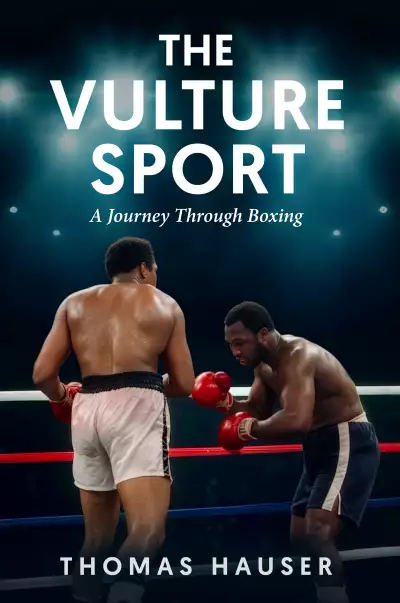
The Vulture Sport
SM: How did you come to write the Ali biography? That must have been the most coveted gig in sports journalism.
TH: Pure luck! The Black Lights came out in 1985. In 1988, I was working on a book about Chernobyl with Dr Robert Gale, the bone marrow transplant expert from UCLA Medical Center whom Mikhail Gorbachev brought over to the Soviet Union. As I was finishing that book, I got a call from Robert Gottlieb, the head of the literary department at William Morris. He asked, "You wrote The Black Lights about boxing, and you wrote Missing, so you've had political involvement. Would you be interested in working with Muhammad and Lonnie Ali on what we hope would be the definitive Ali biography?" I said yes.
I met with Muhammad and Lonnie in New York. Muhammad was my boyhood hero, but this was a point in his life where he was starting to have physical difficulties – he was 46 years old. I wasn't sure I wanted to do the book if it was going to depress me for two years. Lonnie suggested I come out to their farm in Berrien Springs, Michigan, so we could spend some time together and see if it was a fit.
The first night I was there, it was hard to make eye contact. I woke up the next morning, went down to the kitchen, and Muhammad was sitting there. He asked, "Do you want Corn Flakes or Granola?" I said to myself, "Hauser, loosen up. Treat him like another person." I will never have another project that brings as much joy to my life as that one did. Not only the time I spent with Muhammad, but the range of people I interviewed for it, and sitting on the sofa in my living room with him watching old VHS tapes of his fights. I am really privileged that I had that experience.
SM: You've met him once before during his prime, right?
TH: I had actually met Muhammad Ali when I was an undergraduate at Columbia. I had a weekly radio show called Personalities in Sports. Right before Muhammad Ali fought Zora Folley in 1967 – just before he refused induction into the army – I took my bulky tape recorder down to the basement of Madison Square Garden where he was training. He glowed; he was glorious.
I had heard that Muhammad would spend as much time with a kid from a high school newspaper as he would with a boxing writer for The New York Times, and I know that's true because I was one of those kids. I taped a 10-minute interview with him, but that was the only time I had met him before the biography project.
I asked Joshua how he felt about Brexit, and this look came over his eyes where he clearly didn't want to say anything political
SM:That piece you wrote for The Guardian about rewatching the Thrilla in Manila with Ali was deeply evocative. That fight and the Rumble are almost mythic events now…
TH: Muhammad during his glory years was probably one of the few people on the face of the earth who was as famous as Sherlock Holmes.
SM: And they both had notable comebacks…
TH: Conan Doyle was actually a boxing enthusiast himself. He claimed he boxed a bit as a medical student – though I suspect it was just sparring, and he was a bit of a blowhard! Ten years after Jack Johnson fought James Jeffries, Doyle wrote that he had been asked to referee the fight, but decided not to. He wasn't actually asked to referee it; Tex Rickard had floated the question of who should referee to spur interest, and the editor of a New York newspaper suggested Conan Doyle.
Doyle wrote a bit about boxing in the Sherlock Holmes stories, but it was very superficial. He wrote a short story called 'The Croxley Master', which was quite good and evocative. But Doyle was also a racist, and that came to the fore when Battling Siki was signed to fight the British heavyweight champion Joe Beckett in England around 1921. The British Home Office refused to give Battling Siki a visa because they did not want an African coming into England and fighting a white man. Doyle came down on the wrong side of history on that issue, writing an impassioned letter to a Manchester newspaper supporting the ban.
SM: You interviewed two US presidents for the Ali biography – Gerald Ford and Jimmy Carter.
TH: Yes, I interviewed Jimmy Carter, who sent Ali on that ill-fated journey to Africa to gather support for the US boycott of the Moscow Olympics. I also interviewed Gerald Ford. After Ali beat George Foreman to reclaim the heavyweight championship, Ford invited Ali to the White House – which would have been unheard of six years earlier.
Ford told me he did it because it was a post-Watergate presidency, with horrible wounds from Vietnam and race riots, and he thought, "What better way to begin the process of healing than by inviting Muhammad Ali to the White House?" Then he paused and added, "And I always wanted to meet Muhammad Ali." Later on, I met Bill Clinton through Muhammad Ali, and my relationship with Ali also led me to meet Donald Trump.
SM: Ali had the courage to speak truth to power, which feels increasingly rare. There are very few politically outspoken boxers now.
TH: Nobody that I can think of. While England was getting ready for the Brexit vote, I was sitting with Anthony Joshua in a small press sit-down. I'm a big Anthony Joshua fan – he strikes me as a very nice man with good values.
I asked him how he felt about Brexit, and this look came over his eyes where he clearly didn't want to say anything political. He parried it quite well and asked, "Well, what do you think?" I said, "I'm against Brexit. What do you think?" But he wouldn't answer the question. You can't blame him. If you worry about what people say about you on social media, you can't have a life.
When Sherlock Holmes and Mrs. Rutledge came out, someone posted: "Hauser is a fraud. The first half of his book takes place in 1891, and everybody knows that in 1891 Holmes was in hiding from Professor Moriarty's henchmen." I didn't bother responding, but I thought: "Hey guy, do you understand that Sherlock Holmes isn't real?"
You should take the same amount of care for an article you're writing for a small website as you would for The New York Times
SM: Do you think boxing will exist in 50 years' time as we currently know it?
TH: There will always be boxing, but what it will be like as a sport and a business, I don't know. Things are moving so quickly. Boxing has been transformed by social media. If you made a list of which fighters have made the most money from boxing in the past few years, you'd have Tyson Fury, Anthony Joshua, Canelo Álvarez, and Jake Paul. I have a great deal of respect for Jake Paul turning himself into a legitimate club fighter, but the idea that if you ask 20 people on the street to name an active boxer, the name that gets the most mentions might be Jake Paul – that does not speak well for boxing's future.
SM: What are the biggest lessons or pleasures you've derived from 50 years of writing?
TH: It starts with challenging every word you put on paper: make sure it says exactly what you want it to say. Decades ago, Lonnie Ali was asked to write something about Muhammad, and she showed me a draft that started: "Muhammad is one in a million." I told her: "No, Lonnie, Muhammad is not one in a million. If he were, there would be 350 more like him walking around the United States. Muhammad is sui generis. Muhammad is unique."
Second, a reader only knows what you've put on paper. When I wrote a spy story set in the mountains of Nepal called Hannuman's War, I had 55 rejections from publishers before finding a home for it. One day I received two rejection letters: one said the book needed more Nepalese politics, and the other said it needed less Nepalese politics! But several editors mentioned they didn't like the main character because he seemed surly and unpleasant. I realised that while I knew how much he was suffering in my head, I hadn't put that down explicitly on paper. Once I made his suffering clear on the page, I got a publisher.
Whenever boxing writers ask me for tips, the first thing I tell them is: "If there's free food, grab it!" More importantly, you should take the same amount of care for an article you're writing for a small website as you would for The New York Times, because everything you write becomes part of your creative legacy. If you're writing about real people in non-fiction, you have to remember that these people have feelings. You can be critical, but you have to be fair, and you have to be willing to stand by what you write.
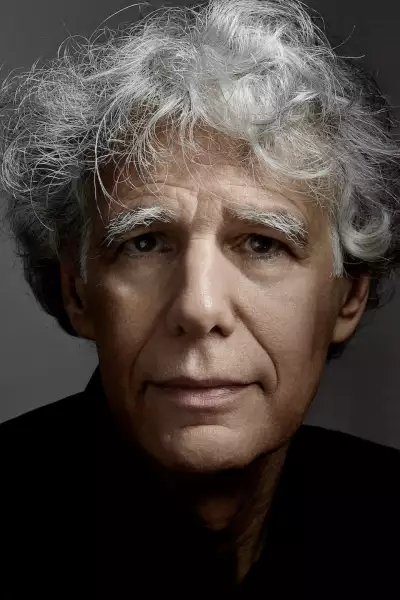
Thomas Hauser
SM: Presumably you’ve written articles that really pissed people off? .
TH: Yes. Several years ago, I wrote an article saying I thought Anthony Joshua should retire from boxing, which I still believe. Eddie Hearn was not pleased with that and went off on me publicly, saying I was a senile old man whom nobody pays attention to anymore.
Eddie Hearn is a very good promoter, but he's not the one getting hit in the head. Anthony Joshua himself spoke at an Under Armour event that same week and said that if he is healthy and happy at 50 with no ill effects from boxing, that's a legacy. I would love it if Anthony stays healthy. Getting hit in the head isn't good for anybody, but it's particularly troubling for Anthony because he isn't reacting to punches the way he once did, and he already has generational wealth.
The fight that did the most damage to him was the Klitschko fight at Wembley. He climbed off the canvas to knock out Wladimir Klitschko in an enthralling fight, but it took something out of him. When you walk through fire like that, it either makes you stronger or you realise you never want to go through that level of pain again. Out of admiration and respect for him, I wish he would retire.
SM: I assume you favour Tyson Fury over Joshua?
TH: It's a very interesting fight because Tyson Fury isn't what he once was. And Anthony hits very, very hard. You're talking about a fist fight, anything can happen. My sense is that Fury boxes well enough that he won't get hit by AJ's best punch. Over time he will break AJ down and AJ will crumble. But I could be wrong. I've been wrong before.
When I wrote an obituary for Ali, where you usually put the date of birth and death, I wrote: Muhammad Ali, 1942 – Forever.
SM: What are your thoughts on Zuffa Boxing?
TH: I am very disturbed about what has happened to boxing in recent years. My sense is that the big Saudi initiative is winding down. It has lost hundreds of millions of dollars, which the Saudis don't have to spend on sports anymore; they've just cancelled the LIV Golf tour. Now, Zuffa Boxing is different from Riyadh Season in that Zuffa was always constructed to run in the black. To the extent that Zuffa Boxing has had fights that lost tens of millions of dollars, like Canelo against Crawford, that was underwritten by Sela.
So Zuffa now has a certain war chest from Paramount. They're obviously pushing very hard – and will probably be successful – in amending the Muhammad Ali Boxing Reform Act to strip fighters of many of the rights that they have. I don't know how Zuffa will play out. The Saudis now own 60% of Zuffa, and TKO owns the other 40%, although I wouldn't be surprised if TKO bought out that 60% Saudi interest.
My sense is that Zuffa Boxing will not do well in the UK, because boxing is thriving there and you've got very good promoters like Queensberry and Matchroom. Over here in the US, boxing is not doing well, and it might be that Zuffa will be able to con people into thinking that what they're doing is real boxing. Let me rephrase that: it's real boxing, but it's not elite boxing for the most part right now. We'll see what happens.
Two things have hurt boxing enormously. One is that you really don't know who the champions are. In boxing, there are innumerable champions, and it's hard for the public to know who the real champions are. Don't tell me that the Zuffa champion is going to make a difference, because it won't. The Zuffa champion will be a phony champion for the most part – not all of them, but most of them will not be elite champions.
The other thing is that boxing has been taken off free television. Now, to really keep current in boxing, you have to pay a huge amount of money to watch most of the fights you want to see.
SM: What other projects are you working on?
TH: The Vulture Sport is coming out in book form later this month on Amazon, compiling everything I wrote about boxing over the last year and a half, plus a previously unpublished essay on the 10th anniversary of Muhammad Ali's death regarding his meaning in the age of Donald Trump. My email address is public – thomashauserwriter@gmail.com – and I answer every email I get if readers want to open a dialogue about these things.
I'm also working on two new boxing book projects. One is a 100,000-word book of boxing quotations categorized by subject matter and speaker. Second, I was recently introduced to a treasure trove of 240 previously unpublished photographs from the Thrilla in Manila, taken by L.O. Riley for the Nation of Islam newspaper Muhammad Speaks. I'm putting those together for a coffee-table photo book that gives full credit to both Muhammad Ali and Joe Frazier.
SM: What is your favourite boxing quotation of all time?
TH: There are so many. Muhammad Ali was the most quotable athlete of all time. One story that comes to mind: Ali and I were at a fight card at the Kingdome in Seattle, and a young lightweight club fighter with a 5-3 record came up to him.
Meeting Ali was the high point of this kid's life. He said, "Mr Ali, when I'm walking to the ring for a fight and I get scared, I say to myself: I'm Muhammad Ali, I'm the greatest fighter in the world, and no one can beat me." Ali looked at him and said, "When I was going to the ring for a fight and I got scared, I said the same thing."
When I wrote an obituary for Ali, where you usually put the date of birth and death, I wrote: Muhammad Ali, 1942 – Forever.
The Vulture Sport and Sherlock Holmes and Mrs Rutledge are both available from Waterstones now