By the end of his 2023 ‘The Sonder Tour’, Irish singer-songwriter Dermot Kennedy had started to fall out of love with touring. Performing live in front of crowds was everything he had ever dreamed of but it was becoming too exhausting and relentless.
Apart from rare live appearances, joining the likes of Niall Horan, Zach Bryan and Noah Kahan on stage, Kennedy took an extended break to rekindle that burning passion he had for performing back when he was busking on the streets of Dublin. During his hiatus, he returned to rural Ireland and drew inspiration, energy and strength from his home country.
With a new outlook on music, Kennedy recorded his third studio album, The Weight of the Woods, his most assured work yet. The artist shook off his imposter syndrome and started to trust his own abilities, striving to have the same carefree attitude he had when he was 18.
In support of his album, Kennedy will also embark on his biggest headline tour to date, including a huge show at London’s O2 Arena on 5 June.
Square Mile: What did you want to express with The Weight of the Woods?
Dermot Kennedy: The first word that comes to mind is “burden”. I’m really proud of and love where I’m from but I have this community of family and friends who I grew up with, people who I’m so close with and who I’d be lost without. I see myself as a voice for all of us.
Sometimes, people assume that when I’m on stage, I’m only singing about my own experience and my own life and this heartbreak and that thing. But sometimes I’m singing from the perspective of my mother, father or sister. It doesn’t make it less powerful; in fact, it can make it more powerful, as I feel like I’m singing for all of us, which is a lovely feeling.
At the same time, doing what I do comes with its own challenges and it can be a burden at times. I’m reluctant to frame it as this perfect, flawless thing because sometimes it can be a bit heavy.
I felt like I had to earn it. Album one and two were me earning it – and album three is me claiming it
There’s a lyric in the title track which says, “Let me add to the weight of the woods.” I’m quite drawn to the idea of someday, whenever I die, just bring me up there and let me be part of the forest. I’m drawn to things that make me feel small and insignificant. This career is a funny one in the sense that you’re constantly trying to get attention – and I’ve never been like that since I was a child. I’ve always been shy so it seems contrary to my nature to try to shout as loud as I can and get as much attention as I can.
The music is a lovely buffer for that because I believe in music so much, and it’s such a powerful thing so I’m happy to shout about that. But sometimes I like the idea that I’m just passing through. The songs mean the world to me but I know they don’t mean the world to the rest of the world.
SM: Does writing from different perspectives help bring more out of you creatively as a songwriter?
DK: Of course. When it becomes quite powerful is when it’s something we’ve all shared, maybe as a family or a friend group. I would never discuss these things with the people I’m talking about; it’s an unspoken thing, but it’s quite beautiful.
SM: The forest is significant in Irish folklore. What kind of energy do you get from nature when you’re back in Ireland?
DK: I never want to sound corny or as if I’m some giant celebrity, but I think that oftentimes, the more successful you get, the world feels a lot smaller. There’s something about the forest, I just want it to feel infinite. There aren’t many places in the world where I can get outside my own head, and I love that in the forest, you can see trees all around you. That’s when I feel peaceful. I want to be in a giant sprawling forest. I like feeling lost because that’s what has always appealed to me since I was a kid.
When you get a career in music, it comes from all this lovely inspiration and these feelings that you had when you were a kid. But the way it’s set up as a business and touring, the feeling of being happily lost goes away a little bit.
SM: Do you like to start recording your albums in Ireland as a launch pad for creativity? Or does it just depend on where you are based at the time?
DK: In the past, it was dependent on where I was. But I don’t think that’s the best thing for the music. It can’t be. I’ve had albums where track three was made in LA and track four was made in London and the next track was made in Dublin.
It’s hard to make something that’s consistent and has a story and an energy to it because you’re picking up in different places. It doesn’t feel totally natural to me.
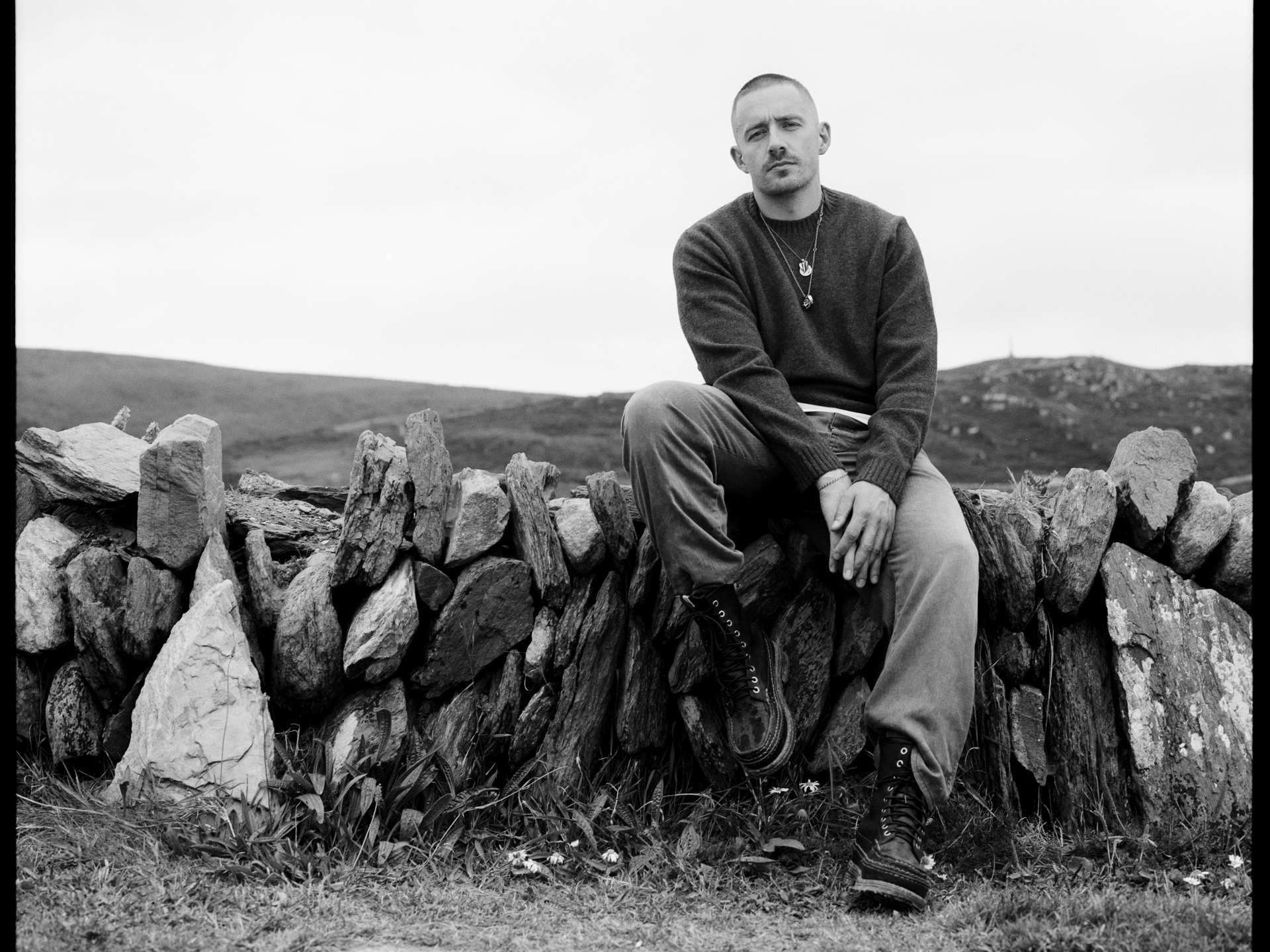
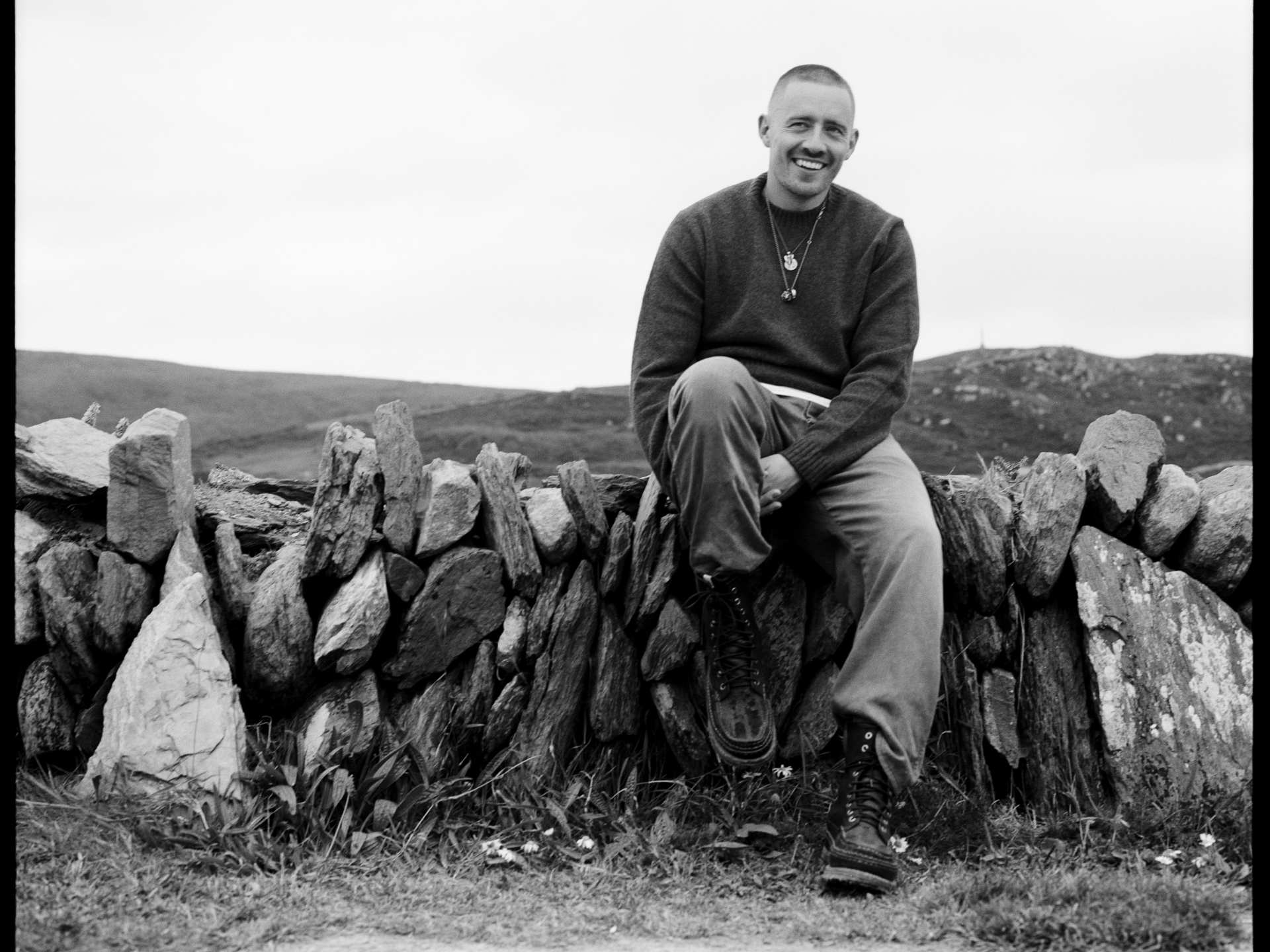
This time, Ireland was the first place we started writing the songs and where we shot all of the artwork and everything you see around the album. Home is very important to this one. It’s all the things which are hard to explain, it’s how you feel in your body and it’s how your mind is at ease – and good thoughts come from that.
In some ways, there are two ways you can write songs. You can try and be clever and make songs that might experience some degree of success. Or you can get to the real, beautiful stuff and wait for it to show up – and really just do what feels right in your body and soul. And that’s what we got to do this time.
To some degree, I felt like I had to earn it. Album one and two were me earning it – and album three is me claiming it.
SM: Usually, labels will push for new releases. It must be a rare gift to have that time and space to let this inspiration come.
DK: Absolutely. I’m lucky because some people won’t be given that rope. Although lucky might not be the right word, as I waited a long time to sign a record deal.
SM: How important is it as a songwriter to give yourself this time to let the inspiration come naturally?
DK: It was definitely important. I finished a tour in December 2023 in Australia. It felt like we had been on tour for five or six years straight and it felt relentless and exhausting. To be honest, it felt the opposite of what we were just talking about. That feeling of being settled in your body and having the right energy, I didn’t have that anymore because touring threatens that and can chip away at that a little bit. I just needed to take some time.
I took an extended break for the first time in ages and there were a few moments in that year where I’d jump on stage and sing a song. I jumped on stage with Noah Kahan and did a song in Dublin and I did the same with Niall Horan. I went to both shows with my dad. This was the longest I had been away from touring since I started and he asked, “Do you miss it?” And I was like, “Not at all!” At that moment in time, I did not miss it.
We did a small, intimate run of shows in the autumn, which was a beautiful thing – and that was the nicest way to reintroduce myself to the touring machine. Now I feel as though I do miss it, and I’m excited to get stuck into everything again.
SM: What did you learn from this break?
DK: I had gotten to a point where I needed time away. You learn so much. When you start a career in music, you go into it thinking you know how it’s going to be. I don’t mean this in a negative way, but you’re just so surprised by everything. For me personally, it’s a journey to get back to the headspace I was in before I had a career – one where you feel quite easily inspired.
SM: What didn’t you miss about touring? The relentless nature of it all?
DK: Yeah, I think so. Playing live is a sacred thing and it should be cherished. It should have a different energy every day so you don’t feel like you’re phoning it in. Also, you have to look after people. I’d have booking agents and managers asking me, “Are you OK?” Yes, I’m OK but I’m not up at 6am unloading the truck.
It’s my tour so I need to be conscious of how everybody is doing. It’s exhausting for everybody. To be honest, I probably get a very sweet deal as I do a soundcheck and then play a gig for 90 minutes. You have to consider everybody in these situations.
SM: This album has a refreshed approach to the songwriting. What was different about this process?
DK: I just feel more confident. Music is a funny business because it’s all opinions. You are in these situations where you are writing music and you’re in rooms full of opinions. What was interesting for me to learn was that oftentimes it’s just whoever shouts the loudest and I’ve been a quiet person my whole life, so I’m never going to be the one shouting or giving orders. I like to work quietly and gently.
It took me until album three to realise that I can just trust myself. There have been so many things in the last ten years that I realised I was right about this, or I should have trusted my gut because it would have worked out better than I wanted it to. It’s taken this long to get to a point where I know what I’m doing, I don’t feel like a fraud anymore and I can do what I want.
It’s a refreshed approach because it was me getting back to writing songs like I did when I was 18 and I didn’t really give a shit what anybody thought.
SM: Did this give you space to experiment with different sounds? I really enjoyed the classical elements on the opening track Funeral and ‘Endless’.
DK: I studied classical music for three years in Ireland, and that’s the choir from that university. They’re incredible and one of the best choirs in the world. What I was talking about with trusting myself creatively and knowing that I know best, ‘Endless’ is a good example of that.
That song could be built up and could have drums and everyone would be talking about its potential. But, no, I feel like it’s most powerful if it’s just violin, vocals and trumpet. That feels like the most potent version of that song to me. Another nice thing – I have Gabe Simon to thank for an awful lot of this – is that we didn’t do 500 versions of each song. It felt like if it carried the right energy, then it was the right version. That was important in the way that I sang the songs, too.
I would sing them a few times until it wasn’t crap, but I wasn’t singing the song 50 times and trying to find the perfect syllable at the perfect moment. Sometimes, if you do that, then you get to the point of diminishing returns and it doesn’t get a whole lot better. Confidence and trust were the new approaches in terms of my production.
It’s very important to have moments that are super intimate and I want my shows to be like this too, almost awkward in their intimacy
SM: Exactly. The good thing about this genre is that it’s personal, so it can feel natural and not too polished.
DK: It’s tough. Some people might have the ability to have this rare nugget of an idea and then flesh it out. People think that acoustic me is the best version of me but I’ve songs that have huge arrangements like ‘Lost’ and ‘Without Fear’. It feels as though they benefit from everything that’s been added to them, so you have to be careful.
One word that I’ve always been really determined to have in my music is ‘dynamics’. It’s very important to have moments that are super intimate and I want my shows to be like this too, almost awkward in their intimacy. Then also have moments that are huge, euphoric and as loud as you can play. All the acts that inspired me growing up did that. I was determined to capture that.
SM: I’m excited about your upcoming tour. How are rehearsals going and what can people expect from the shows?
DK: I think what people can expect is very exciting because if I think about this album, it feels like a lovely landing point between albums one and two. It feels like a balanced version of everything I’ve done thus far. The show can be a similar thing.
The tour we did in the autumn was extremely beautiful. I used to dream of playing in big, ornate theatres. To be able to do that was a dream. Now we are at the point where we are talking about arenas and in Ireland, we are talking stadiums.
It’s incredible, but at the same time, I’m not trying to lose that intimacy. I’m trying to set the show up in such a way that the people who loved the intimate tour don’t feel like they don’t have that feeling again. It’s very achievable.
With what I was saying about dynamics in music, I think you can have both. You can have the acoustic moments playing in front of 50,000 people and if you capture the right feeling. At the same time, you can have fireworks going off with the biggest musical moment in your life.
SM: You also established your own festival, Misneach. [Launching on St Patrick’s Day.] Why was this something that was important to you?
DK: It’s important to me because all over the world, everybody talks about St Patrick’s Day. Everybody thinks it’s great and everyone loves celebrating it. Everybody loves Irish culture, but at the same time, in all these places with huge Irish communities, [on St Patrick’s Day], apart from a small parade, people essentially just drink all day.
We are constantly talking about how proud we are of Irish culture and Irish music. People love saying we punch above our weight with the music we make and as actors, authors and poets – and that’s true – but in my mind, we need it to keep happening. The Irish music scene is a very exciting thing and it’s stronger and more vibrant than ever.
If I’m in a position where I can sell tickets and get 25,000 people into a park and then also bring 10-12 Irish artists, who I think are brilliant and people might not have heard of, then that’s a lovely thing to chase after. The potential of it is huge, and I’m very proud of where I came from and I’m very proud of every time I travel around the world being an Irish artist.
I was lucky enough when I was coming up that people like Glen Hansard and other artists would give me opportunities and be very kind to me, so it wouldn’t be the right thing to do if I didn’t try my best to help other people out as well.
It’s crazy for me if the first thing I ask is, “What am I getting paid?” It’s an affront to the younger version of yourself who had a dream
SM: Am I right in thinking you went to Boston at the start of your career to busk?
DK: Yeah. I didn’t even have a career at that point. I was travelling with my friends. You can get the J1 Visa in Ireland when you’re in college and you can go spend the summer in America and get a job. It’s an incredible, magical thing because you’re so young and most people have never been to America. You spend the summer having the best time of your life and drinking the whole time. It was a special time.
You go over with X amount of money you saved up, but the plan is to get a job while you’re over there. I went around trying to get jobs in restaurants and I didn’t have a clue what I was doing. I was like, “Fuck it, I will just play music on the streets and see what happens.” I tried a few places. I tried playing outside of Harvard and it comes as no surprise that they tell you to stop quite quickly. I then played a few places around town and settled on a great one.
Busking for me was a real cheat code, whether it was abroad or at home, because it meant I didn’t have to get a ‘normal job’. It paid quite well and I was doing what I wanted to do – and the whole time you’re practising and figuring out how you want to play to people.
I would encourage any up-and-coming artist to go busking because sometimes you can sit at home all day waiting for someone to offer you a gig or a show. If you go down to your local high street, then there are people walking up and down there all day. It will be a long time before you sell that many tickets so it’s a good way of doing it.
SM: Would you earn more money busking than a gig at a smaller venue?
DK: I would say roughly 20 times more, sometimes. Busking is an art and it took me time to learn that. Some people are very good at setting up their shopfront and setting out CDs and doing that clever stuff.
There’s a venue in Dublin called Whelan’s that holds 300-400 people and it’s legendary within the city. I played support shows there and I would get paid €50 or sometimes not at all. You’re just happy to do it.
I did a Q&A a while back at a university in Dublin and there was a girl who was starting out [as an artist] and her question was, “I’m trying to play shows and get more recognition. What is your advice about playing what you’re worth?” I was just like, “Fucking hell, just play the gig.”
People should be treated with respect as artists in every scenario, but at the same time, if you just put your head down and say ‘yes’ for years and play and play and play, then some day you’re not going to have to worry about being paid what you’re worth. It’ll be a given.
At the beginning, if you’re thinking about whether you’re being paid properly for this or that, then it’s a bit naive because there’s always going to be thousands of people willing to do it and chase after it for free. I do stuff now where I will get home after it and I’d be like, “Did I get paid for that?” Oftentimes, the answer is no. It’s an honour for me to do certain things so I just don’t hesitate.
It’s crazy for me if the first thing I ask is, “What am I getting paid?” It’s an affront to the younger version of yourself who had a dream. It’s almost like, ‘Who do you think you are? Don’t you just want to go and play for people?’ To me, that’s all I’ve ever wanted to do.
View on Instagram
The Weight of the Woods is out on 26 March.