I remember with misty-eyed clarity the first time I visited 43 Upper Brook Street. It was November 2009 and we were dining at Le Gavroche, the legendary French restaurant overseen by the Roux culinary dynasty, for my mother’s 50th birthday. As a teenage boy wearing a suit jacket too broad for his young shoulders, stepping through the entrance of this grand Mayfair townhouse felt like being invited to take tea at Buckingham Palace; I could hardly believe my luck. And yet, here we were, circling the stairs to this most famous of establishments to be greeted by a sea of crisp white tablecloths, beautiful flower arrangements on almost every available surface, and warm waiting staff dressed to the nines in black jackets and bowties.
What transpired was a meal of such balletic pomp and extravagance that it left an indelible mark on my youthful mind. Every dish that emerged from beneath its gleaming cloche seemed to raise the stakes further: a pillowy light Soufflé Suissesse; a “chicken salad” that used everything from the egg to the cockscomb; and turbot roasted on the bone and served tableside with a glossy hollandaise sauce. From that moment onwards, I promised myself that whatever I chose to do as a vocation, it would somehow touch this most magic of worlds. It wouldn’t be an exaggeration to say that I might not have been a writer at all were it not for that formative fine dining experience all those years ago.
So, it’s with no small amount of nostalgia that on yet another November’s day I should find myself standing at the entrance to this fabled building once again. The name above the door these days is Bonheur by Matt Abé, but the ghost of diners past still raised the hairs on the back of my neck as my wife and I sat down for an introductory glass of Champagne Henri Giraud’s Cuvée Esprit Nature.
When Michel Roux Jr announced the closure of Le Gavroche in 2024 after 56 years of service, there was a period of collective mourning from those who had dined there. When it was later confirmed that none other than Gordon Ramsay – a chef whose nascent career included working in these kitchens under the watchful eye of Albert Roux – had secured a lease on the site and would be handing over the reins to his protégé Matt Abé, many of us were thrilled that the restaurant’s fine dining traditions would carry over into its latest guise.
“This is my restaurant. Gordon is my business partner, my adviser,” Abé has affirmed, and I’m pleased that Ramsay has graciously taken a backseat to allow his former point man to have the spotlight on his own. About time too: the Australian-born chef has worked with Ramsay since 2007, rising to the position of chef-patron at the three-Michelin-Star Restaurant Gordon Ramsay following the departure of Clare Smyth in 2020, so it’s fair to say he’s paid his dues.

Joe Howard
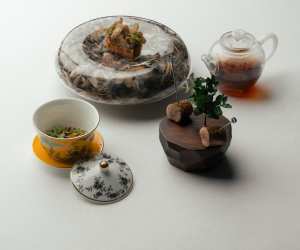
Bonheur, meaning ‘happiness’, draws on Abé’s classic French culinary background with little sprinkles of influence from his native Australia and Asia. The cooking features razor-sharp technique, a selection of very well sourced produce (from 125-day-aged Cumbrian blue grey beef to the peerless Ampersand Dairy butter from Oxfordshire), across stunningly presented dishes that appear to have been plated by individuals from the Royal Academy of Arts around the corner.
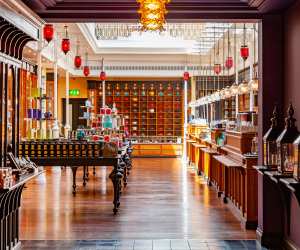
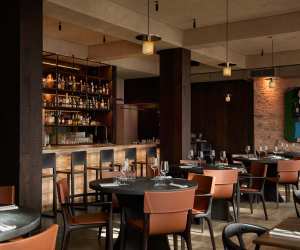
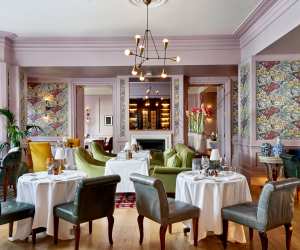
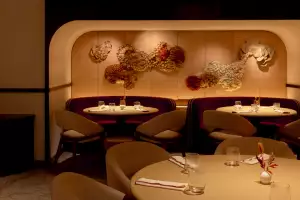
The dining room itself is scarcely recognisable from the bourgeois gentleman’s club interiors of its former occupants. Long gone are the plush green walls and claret-coloured dining chairs, and in their place Russell Sage Studio has transformed the subterranean dining room into something warmer and more contemporary. The textural artwork on the walls as well as the leather-topped tables and two central waiting stations encircled by Zalto wine glasses makes for an invitingly tactile room that avoids the soullessness of some fine dining spaces that have more in common with a first class airline lounge than a place you’d like to eat in. The palette of cream, cocoa, rust, and ochre is said to nod to Abé’s Australian roots, but visiting as the trees in Hyde Park turn from green to russet has me thinking unmistakably of autumn.
It would be remiss of me not to mention that the banquette seating is on the cosy side of the spectrum. Shaped as a shallow crescent, there’s a knack for avoiding knocking knees with your dining companion whereby you shuffle a little closer together and face outward – romantic for myself and my wife, perhaps less so if you’re accompanied by a business acquaintance. But I digress.
There’s two tasting menus to choose from for dinner (the five-course Journey and seven-course Dream), as well as an à la carte selection for traditionalists. Journey begins, as all good tasting menus should, with an assortment of pretty little crispy nibbles to accompany the fizz. But this is swiftly followed by what I would class as Abé’s opening gambit: a crystal clear beef consommé split with a little beef fat and served in a gold-painted bowl to emphasise its shimmer. It’s a heady Sunday roast in a cup that practically moos with bovine umami grunt and provides a rousing slap around the chops.
Joe Howard

Joe Howard
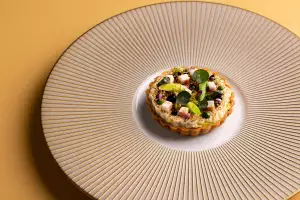
That little twinkle in Abé’s eye continues in the first course proper in the shape of a ‘Quiche Lorraine’ elevated echelons above its picnic fodder groundings with impossibly light pastry, a bronzed puck of Gruyère cheese atop creamy leeks, and a piquant vin jaune sauce employed to cut through all that richness. It’s lick-the-plate stuff.
What followed is one of my dishes of the year: cured turbot, served with a baby quenelle of lobster mousse, celeriac puree, and both a lobster and hollandaise sauce. I experienced what I can only describe as a ‘Ratatouille moment’ as my mind drifted back to that wonderful roasted turbot I first tasted in this very room 16 years ago. My godfather, an unbridled gastronome who sadly is no longer with us, shared that dish with me that night declaring it the “King of Fish” as we greedily devoured it. My old pal wouldn’t have half loved Abé’s nostalgia-inducing twist on that classic.
I damn nearly marched straight into the kitchen to give Matt a bear hug
The depth of the lobster jus was balanced by the lightness of its airy hollandaise accompaniment, while the dusting of kombu salt and celery powder enhanced the almost nutty sweetness of the turbot’s flesh to ratchet up the intensity further. I damn nearly marched straight into the kitchen to give Matt a bear hug.
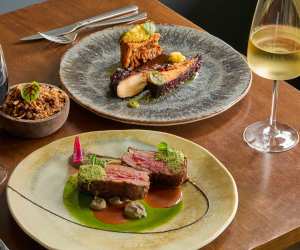
Emotions sufficiently high, I’ll level with you that the resulting main courses didn’t quite reach the same heights. I found both my fallow deer as well as my wife’s Cumbrian beef to be a little conservative in terms of their flavour combinations. This is a gripe I've had with tasting menus for years and years – following many interesting, playful dishes, the main course so often reverts to a traditional meat course that safely brings the diner back down to earth, and I've never understood why. Don't get me wrong, both were faultless in their execution, the pine cream on my venison a particularly pleasant addition, but it left me with a vague sense that the kitchen was playing it slightly safe with this first rendition of the tasting menu as opposed to swinging for the fences. It’s an impression that persisted through the palate cleanser and dessert as well.
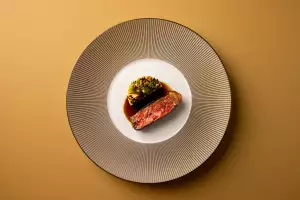
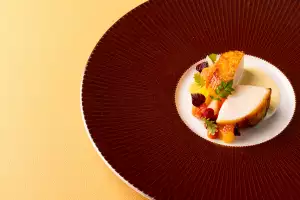

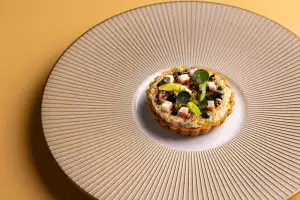
Free from the shackles of running Ramsay’s flagship restaurant, I must admit that I had expected this evening to act as some sort of coming-out party for one of the capital’s most underrated culinary talents, but it never really felt like Abé or his brigade gave themselves the room to run away with themselves completely. Clever flourishes were delivered with a subtle nod but I couldn’t help longing for a little melodrama or a more overt expression of Abé’s unquestionable ability.
Perhaps that says more about the intended customer in this sleepy corner of Mayfair and the hard task ahead in gently ushering in a new era at this historic site, but that cracking turbot dish told me everything I needed to know about the kitchen’s lofty potential. It’s possible that this somewhat ‘well-behaved’ tone will change in time but in a world where the (absolutely fantastic) restaurant playlist churned out groundbreaking artists of the past like David Bowie, The Cure and Michael Jackson, some dishes weren’t quite on the same sonic page. Lovely as it was, this was less a rock’n’roll performance and more a piano concerto.
In the spirit of unfettered greediness, I’ll add on a related note that dishes were quite sparingly sauced – beautiful little pools of delicious sauce, clearly handled by a skilled chef, but little they most certainly were – and on more than one occasion I wished there were a gravy jug left on the table from which I could more generously dress my dish. All the better to mop up with the ephemeral milk bread.
Service, as you might expect from a Michelin-aspiring restaurant, was handled with sufficient care and ceremony by general manager Matthew Widdowson and his team, while I’ve got to give props to head sommelier Eric Zwiebel who paid just as much attention to my wife’s non-alcoholic pairing (including two brilliant alternatives by drinks brand Bæk) as my own wine flight.
Bonheur by Matt Abé is an exercise in precision at the hands of a true master of his craft. The sheen on the sauces, the to-the-second perfect cuisson on the proteins, and the lightness of touch in the presentation are the work of a rarefied calibre of chef. Few names have opened up their first solo restaurant with such an impressive resumé behind them and fewer still will have done so in a building with more than 50 years of culinary history soaked in its foundations. Whether it can inspire another generation of kids to pick up a pen and write about restaurants? Only time will tell.
For more information, see bonheurbymattabe.com