A strange thing happened in the first half of 2026. Against a backdrop of global economic turmoil and political unpredictability, a discreet luxury asset class started to surge in value.
A continual rise in classic and collectable car prices has been assumed for the past 15 years or so. During a cost-of-living squeeze, international unrest and rises and falls in the price of gold, oil, interest rates and other luxury items, the price of old cars seemed resolutely stable; even the pandemic had a limited effect, forcing a short peak that quickly, in general, corrected. Then, as 2026 dawned, we seemed to enter a new dimension.
January has always been a major marker point for US collector car values but the traditional old behemoth Barrett-Jackson, Bonhams and RM Sotheby’s auctions in Arizona have, in recent years, been eclipsed by Mecum’s Kissimmee sale that is now the world’s largest public collector car auction. This year, a total of 4,702 cars were tracked as sold by Hagerty, the classic and collector car company, across these four events with a total value of $678m, up 52 percent from 2025. Hagerty also reported that the average sale price had increased significantly year-on-year from $93,037 to $144,161.
Big numbers, but the news headlines were reserved for a set of Ferraris that sold at Mecum: the Bachman Collection of over 45 cars, mainly relatively modern Ferraris, most with delivery mileage and with ultra-rare specification, all collected by Tennessee-based collector Phil Bachman over the preceding 40 years.
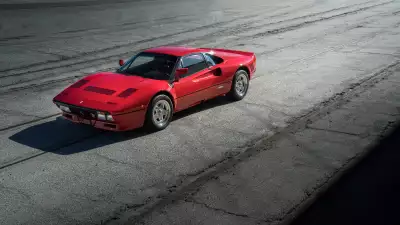
The prices paid were extraordinary: Mecum reported 19 world records smashed, with all five Ferrari ‘halo’ cars (288 GTO, F40, F50, Enzo and LaFerrari) setting new levels including a phenomenal $17.875m for an Enzo in Giallo Modena with bespoke red and yellow trim. One Hagerty specialist who was in the saleroom described it as a ‘circus’ – and it was only the start.
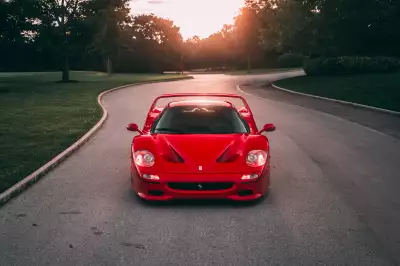
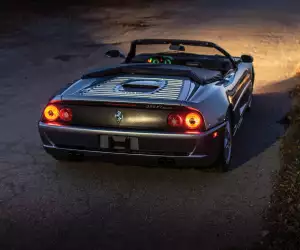
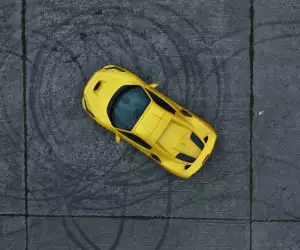
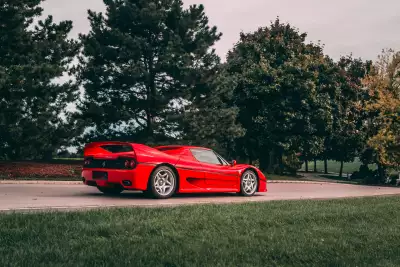
Ferrari F50
Stephan Bauer ©2025 Courtesy of RM Sotheby's
The following week, halo Ferraris once again hit big numbers at the RM Sotheby’s Arizona sale, with an Enzo and an F50 both selling for a price significantly in excess of the Hagerty Price Guide’s current top ‘concours’ value. At the end of the month, the focus shifted across the Atlantic to Paris and again, the big spenders came out for top modern classic Ferraris. Notably, a very low mileage 2004 Enzo sold at RM Sotheby’s for €8.105m, and Gooding Christie’s sold a 1984 288 GTO for €9.117m and a 2018 FXX K Evo for €6.98m – both world records.
I have tracked a lot of collector car auctions for a long time. The odd anomaly is expected: auctions are as much performative as they are transactional and the human traits of pride, obstinacy and competition, often fuelled by a heady mix of alcohol and occasion, can push prices much higher than the true value of the lot.
These sales also tend to be relatively isolated: either a single lot will fire, or sometimes an entire auction. This, though, was different, more widespread both in terms of the models that increased in price and also the geographical locations.
People in the trade I talked to in Paris suggested this was the case: that the Mecum results had been skewed by a single bidder, that some of the sales hadn’t gone through. A lot of people were trying to make sense of a very strange situation and expecting everything to calm down.
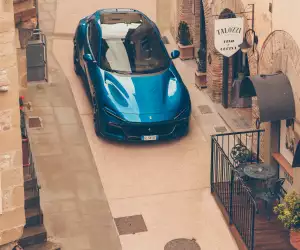
But they hadn’t factored on 2026; it’s not turning out to be a calm year. Prices didn’t subside but instead the phenomena seemed to spread, both to other auctions and to other cars. Ferraris other than the halo cars surged: the two-seat version of the Ferrari Monza SP2 [pictured] may not be the most practical of cars, but it is a rapidly growing collectable and a relatively high bar had been set at $2.5m at RM Sotheby’s Abu Dhabi auction in December 2025. That record was then nearly doubled when Broad Arrow sold a delivery mileage red car with blue trim for $4.955m at The Amelia, Florida three months later.
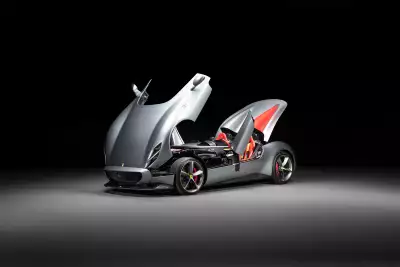
Ferrari Monza SP2
Abdulla Jaafari © 2025 Courtesy of RM Sotheby's
Porsches followed: the previous $2.2m auction record for a Carrera GT set by Mecum at Glendale in 2022 was broken first in 2026 with a $3.1m sale by RM Sotheby’s in Arizona in late January, then a month later by the same company in Miami at $3.3m, before Broad Arrow smashed the record in March at The Amelia with a $6.7m price. The latter was a stunning car, painted in Gulf Blue over Ascot Brown interior with various desirable options including XT bucket seats but even so, it was a huge number: a 205 percent increase on the record price in the first 75 days of this year.
On the face of it, the top segment of the market is booming, and more modern collectables seem to be making the greatest headway, but it could be more localised than at first glance. At the end of March, Hagerty analysed 59 cars built since 1980 that sold at public auction for over $2m since 1 January this year. Eighty-four percent of them were either sold in America or Hagerty knows were bought overseas by a US buyer. Also, the surge in this segment of the market seemingly isn’t being replicated either in other areas or in other countries: a recent update to the UK Hagerty Price Guide shows that overall, 83 percent of values have been static in Q1 2026, ten percent of cars fell in price, and just seven percent rose.
Also, there’s still wariness within the trade: some of these price rises aren’t just big, they’re phenomenal: that near-$18m Enzo sale at Mecum Kissimmee didn’t just break the previous record, it tripled it.
You can argue that it was of unique spec and extremely low mileage, with an incredibly detailed history but the previous high sellers, both at around the $6m value, also had phenomenal history: one was the very first Enzo made and owned by Fernando Alonso, and the other the very last, built by Ferrari after the main production run for the Pope and auctioned for charity. Steady increases in value are good but triple-digit increases in a short period of time can be scary – and the only time that’s happened before, in the early 1990s when Ferraris again surged in value, we saw a rapid price correction follow.
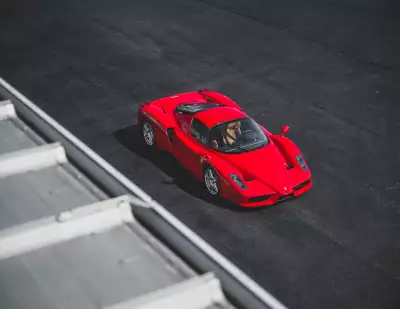
Ferrari Enzo
Darin Schnabel ©2025 Courtesy of RM Sotheby's
I’m not saying that will happen. The world is a very different place in 2026 than it was in 1991: the internet gives people much more information, not just about the cars and their condition, but about prices and what everyone else is paying.
There’s a shift in wealth, too: last year, Hagerty overlaid a Fed chart that showed the US top one percent annual income with the global top public auction price paid that year for a collector car. It matched very closely until 2011, only exceeding the average top earnings once in the preceding 22 years, in 1990, just before that crash I discussed earlier.
Since 2011, the record has exceeded top earnings nine times and this year it looks likely to continue the trend. This could mean people are overstretching themselves to borrow money against cars they think will soar in value, as they did 35 years ago, but maybe there’s an element of wealth inequality that ties in: it’s possible that the Fed’s top one percentile income isn’t the metric that’s relevant any more, and we should be looking at the top 0.1 percent, or even the top 0.01 percent, people who can drop $45m on a painting and for whom $18m for a Ferrari won’t break the bank.
Yesterday, I spoke to someone who manages a number of cars for a significant British collector including a Ferrari F50 valued at about £4m. Another collector had approached him with an offer of £10m for the car, but the owner refused. “I just like driving it,” he said. Maybe wealth inequality has fundamentally separated the market.
Stephan Bauer ©2025 Courtesy of RM Sotheby's
Many expected that the results from the January US auctions wouldn’t transfer to Paris, but they did. However, I would still urge a little caution; unless you have a bank balance that wouldn’t notice a few millions missing, there’s bound to be an element of stretch from the very top cars down to others that won’t be as resilient should buyers start to sit on their hands.
The best way to progress in this market is to buy well: the very top cars in terms of model, provenance, condition, originality, and spec will usually maintain their values most effectively, and supply and demand matters: low production numbers are important in a collector’s market.
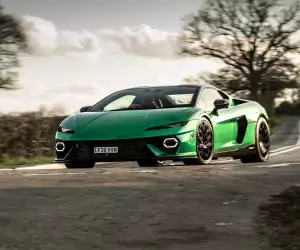
And, as the recent online furore about the new Ferrari Luce’s design suggests, many people still desire the analogue grunt that a V12 or even a turbo-charged V6 gives. Buy now, and drive: after all, that’s what these cars are all about.
See more on classic cars values at hagerty.co.uk