Brought to you by

The Renault 5 Turbo is nothing short of a cult classic – the OG hot hatch before ‘hot hatch’ was even a phrase.
The rally version won the 1981 Monte Carlo Rally; and the road going version? Well, that won my heart.
You see, the coolest kid in our school drove one. You know the guy – played the lead guitar in the band, captained the firsts, dated the head girl. He was that guy.
A teenage me dreamt of having a Renault Turbo as a first car. Now, a 40-something me wants one all over again.
But this one is a little different.
Because Renault, in an act of modern automotive defiance, has taken one of the most charismatic machines ever to wear a diamond badge and reimagined it for a new era.
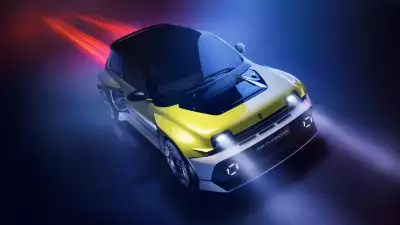
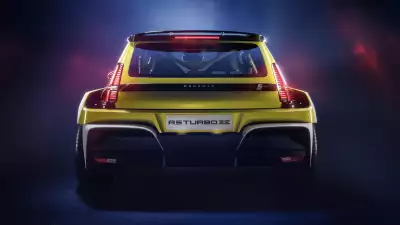
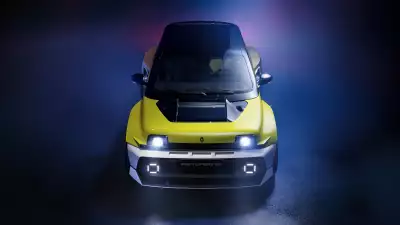
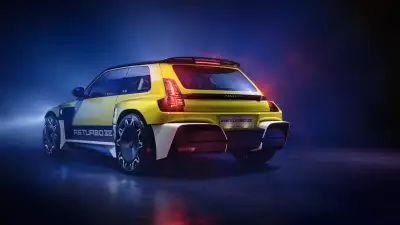
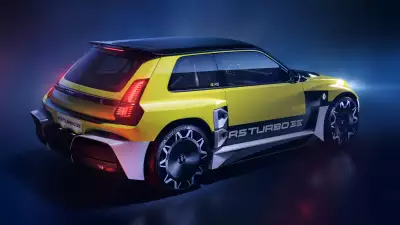
The result is the Renault 5 Turbo 3E: a compact, rear-wheel drive, all-electric riot that looks like the rebel child of the original car – and behaves just as outrageously. Renault itself calls it the first electric “mini-supercar”, and for once that sort of language does not feel wildly overcooked.
That matters, because the Turbo 3E is not arriving in isolation. It forms part of a much broader Renault resurgence. The reborn Renault 5 has managed to blend retro influence with modern technology in a way few rivals have managed.
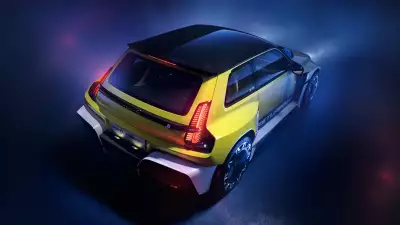
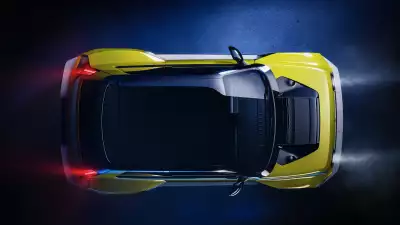
Although it borrows the broad visual cues of the standard Renault 5, the Turbo 3E isn’t a case of pumping up the trim and adding some flared arches. It sits on a fully bespoke platform with 800-volt architecture, and has a stance so aggressive it makes most modern performance hatchbacks look a bit apologetic. Only the mirrors and tail-lights are carried over from the regular car; everything else has been engineered to create something lower, wider, lighter and substantially more unhinged.
The numbers are, frankly, absurd in the best possible way. Two rear in-wheel motors produce 555hp and a scarcely believable 4,800Nm of torque. Expect 0-60mph in under 3.5 seconds, a top speed of 167mph and a power-to-weight ratio of 2.6kg per horsepower – figures that place this squarely in proper supercar territory rather than a novelty-EV sideshow.
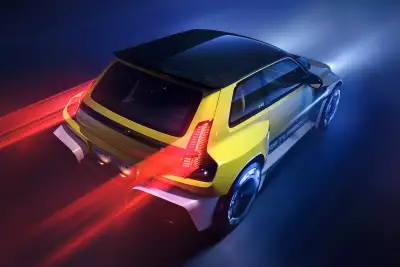
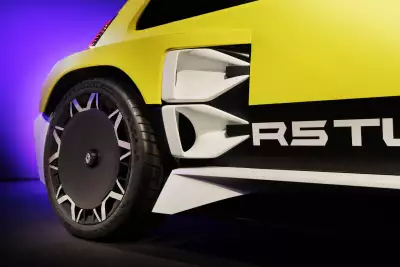
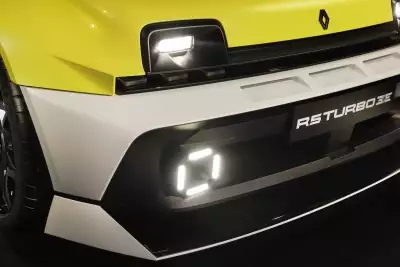
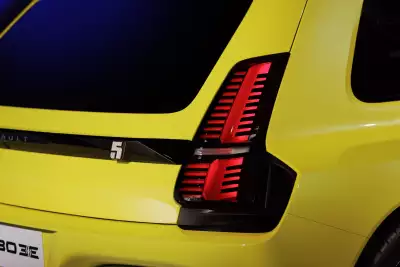
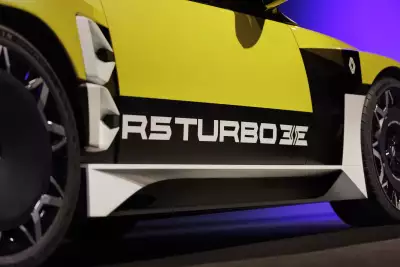
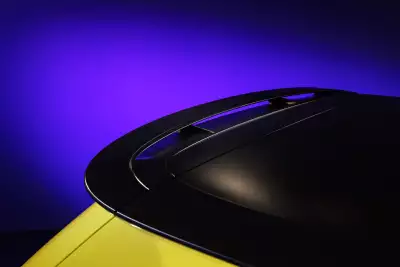
A 70kWh battery is mounted low in the floor, helping the Turbo 3E keep its centre of gravity where it ought to be, while the overall weight is held to around 1,450kg thanks in part to a carbon superstructure. In plain English: it goes like a scalded cat and turns in with the sort of savage enthusiasm that made the original car such a legend.
It is also, because this is 2026 and not 1981, rather more sophisticated than its extrovert bodywork might suggest. The estimated WLTP range sits around the 248 mile1 mark – while 330kW DC charging means 15 to 80 per cent can be done in around 15 minutes2. There is also 11kW AC charging, four regenerative braking levels, multiple driving modes and Google built-in3 via Renault’s OpenR Link system.
So yes, this may be the descendant of a rally hero – complete with a vertical handbrake and a drift-assist mode – but it is also a connected, high-voltage, highly engineered showcase for where Renault believes performance EVs can go next.
Inside, it’s every bit as theatrical as you would hope. Bucket seats, six-point harnesses, Alcantara trim and plenty of carbon ensure it feels suitably race-ready. While dual OpenR screens have been inspired by the dashboard layout of the original Renault 5 Turbo and Turbo 2 for added nostalgia points.
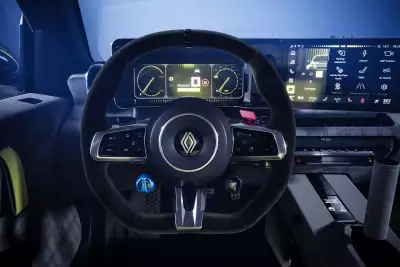
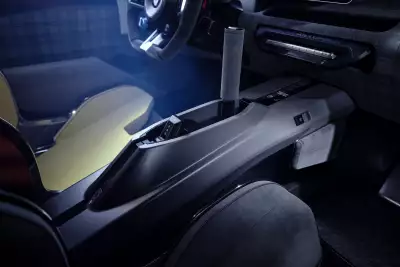
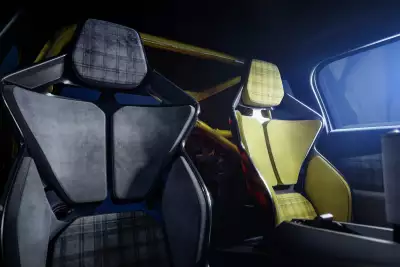
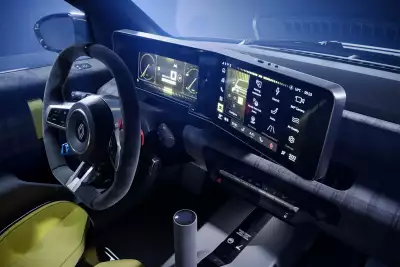
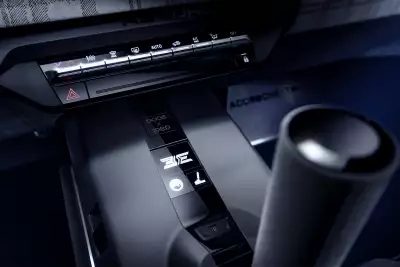
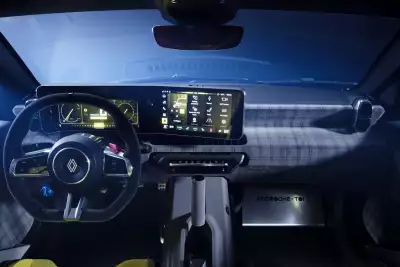
On that note, you can choose suitably historic colourways to echo the old Turbo and Turbo 2, including Rouge Grenade and yellow-white-black competition-inspired liveries, alongside more contemporary options.
Buyers will also be able to work through a broad menu of interior and exterior finishes to create something more individual still with seats, dashboard, door panels, and centre console all able to be personalised to your tastes.
Which brings us to the bigger picture. For years, legacy carmakers have talked a good game about electrification while serving up vehicles so visually anonymous and emotionally sterile you would struggle to recall them half an hour after parking. Renault is taking a different route.
It has understood that progress does not have to come at the expense of character, and that the smartest way to sell the future is sometimes to give it a silhouette from the past – and but add in a mischievous streak.
The new Renault 5 began that work. The Renault 4 has built on it. The forthcoming Twingo should continue it. But the Turbo 3E is the car that makes the whole story sparkle.
This is not Renault retreating politely into its archive. They raided it and turned the volume up to 11. Which, for anyone who ever had a poster of the old Turbo on their bedroom wall, feels exactly right.
Only 1,980 examples will be built – a tribute to the year in which the original Renault 5 Turbo was launched – with each one being numbered. Pricing starts from £140,000 excluding options and customisation. See more at renault.co.uk
(1) WLTP figures shown are for comparability purposes only. Actual real-world driving results may vary depending on factors including the starting charge of the battery, accessories fitted after registration, weather conditions, driving styles and vehicle load.
(2) Charge time may vary depending on factors including charging conditions, battery, ambient temperature at point of use, and if battery safeguarding technology is activated.
(3) Google, Google Maps and Google Play are trademarks of Google LLC.