Brought to you by

Founded by Simon Aron in 2018, Cask Trade is a global cask whisky marketplace and one of the world’s largest whisky cask stockists. It helps private clients and trade customers buy, manage, bottle and sell whisky casks, offering guidance at each stage of ownership.
Here, Scott MacDonald, Cask Trade’s head of business development, explains what the Scotch whisky downturn means for cask buyers and where he sees opportunities over the longer term.
How the downturn is changing the cask market
Scotch whisky exports were worth £5.36bn in 2025, but that headline figure hides a market under real pressure. Export volumes fell, the US declined and producers have reduced output, delayed investment and reconsidered staffing. For buyers, however, that adjustment is creating greater choice, more realistic pricing and genuine negotiating power.
During and immediately after the Covid pandemic, demand shifted, online sales accelerated and stock was laid down in anticipation of that momentum continuing. Instead, consumers faced sustained inflation, higher energy prices and less disposable income. Increased alcohol taxation and geopolitical uncertainty have made consumers and businesses more cautious still.
We are now seeing the impact throughout the supply chain. Suntory Global Spirits has scaled back production across parts of its Scotch estate, with 38 roles proposed for removal. This is serious, but it’s also evidence of an industry correcting the imbalance between stock produced during the boom and current demand.
After over 25 years in the drinks industry, I have learned that markets aren’t linear. Periods of growth are normally followed by periods of adjustment, and Scotch is no different. This downturn has lasted longer than expected, but the fundamentals of Scotch have not disappeared.

There are clear reasons for optimism. On 24 July 2026, the United States removed the 10% tariff on UK whisky, restoring tariff-free access to Scotch’s most valuable export market, worth £933m in 2025.
Hong Kong has also introduced a more favourable duty regime for premium spirits, reducing the rate from 100% to 10% on the portion of the import value above HK$200. The recent UK/India trade agreement reduced India’s import tariff on Scotch from 150% to 75%, with a further staged reduction to 40% over ten years.
Beyond the established markets, the longer-term opportunity may be broader still. Vietnam, Malaysia, Cambodia and Indonesia have expanding urban middle classes, increasing interest in premium imported spirits and developing whisky cultures.
Cask Trade’s recent success in establishing new business in those markets provides early evidence of commercial demand. South America remains less predictable, but perhaps that’s why it shouldn’t be ignored.
Not every emerging market will develop at the same pace, and routes to market, taxation and regulation remain challenging. The next phase of growth is unlikely to come only from the countries that drove the last one.
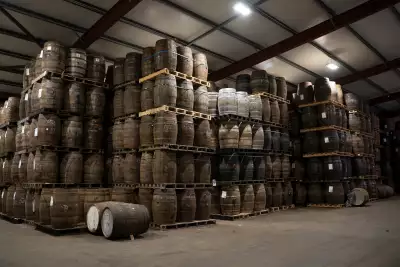
For buyers, the market has changed considerably. Today, more aged stock is available, sellers are more willing to discuss sensible deals and buyers can afford to be more selective. That doesn’t mean every cask represents good value. Distillery, age, cask type, spirit quality, storage costs, ownership documentation and a credible route to exit all matter.
In practical terms, I believe buyers should now focus on three things:
- Review existing holdings and identify gaps rather than buying more of the same. Strengthen and diversify the portfolio selectively.
- Consider aged stock, which may now offer better relative value and reduce the waiting time, but only where the liquid and price are right.
- Remain open and ready to act. A buyer’s market rewards patience, but also those prepared to move when the right cask becomes available.
Scotch continues to be one of the world’s most respected premium spirits, with heritage and demand across over 160 markets. Production can be reduced quickly, but rebuilding stock when demand returns takes time. That imbalance is one reason quieter periods can create attractive long-term opportunities.
The current market should not be presented as risk-free; careful selection remains essential. However, for buyers with available funds and the ability to take a long-term view, this may be the time to look more closely. By the time the opportunity is obvious to everyone, the best buying conditions may have passed.
Visit Cask Trade to learn more about cask ownership and download Beyond the Cask, its 2027 Cask Whisky Marketplace Guide. To discuss available casks, call the team on +44 (0)20 3746 3034.