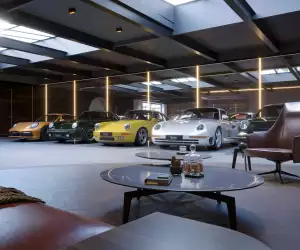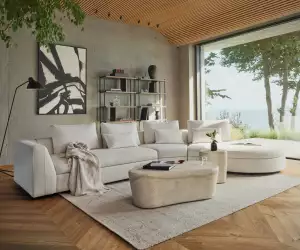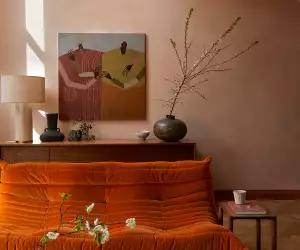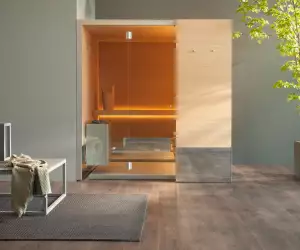
There is something gloriously decadent about giving a film screening its own postcode. Not a television in the corner of the sitting room, but a room engineered around the cinematic experience: a space where the seats are tailored for prolonged periods of doing absolutely nothing productive whatsoever. In other words, a space dedicated to one of life’s finer pursuits: staying in. As the nights get longer, it’s something we can all aspire to.
The modern home cinema has grown up; it’s now less about duplicating the local multiplex in your basement and more about creating an immersive, beautifully considered space that belongs to the house around it – a place you could happily spend an entire Sunday in. What’s on screen, it turns out, is almost beside the point.
Rewrite the script
For homeowners investing in serious interiors, the cinema room is being treated with the same care as the library or principal suite. That starts with the architecture. Proportion and ceiling heights matter, as does sound isolation if you’re going the whole hog. Lighting needs to work for both the room and the screen, while ventilation, cabling and equipment all need to be considered before the first cushion has been plumped.
Specialist cinema designers, architects, interior designers and technology companies increasingly overlap; the best results come when everyone’s involved early, rather than attempting to squeeze a high-end entertainment system into a beautifully finished room as an afterthought. Great technology should be extraordinary and intuitive, without making its presence known.
Golden Era
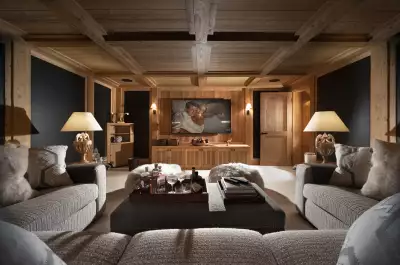
The traditional cinema aesthetic remains tempting as a source of inspiration. Deep burgundy walls, velvet curtains, brass details, perhaps a suitably theatrical lightbox announcing the title of tonight's feature all certainly feel nostalgic. Who doesn’t have a fond memory of the old theatres, even with their sticky carpets? But today’s luxury interiors are rather less interested in imitation. Instead, cinema rooms are borrowing from high-end residential design as much as they are from the golden era of cinema.
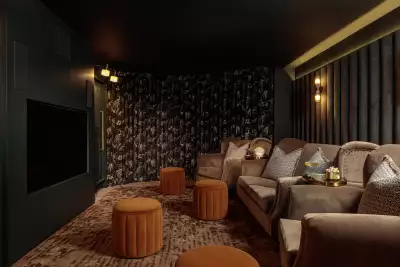
Rich timber, textured plaster, stone, leather, wool, bouclé and beautifully crafted cabinetry now combine with acoustic panels to become architectural details that speak to that bygone era, without mirroring its aesthetic. Speakers disappear behind fabric, while screens retract or sit seamlessly within joinery. The result is less ‘private screening room’ and more ‘exceptionally beautiful room with a rather impressive secret addition’.
For designers and makers, this is fertile territory. A cinema creates an opportunity to demonstrate precisely the kind of craftsmanship that homeowners value and the qualities designers do so well: materials, detailing and customisation, all in harmony with an innate understanding of how people actually want to live.
Hidden gems
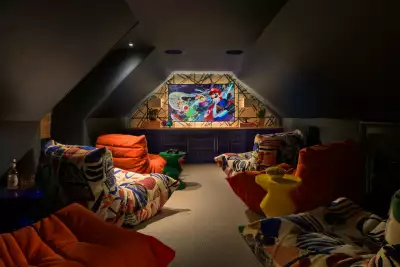
There’s a slightly amusing paradox at the heart of the modern cinema room. The technology available has never been more sophisticated, yet the luxury lies in making it disappear completely.
Projectors with vector-mapping capabilities can be hidden away. The thinnest screens can descend from ceilings or sit discreetly within bespoke cabinetry, making them less of a focal point and more of an integrated part of the room. Speakers can be integrated into walls, floors, ceilings and furniture, with tiny microphones enabling 360-degree sound mapping and AI-powered automated calibration. Lighting can be programmed to shift from full brightness to a soft evening glow and finally cinematic darkness with a single touch.
Meanwhile, audio systems offer a next-level experience, delivering immersive sound without turning the room into an electronics showroom. This is where specialist technology brands have an interesting role to play in luxury property. The conversation has moved beyond specifications to an integrated outcome: high-end systems can hide speaker arrays directly behind woven, sound-permeable projection screens, so dialogue appears to come straight from the actors’ mouths. Because nobody’s ever invited friends round to admire their HDMI cables.
Furniture is ready for a close-up
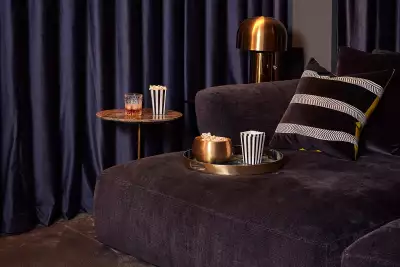
A home cinema chair has evolved considerably from the black leather recliner with its obligatory cup holder. Bespoke seating can now be tailored to the room, the individual and the way the space is intended to be used.
Perhaps it’s a pair of generous armchairs rather than four rows of seats. Perhaps there’s a sprawling sofa or bean bags for family film nights. My personal brief would be unapologetically indulgent: individual loungers, discreet side tables, cosy footrests and enough space to settle in for an eight-hour Star Wars marathon. This is where furniture makers, upholstery specialists and luxury interior brands can make a cinema feel genuinely domesticated. The best spaces don’t simply accommodate people; they seduce them into staying.
Star quality
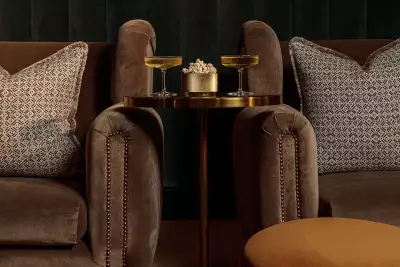
There’s also a practical reason behind this evolution. In London, where space already comes at a premium, dedicating an entire room to one function can be a significant commitment. So the smartest contemporary spaces are often designed
to work a little harder.
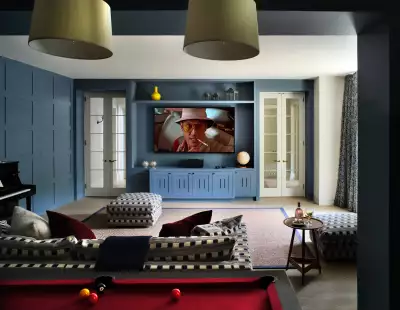
A cinema can become a games room, entertaining space, family den or sports-viewing room. Add a bar and suddenly it becomes somewhere to host friends. Add comfortable seating and beautiful lighting and it becomes somewhere to retreat to even when the screen isn’t switched on.
That versatility makes the room particularly interesting from a property perspective. Luxury is no longer simply about having more rooms. It’s about making every room feel purposeful, personal and, most importantly, exceptional. A major sporting event can become a stylish occasion at home; a film premiere an excuse to entertain; a box-set binge, a perfectly respectable reason to stay in midweek. And that distinction matters in a luxury market increasingly obsessed with individuality. Buyers want homes that feel considered, not catalogued. They want craftsmanship, cleverness and experiences they can’t simply add to an online basket. The home cinema happens to offer all three.
Lights down
So perhaps it’s time to look at your nights in. No ticket queue. No sticky floor. The modern home cinema sits at the intersection of luxury property, considered interiors, skilled craftsmanship and aspirational lifestyle, bringing all four together in one highly desirable space. The screen may show the stars, but now the room’s getting its standing ovation.
For more inspiration for your own home cinema, go to: pfeifferdesign.co.uk; thevawdreyhouse.com; nickydobree.com; phina.co.uk