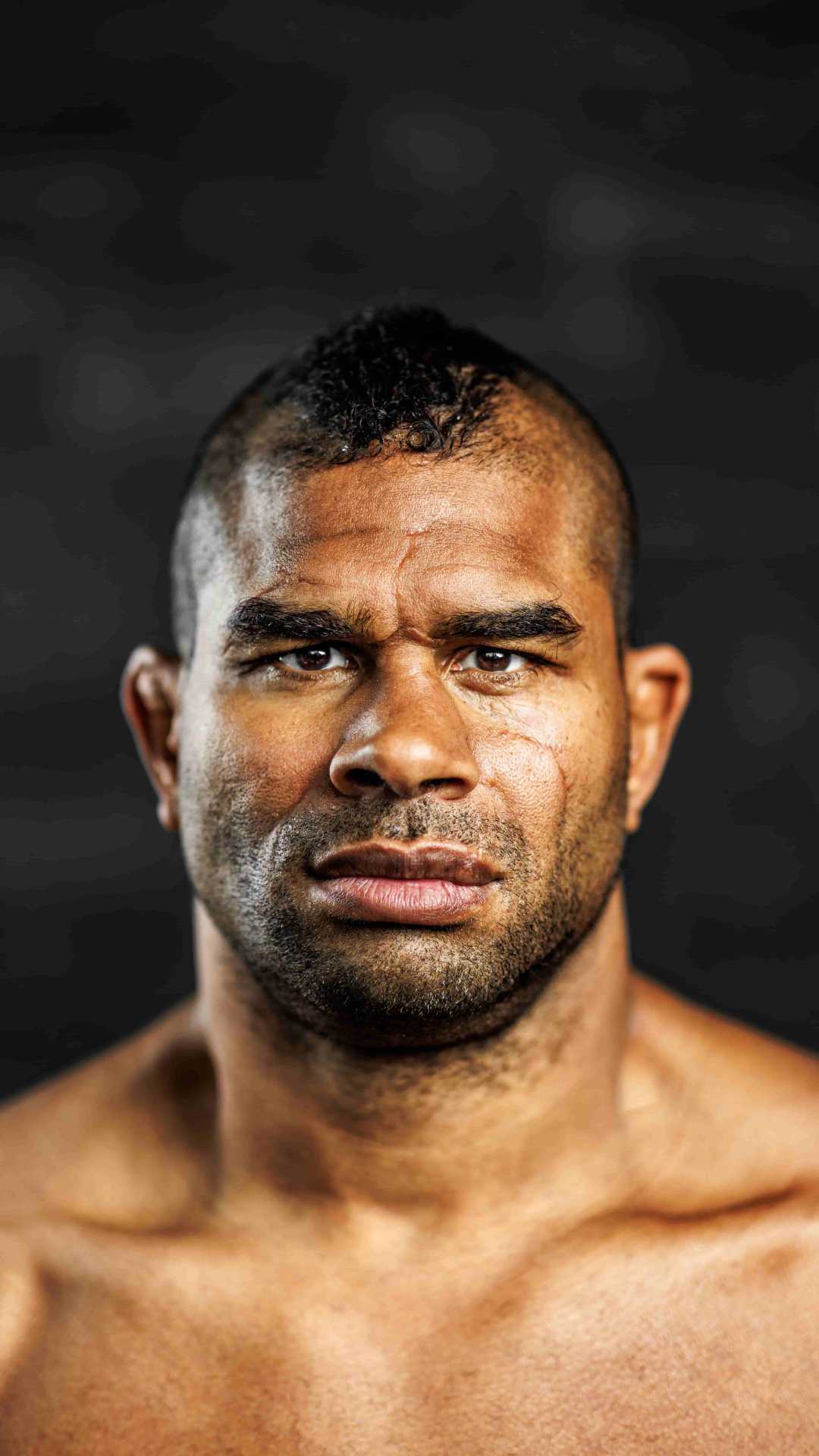
Alistair Overeem has changed, and he’d like you to know why.
The former Strikeforce Heavyweight World Champion, DREAM Interim Heavyweight Champion, and the 2010 K-1 World Grand Prix Champion, Overeem remains one of the most decorated heavyweight fighters in history, dominating in both kickboxing and mixed martial arts. He is the only fighter to have simultaneously held major world titles in both MMA and K-1.
Overeem has survived countless concussions, broken noses, and a busted open lip. He has gone to war with some of the most dangerous heavyweights alive, absorbing a thunderous fist from Francis Ngannou in one of the most brutal exchanges of the era. After decades at the top of the division, years of accumulated damage had begun to surface as nerve pain and ligament strain. His body was giving out. The day he made the decision to step away, he says, the pain subsided.
Suddenly, he had free time. The thing that filled the space? His phone. He was caught in a consuming loop, picking up his phone a hundred times a day for no apparent reason. Overeem wondered how much the tech was affecting him, so he decided to test it. He approached the problem the way he did an opponent. He structured a game plan and stuck to it. In this case: a 21-day tech detox that restricted phone usage to 30 minutes in the morning and 30 minutes in the evening.
On day 21, he says, he woke up with different eyes. After years of living on autopilot in the cage, he connected to his centre again. Food tasted different. He looked at his kids and felt love in his chest. After years locked in the physical, the emotional and spiritual parts of him resurfaced.
I saw withdrawal symptoms in everybody. I knew the phone was doing damage to us in ways we didn’t realise
His story brought me solace. Overeem is one of the most disciplined men on the planet. Even he is susceptible to the negative effects of technology that has overtaken the modern world. We are disconnected from our own biology. We are in dire need of different habits.
Since that day, Overeem has been studying what happened to him. A full scale dopamine-detox is what he's resolved. He wants everyone to receive the education that he has on the human brain and body. That same intensity that built a world champion is now determined to build a happier, healthier world.
The Demolition Man is healing. He want you to, too.
We sit down to explore how he realised he was addicted to his phone, the protocols that have changed his mind and body, and his wider mission in the world.
Square Mile: When you retired from fighting, what was the state of your brain and body?
Alistair Overeem: I retired in April of 2023. After my last fight, my body didn’t want to do it anymore. I kept getting injured, and they kept coming back. I had severe, weird pain in my lower back. I’ve had all types of injuries from my martial arts career. I kept them at bay with Ice baths, dry needling, foam rolling and a lot of training to heal my body. I had 300 needles in one week towards the end of my career. I did core workouts and animal movements. It just didn’t work anymore. I kept trying and kept hurting myself. The pain wasn’t good. It was nerve pain; joint pain. We always want to hold on to what we know. But that moment I accepted the retirement was the moment I started to heal. My body stopped hurting.
SM: How was that pain different from the pain you were experiencing every time you stepped into the ring?
AO: In the ring, you don’t feel pain. You just have bruises. I feel tired afterwards, but I don’t feel pain in the ring. Even if you get knocked out, you don’t feel anything. You just wake up later. I ask my coaches how the fight went when I get knocked out because I don’t remember. When you go into a fight, you train responses and interactions. Then, in the ring, you go autopilot. You process later.
SM: At what point after retirement did you realise you were addicted to your phone?
AO: Over the years, I noticed I was grabbing my phone without realising why. When I was still fighting, I did a test in training camp with my coaches and team where we all put our phones in a box for 50 hours. I saw withdrawal symptoms in everybody. I knew the phone was doing damage to us in ways we didn’t realise. Then, when I retired, I had time to notice the problem and address it. So I sat down and made a plan. I did 30 minutes on the phone in the morning; 30 minutes in the evening. Then 21 days in, the miracle happened. I woke up, and everything was different.
SM: What changed? What did you feel on that 21st day?
AO: Everything changed. I woke up, and boom. My motivation and energy went through the roof. My eyes were bright. I felt like I was on drugs. I was so elevated. Food didn’t taste the same. I connected to a higher power. I saw my kids and felt tingles in my heart for the first time in a long time. In 15 years. I now understand that what I experienced was a dopamine reset. I needed to know what happened, so I started ordering books to understand. Dopamine is our internal reward system. Our motivation.
When I did my tech detox, I balanced out my brain. I couldn’t wait to tell people. I’m now doing my third dopamine reset this year, and I pair it with Ramadan and nutrition for the full effect. The phone is great technology, but it comes with dangers. We are not protected from them. I’m here to spread the message and warning. Our leadership is asleep.
SM: Let’s say I make you the leader of the world. What are you first doing?
AO: First, you have to demonstrate the why. Why would people do a tech detox? I’d get universities on board. I’d start doing testing. I’d get data. You need to demonstrate the changes first. I’m in talks with a university in Dubai to start doing this soon. We need scientific papers. Then from there it’s about spreading the message. People are creative. They’re adaptive. They’re going to figure it out. It’s going to be baby steps. I’m guiding the people around me. We have to go slowly. But I’m hopeful we are going to create change.
My life is full now. I feel like I just discovered the world.
SM: Tell me about your understanding of dopamine?
AO: When we use the phone, it’s instigating a dopamine response. Dopamine feeds the ego. We are in the age of information. There are impulses in our pocket. Our ego inflates and becomes unbalanced. When the dopamine dosage is high, we need more. We need to literally keep feeding that ego. It can be more romantic attention, food, or technology. The West’s entire culture is based on more, more, more. We are dopamine addicted. It’s killing our relationships, our connection to things. We can’t be present anymore as a species.
Our dopamine receptors are also associated with rising depression rates. It’s dopamine, and it’s also the gut. But if we don’t tackle these two problems, we’re never going to solve the mental health epidemic of our time. You need to limit the input. Your nervous system is not designed to handle this many impulses. It’s 21 days to break the addiction. It’s three weeks, and you can change your life. I now do the reset every single year.
SM: How do you recommend someone begin doing a dopamine reset?
AO: People should do this in stages. First, start with no social media. Then cut down the phone time to 60 minutes a day. Then include food. Cut sugar and processed food. Then look into fasting. Food is one of the many protocols I do in my life. If you don’t want to do it, you’re only hurting yourself.
View on Instagram
SM: You described earlier a connection to a higher power. Can you speak more on that?
AO: I wasn’t raised religious. But I learned that there is a higher power. Some call it God, some call it Allah, some call it the source. People get chances to connect with that in their own way. I tried it out, and it was a beautiful thing. It changed my life.
SM: Did you have a relationship with God before the tech detox?
AO: Not really. I had an internal sense of right and wrong. When I put the phone down, it showed me there was more to life. I started reading again. I looked into consciousness and spirituality. I converted to Christianity.
SM: Why did you feel called to that religion?
AO: It came across my path, and it felt right to do. I’m very grateful and thankful that it did. All religions are connected to the same source. I’m living a very different life now. My life is full now. I feel like I just discovered the world.
I am here for the maximum life experience. I think the max right now is 125, but I believe we can live longer
SM: What are the other protocols you're doing for your health at the moment?
AO: My 25 years of competition have given me a lot of information. I’ve had 25 nutritionists. Wim Hof is a mentor of mine; he used to live down the road from my house. I do gut cleanses. I do ice baths for 21 minutes every day.
SM: 21?!
AO: Yes. Every morning. I’ve been in longer. I’ve been in the ice bath for an hour before. For me, the ice bath is just a test of mind and body. Is your mind strong? Is your mitochondria firing correctly in the body? Then I do upwards of six hours of breath work a day. I do a range of techniques. I do Wim Hof’s technique. I do deep, slow breathing. That’s the majority. I also do alternate nostril breathing. This is all Indian ancient knowledge. We use current technology to measure the affects but it’s not new. If I had known all of this stuff when I was fighting, I would have won all my fights.
SM: Do you know your biological age?
AO: My biological age is 28 years old.
SM: How long would you like to live for?
AO: I am here for the maximum life experience. I think the max right now is 125, but I believe we can live longer.
SM: Do you feel now you are a better version of yourself today than when you were fighting?
AO: Absolutely. In every way. I’m more patient, loving, and creative. My humour is up. I’m able to connect with people more. I’m a more present father. I was seriously addicted to my phone back then. I was also always inside. I was in the gym, in a restaurant, in a room. Now I get out into nature, and I walk barefoot. I do cold exposure. We need to generate the wave. We need to get people off their phones. I’m spreading this message everywhere I can. I want the world to heal.
You can follow Alistair Overeem's longevity journey HERE.