It was more than 100 years ago that Hyman Moscot, an immigrant from the Slavic states of eastern Europe, began selling eyeglasses on the Lower East Side of Manhattan. Today, his descendants oversee more than 40 stores on four continents.
The MOSCOT brand has evolved from the neighbourhood optician of Orchard Street in New York City to become the eyewear choice of artists, subversives, and style-conscious public figures – even King Charles has been spotted wearing a pair – around the world. Not bad for a business which began on a pushcart.
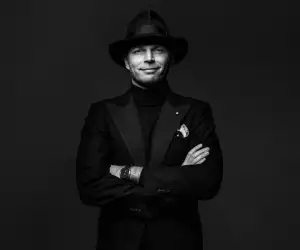
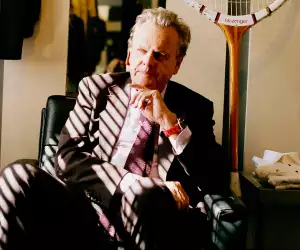
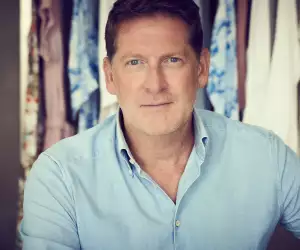
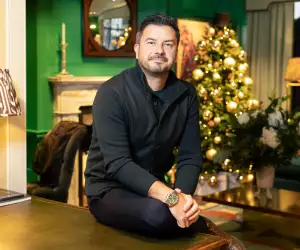
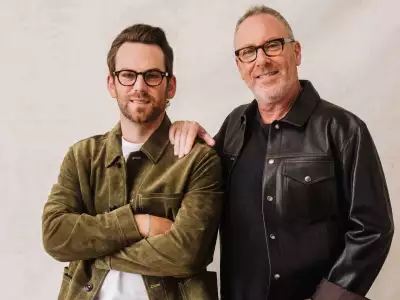
The current custodians, father-and-son duo Harvey and Zack Moscot, are the fourth and fifth generations of the family to run the company. We caught up with them on the opening day of their newest London store, an address on Beak Street in Soho exactly next door to the first one they opened outside NYC, to learn more about the brand and its heritage.
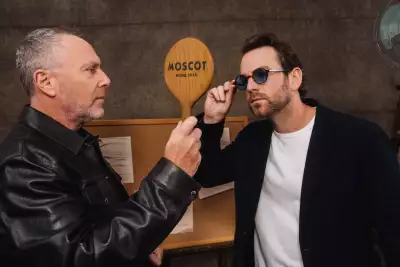
SQUARE MILE: Tell us the history of how the brand; how you began and how you came to be in London?
HARVEY MOSCOT: My great grandfather came to the U.S.A. in 1899, escaping oppression in Eastern Europe. He set up shop on Orchard Street on [Manhattan’s] Lower East Side, where people sold their goods from a pushcart, which is why we have a pushcart as our logo. In those days, you didn't get your eyes tested, you just put on glasses, and if [they made] things clearer, you purchased them.
His son, Sol Moscot, was born in 1910 - that was my grandpa, 2nd generation. My father, Sol’s son, joined the business in the '50s as an optician. I entered the business, as the fourth generation, as a teenager working for beer money, every summer, every weekend, learning everything you needed to know about the optical business.
There was no optometrist in the family; they always relied on optometrists to do the testing and if the optometrist didn't show up, I used to hear about it from my dad at dinner because he didn't sell eyeglasses if you didn't get your eyes tested!
So I went to optometry school. [My dad] was one of these guys that liked to really talk, [he] could have been mayor of New York, but [he] was about the experience that customers had when they came to MOSCOT, and now we translate those values into today's offerings.
In 2013, [my son] Zack entered the business, with no background in eyeballs or optics [but as a] talented artist…with a different perspective in design.
ZACK MOSCOT: There was kind of a natural evolution of the brand; the generations ran the shop, and then there were aspirations with my dad and my uncle to tell the story [of the brand]. Over the last 13 years, working with my father, [me] as a designer, him as the optometrist, we really pair well together in terms of growing the business from both a retail and design…perspective.
HM: [Regarding London] Soho feels very, very similar to the Lower East Side of New York. So we've taken the story and our brand and we've tried to tell it in other parts of the world.
ZM: People started coming to MOSCOT, tourists, international people, kind of intrigued by just what it was that we were selling. We started selling our frames throughout Europe, which led to the natural evolution of opening our first shop in London, which at the time felt right for us, because it felt the most aligned with New York City. Soho felt like the closest [to] the Lower East Side, because it was very much oriented around the arts.
HM: I think it's important to note that the Lower East Side…was never a glamorous, cool neighbourhood. It was kind of down and dirty; it had edge. Because the rents were not expensive, it was a natural attraction for the artists…the musician, the sculptor, the architect. This is where they all went, because it was affordable, and a lot of them ended up successful, but they were our customers.
That's how we got engrained with the film industry and the arts. You had little galleries that opened up where they would display their art or play their music, and that attracted people internationally, and that's [how] they discovered MOSCOT.
ZM: And we get the same types of customers [in Soho], too. Even celebrities that are walking [past] and purchasing: because the age of the brand we were there when these people weren't famous. To this day, we don't pay celebrities to wear our frames, we don't give them product, we just stay true to who we are, and a lot of them still just come to our shop and purchase frames, and it's a cool thing. I think a lot of people are enamoured by the fact that these people wear it, and we're not paying them to do it.
Soho feels very, very similar to the Lower East Side of New York. So we've taken the story and our brand and we've tried to tell it in other parts of the world.
SM: So London obviously featured prominently in your original international expansions – does it still feature that way? Do you plan to expand here even more?
HM: Today is the first day of conducting trade in our new location, which is exactly next door to our original location on Beak Street. We move from 39 to 37. We needed more space to offer the service levels that we like to offer. Covent Garden is bigger, it's definitely a larger footprint, but Beak Street is still considered our flagship [as it was the first one]. And we’re eyeballing something in Manchester too.
SM: How often do you see your customers choose eyewear as a specific element of their personal style as opposed to simply the functional pair – “I need glasses so I'll go for the sort of least intrusive ones”?
ZM: I think speaking beyond MOSCOT, we are seeing [in the industry] that people are accessorising with their eyewear. [It has] evolved over the last few decades, from a medical device [into] more of a fashion accessory. I think for MOSCOT specifically, because our customer is typically fairly bold, very stylistic, [they] really want to come in and get something that expresses who they are, what they are.
We've been known for offering very distinct designs; a lot of very thick, chunky acetate frames, strong details. [We don’t do] all types of crazy colours because that doesn't really speak to the heritage of our design, but we are known for a lot of more bold designs, and it's a really cool way to express yourself. [There is also] so much customisation you can do in our shop: You could add a custom made tint, we offer all different types of advanced lenses and technologies…
We try to offer a true optical expert (an optician or optometrist, depending on the location) and then we kind of have our fashion sales associate or family member [to] step in and really make it a cool stylistic experience for you.
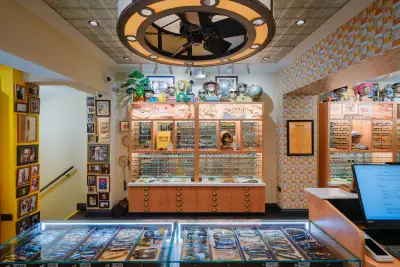
SM: Is the business still very centred on optical eyeglasses or are sunglasses catching up? Is it 50/50 or is one bigger than the other?
ZM: We’re predominantly optical, just because we're known for our optical expertise. Sometimes the sunglass market can fall into a trendier, less permanent place in your everyday wear. But business is strongest when we're selling both! I think we've penetrated more in that sunglass fashion space in the last few years, especially in terms of runway and partnerships and things like that. It's very cool.
SM: What would you say inspires you with your design choices when you're looking at the next MOSCOT creation? What goes through your head, what do you look for?
ZM: A lot of what we're trying to do is just continue to make better quality frames [at] what we feel is the right price, that's fair for our customer. The industry [right now is] so interesting because you have a lot of new players offering lower prices…which we feel has been very helpful in terms of bringing awareness to eyewear as a fashion accessory.
Now that you have so many different offerings from low price point all the way to super luxury, high price point ... so you can enter with an everyday pair, then you realise you might appreciate something like MOSCOT, once you have a dollar in your pocket to spend on a pair of glasses at $400-500, and then, you know, there's also that luxury market of spending over $1,000. So we're always striving to improve quality, looking into more fine details, with more intricate metal materials.
A lot of it is staying [to] our heritage brand, not designing things that don't speak to who and what we are. We’re trying to expand and evolve, but at the end of the day, we don't want to be something that we're not, and that's really important to us. As fourth and fifth generation owners, we’re still running the business to speak to who we are in our DNA.
SM: Maybe they're too young, but is there anyone in generation six currently showing an interest?
ZM: I have three kids, but they're pretty young! One's a powerhouse, maybe she'll just come bust her way through the door. [Another] might want to sit in the background and draw some frames. That would be cool.
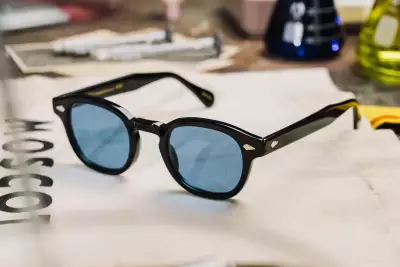
SM: One more, which I’m going to insist you answer: Which is your favourite frame?
HM: That’s like asking “who's your favourite child”?!
SM: Yep, that's why we asked!
ZM: I'm most proud of the global clout that our LEMTOSH has garnered over the last decade. It's just amazing how so many people can wear it. We make it in 4 sizes, 25 colourways, 100s of SKUs… It's almost like a phenomenon in our space. It's timeless, like a pair of jeans, a pair of wingtip shoes. But as of late I would say my favourite frame is probably the DOLT. It's a little thicker than the LEMTOSH, it embodies the same core characteristics that we're known for, but it kind of just adds a little punch. We like our frames pretty bold, you know? So it's a confident person that wears a MOSCOT frame. We always like to say “the frame doesn't wear [you], [you] wear the frames”. When you put these on it can have a profound effect on how people view you and how you view yourself. It really can modify one's perspective.
Find out more at 39 Beak Street in Soho, or at moscot.com.