Brought to you by

There are cities that require a week to get under their skin; Hong Kong requires approximately 20 minutes.
That’s roughly how long it takes after emerging from the MTR into Central to find yourself surrounded by skyscrapers, trams, temples, noodle shops, cocktail bars and the kind of contagious energy that only the world’s greatest cities can impart.
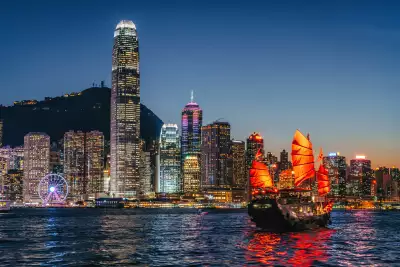
Look one way and there’s Victoria Harbour; the other, mountains rise high behind the towers. Somewhere above you is a Michelin-starred restaurant, somewhere below something equally delicious for a fraction of the price.
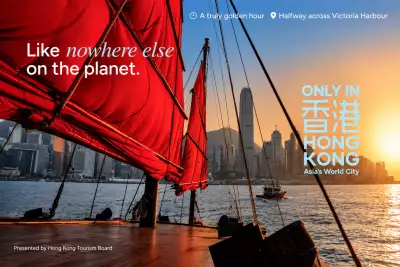
It’s this ability to squeeze seemingly incompatible experiences into one remarkably compact destination that lies behind Only in Hong Kong, the city’s new brand campaign celebrating the flavours, places and experiences you simply won’t find anywhere else.
And October might just be the perfect time to discover them.
Come hungry
If there’s one mistake to avoid in Hong Kong, it’s wasting a meal. This is a city that takes eating seriously, whether that means surrendering an evening to one of Asia’s great dining rooms or standing on a pavement with something delicious in a paper bag. Ideally, do both.
Fine dining
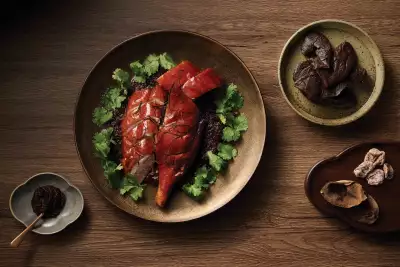
The signature roast goose with aged dried radish created by Jayson Tang at Man Ho Chinese Restaurant inside the JW Marriott Hotel.
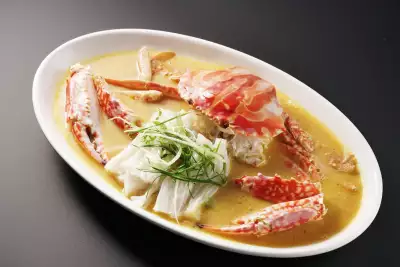
The signature Steamed Fresh Flowery Crab with aged Shaoxing wine, fragrant chicken oil, and flat rice noodles from The Chairman in Hong Kong.
At the top end, Hong Kong punches considerably above its weight. The 2026 Michelin Guide awards stars to 78 restaurants across the city, including seven with the full three-star treatment.
Among them is Amber, where chef Richard Ekkebus delivers progressive French cooking at The Landmark Mandarin Oriental. Then there’s The Chairman, whose contemporary approach to Cantonese cuisine has made it one of the hardest reservations in town, while Yardbird takes the humbler proposition of yakitori and turns chicken, charcoal and sake into something approaching an art form.
For a taste of contemporary Cantonese cooking, head to Man Ho at the JW Marriott. Chef Jayson Tang – now one of Hong Kong’s youngest Cantonese chefs to helm a Michelin-starred restaurant – brings a modern lightness to the classics, from homemade dim sum and barbecued meats to beautifully handled seafood.
Meanwhile, for old-school grandeur, three-Michelin-starred Forum Restaurant has spent decades perfecting the classics, most famously the extraordinarily tender braised abalone created by its late founder, the legendary ‘Abalone King’ Yeung Koon-yat.
And that’s barely scratching the surface. Hong Kong’s great strength is variety: Cantonese institutions sit alongside world-class Japanese counters, modern European restaurants and chefs importing influences from seemingly every corner of the globe. Come with an appetite – and book before you even leave Blighty.
Street food
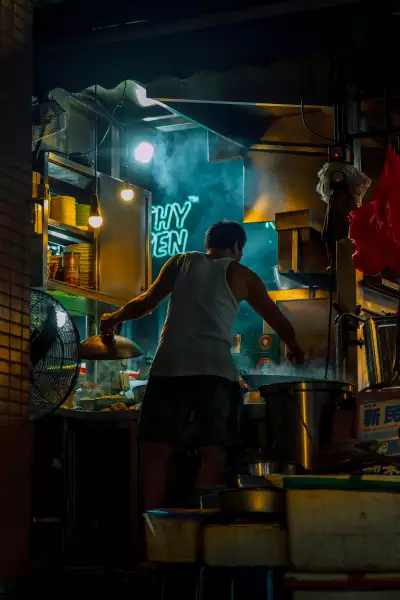
A chef cooking in a Sing Kee dai pai dong
Charles F Hu / factoryxii.today
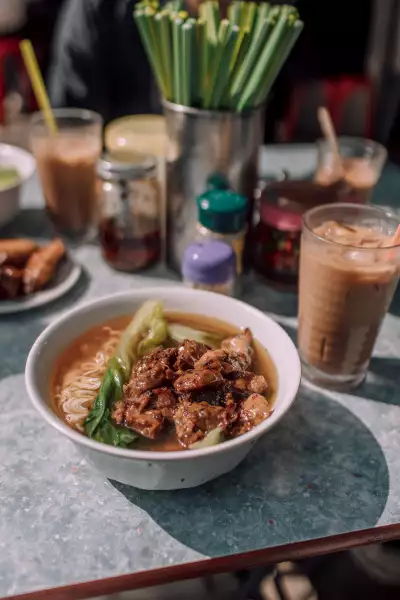
A dish from Bing Kee Cha Dong, a local dai pai dong in Tai Hang
Charles F Hu / factoryxii.today
The beauty of eating in Hong Kong is that spending considerably less doesn’t necessarily mean eating considerably worse. Indeed, some of the city’s most memorable food comes without white tablecloths or wine pairings.
Dai pai dongs remain part of the city’s culinary fabric: open-air restaurants where woks operate at ferocious temperatures and dishes arrive at equally impressive speed. Oi Man Sang is a classic of the genre, while Sing Heung Yuen has been feeding generations of Hongkongers its famous tomato noodles.
Elsewhere, seek out silky tofu at Kung Wo Beancurd Factory, bowls of beef brisket noodles, curry fish balls, siu mai and freshly baked egg tarts. Dim sum deserves a meal of its own, as does roast goose and char siu.
Michelin itself lists numerous Hong Kong street-food specialists, which tells you something about a city where eating brilliantly has never required silverware.
Hong Kong Wine & Dine Festival
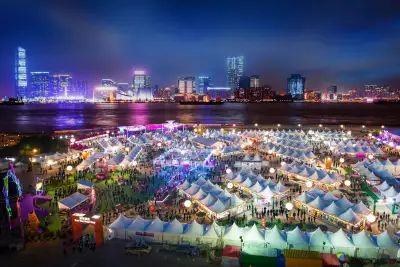
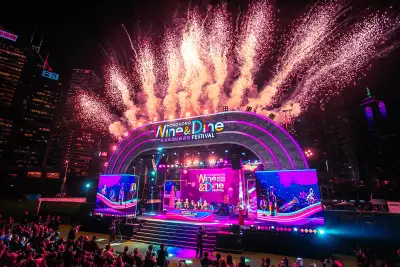
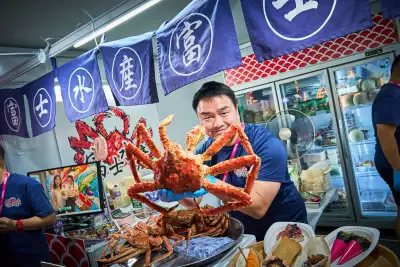
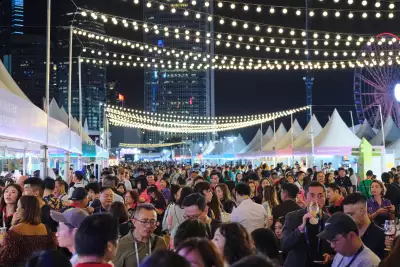
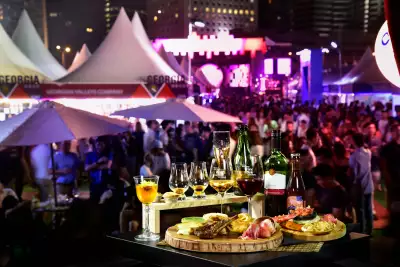
For four days every autumn, much of that culinary firepower comes together in one place. The Hong Kong Wine & Dine Festival brings hundreds of food and drink stalls to the Central Harbourfront, backed by the rather unfair advantage of Victoria Harbour as its backdrop.
Wine is naturally a major part of proceedings, ranging from big-name European and Australian producers to Chinese wines, lesser-known regions, natural wines and low-alcohol pours. But the food is every bit as important, bringing together local Hong Kong favourites and international cooking alongside live entertainment.
It’s effectively Hong Kong’s appetite distilled into one long weekend: high-end and informal, local and international, all taking place beneath one of the world’s great skylines. Just don’t make dinner plans afterwards.
After dark
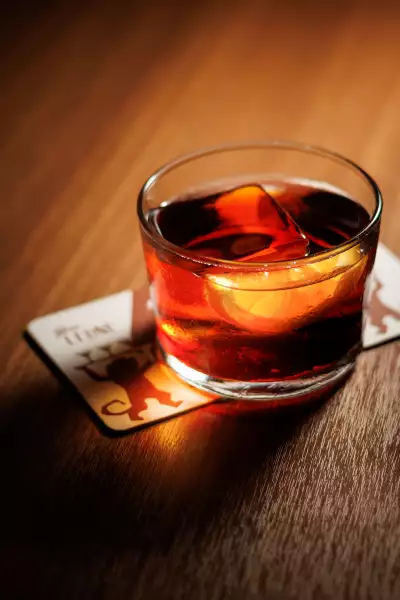
A mezcal negroni at Bar Leone
Bar Leone
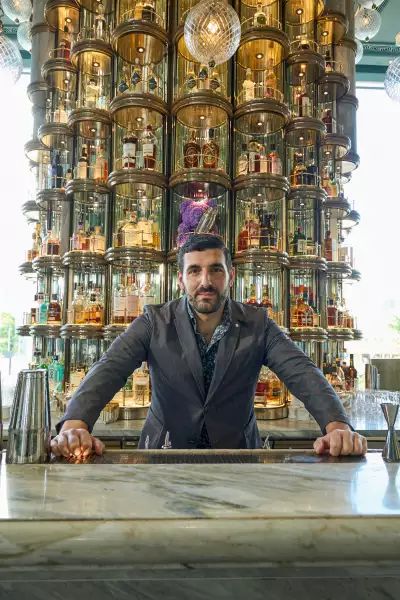
Inside Argo at the Four Seasons Hotel Hong Kong
Chan Chi Leung
Hong Kong doesn’t exactly clock off at 5pm. Central, Soho and Sheung Wan contain enough restaurants and drinking dens to occupy an entire holiday, ranging from tiny neighbourhood bars to glamorous hotel terraces hundreds of metres above the pavement.
The obvious place to start is Bar Leone. Lorenzo Antinori’s laid-back Italian-inspired neighbourhood bar was named the World’s Best Bar in 2025 and remains Hong Kong’s highest-ranked establishment on Asia’s 50 Best Bars in 2026. The cocktails deliberately avoid unnecessary theatre; order something cold and Italian, add one of its mortadella focaccias and wonder why all world-class bars can’t be this much fun.
Elsewhere, Coa specialises in agave spirits; Kinsman champions Cantonese and Chinese ingredients and spirits; and Argo at Four Seasons Hong Kong recently created an entire cocktail menu inspired by the city’s craftspeople, producers and flavours.
That contrast is very Hong Kong. One minute you’re drinking a painstakingly engineered cocktail in one of Asia’s best bars; the next you’re walking through streets buzzing with late-night restaurants, glowing signs and the reassuring knowledge that another meal is never far away.
Take a hike
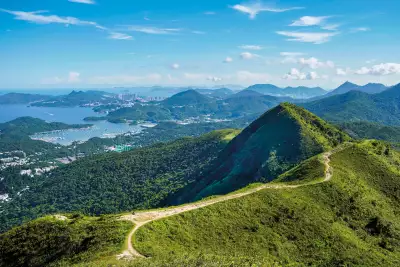
The Maclehose Trail is a perfect trail for any hiking enthusiasts and nature lovers when visiting Hong Kong.
Bernard Chan
The biggest misconception about Hong Kong is that it’s all skyscrapers. In fact, there are around 600km of hiking trails threaded through mountains, forests and coastline, meaning you can leave the urban frenzy behind remarkably quickly.
Dragon’s Back is the classic introduction. The ridge runs through Shek O Country Park, delivering expansive views across green hills and the South China Sea before you can say, “I thought Hong Kong was a city break.” Finish at Big Wave Bay and you can swap walking boots for a swim.
For something more dramatic, tackle Lion Rock, the mountain looming over Kowloon. The wider country park offers everything from gentle reservoir walks to more demanding climbs, with the city spreading beneath you in a spectacular jumble of towers and mountains.
And if you have the time, the MacLehose Trail stretches almost 100km across the New Territories, its ten sections taking hikers from Sai Kung’s wild beaches and volcanic coastline to some of Hong Kong’s highest peaks.
The juxtaposition is the point here: few major cities allow you to spend the morning surrounded by high-rises, hike across a mountain in the afternoon, and be back at a world-class cocktail bar for sundowners.
Island life
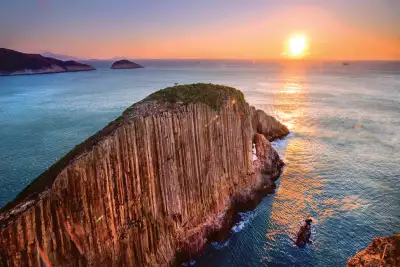
Po Pin Chau is a breathtaking sea stack in Sai Kung East Country Park featuring millions-of-years-old hexagonal volcanic columns.
Leung Wai Por
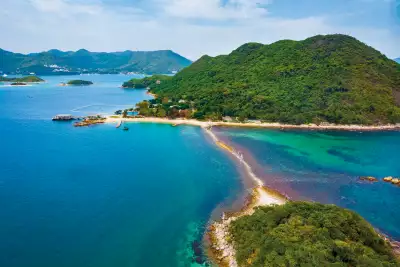
Stacking a hike, a waterfall swim, and a beach day all into one afternoon at Sai Kung
Hong Kong has more than 200 outlying islands, so escaping the city doesn’t necessarily involve leaving Hong Kong at all.
Take a ferry to Cheung Chau and skyscrapers are replaced by beaches, fishing boats and narrow lanes. Grab one of the island’s famous giant fish balls from a street-food stall, hire a bicycle or walk the coastline before catching the ferry home.
Lantau offers something altogether grander. Hong Kong’s largest island combines beaches and hiking trails with the Po Lin Monastery and Tian Tan Buddha – the enormous bronze figure reached via 268 steps. The Ngong Ping cable car provides the rather less strenuous approach.
Better still, take to the water and island-hop through Hong Kong’s outlying archipelago, where fishing villages and empty beaches give way to the extraordinary volcanic landscapes of the UNESCO Global Geopark – including Po Pin Chau, a towering sea stack of hexagonal rock columns best admired from the water.
That’s Hong Kong’s great trick: convincing you that you’ve travelled hundreds of miles when you’ve barely left town.
Culture club
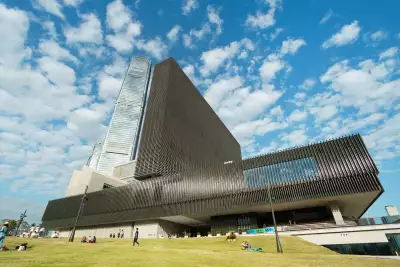
M+ is Asia's global museum of contemporary visual culture, located in the West Kowloon Cultural District.
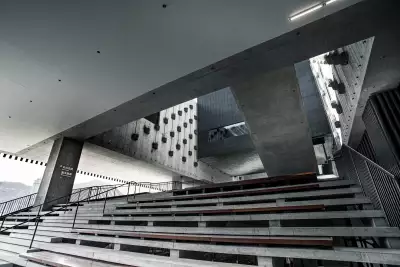
M+ is Asia's global museum of contemporary visual culture, located in the West Kowloon Cultural District.

M+ is Asia's global museum of contemporary visual culture, located in the West Kowloon Cultural District.
Keisuke Kitamura

M+ is Asia's global museum of contemporary visual culture, located in the West Kowloon Cultural District.
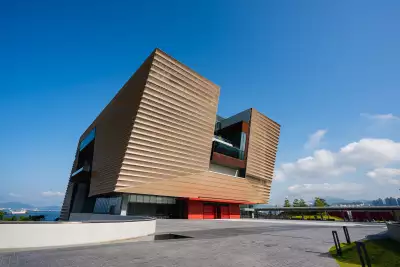
Hong Kong Palace Museum
Hong Kong’s cultural scene has changed enormously in recent years, not least thanks to West Kowloon Cultural District.
Its architectural centrepiece is M+, one of the world’s largest museums dedicated to modern and contemporary visual culture. Its collections span art, design, architecture, moving image and Hong Kong visual culture, with 33 galleries and a roof garden overlooking Victoria Harbour.
Nearby, the Hong Kong Palace Museum explores Chinese art and culture, while elsewhere in the city, Tai Kwun has transformed the former Central Police Station compound into a major centre for heritage and contemporary art.
The best cultural experiences, though, aren’t always behind museum doors. Take the Star Ferry across Victoria Harbour, ride one of Hong Kong Island’s wonderfully old-fashioned double-decker trams or wander through neighbourhood temples squeezed improbably between tower blocks.
Go local
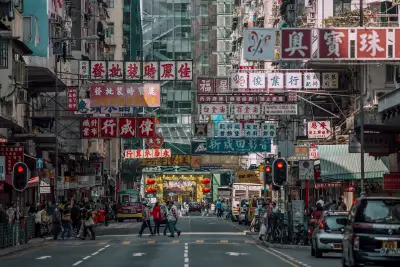
Sham Shui Po is a vibrant district in Hong Kong where historic tenement buildings and bustling street markets meet trendy indie cafés.
Charles F Hu / @factoryxii
Central’s skyline may dominate the postcards, but Hong Kong becomes even more interesting when you start exploring its neighbourhoods.
Sham Shui Po is a good example. Once primarily known for its markets and electronics shops, its old streets now sit alongside independent cafés, creative spaces and boutiques. Browse fabrics and trimmings around Ki Lung Street, rummage through the electronics of Apliu Street, and then stop for coffee before heading back out for another round of eating.
Sheung Wan offers another compelling collision of old and new: traditional dried-seafood shops and Chinese medicine stores rub shoulders with galleries, coffee shops and cocktail bars.
For retail therapy on a considerably grander scale, Central and Tsim Sha Tsui deliver virtually every luxury marque imaginable, while neighbourhood markets and independent designers provide rather more suitcase-challenging souvenirs.
The joy is in wandering rather than ticking things off, as Hong Kong will forever reward curiosity.
Getting there – and getting around
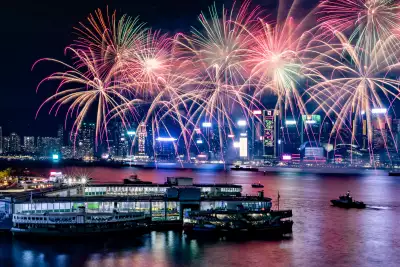
Despite feeling gloriously different from England, Hong Kong is remarkably straightforward to visit from here.
There are direct flights between London Heathrow and Hong Kong, and once you arrive the Airport Express makes short work of the journey into the city. From there, the MTR is fast, clean and almost absurdly efficient, supplemented by buses, ferries, taxis and those historic trams.
But don’t spend the whole trip underground; Hong Kong is best understood at street level – preferably with no particular destination in mind and an appetite you’re prepared to test.
Because that’s ultimately what makes this place special. You can eat at one of the world’s great restaurants, drink at one of its great bars, climb a mountain, swim from a beach, explore a fishing village, visit a world-class museum and buy something wildly unnecessary – all without ever leaving Hong Kong.
There aren’t many destinations where you could realistically do all of that in a couple of days. Only in Hong Kong, indeed.
Discover the experiences you’ll find Only in Hong Kong. Plan your trip, explore neighbourhood guides, events and itineraries at discoverhongkong.com and follow @discoverhongkong on Instagram and Facebook.