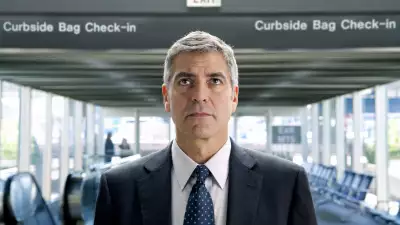
I hate flying. Always have done. It’s not something I’ve ever felt the need to justify: being shot 30,000 feet into the atmosphere in a metal tube that is constructed and piloted by total strangers? Frankly, anyone who doesn’t hate flying betrays a chronic lack of imagination. Don’t get me started on the freaks who enjoy the experience.
I study the pilots on boarding, searching for any sign of intoxication or myopia or a recent and traumatic divorce. Takeoff is the worst. Turbulence isn’t great either, obviously, but those ten minutes between the plane accelerating down the runway and the red seatbelt sign pinging off can reasonably – if paradoxically – be described as my existential lowpoint. The higher the plane ascends, the more jittery I get. Should you ever wish to make a quick £100, purchase a bottle of something strong at duty-free and flog it to me ten seconds after we leave the tarmac.
Forget the plane: I’m on a mental rollercoaster, inwardly screaming throughout. “What was that noise?” “Are the engines meant to sound like that?” “Does that stewardess look alarmed?” “Christ, we’re turning! Are we meant to be turning!” It gets better once we level and the seatbelt sign goes off; the seatbelt sign is my signal to relax, so much as relaxation is attainable. The drinks trolley arrives like a lifeboat.
I love travelling – I love everything about it except the travelling part
There’s an amusing irony that the biggest perk of my job is the frequent opportunities to travel. And I love travelling – I love everything about it except the travelling part. I’ve never turned down a trip due to the flying required but not flying is certainly a bonus of missing one. Also I’ve reached my thirties, the stag party era, and at least twice every summer I am squeezed onto an aircraft with the dimensions and durability of a toothpaste tube to descend upon some boozy Balearic outpost for a weekend that takes five years from my life.
Oh, and the dreams. To be an aeroplane in one of my dreams is akin to being a car in the Fast and Furious franchise: your existence will be dramatic, and likely doomed. I dream about planes every couple of months or so, with inevitably disastrous consequences. Sometimes I’m on the plane itself, sometimes I’m watching as it hurtles towards the ground. Several of these dreams are more vivid to me now than memories of actual flights.
“You should try hypnosis,” a friend told me. As a teenager, she flunked every exam due to nerves. A spot of hypnotherapy later and boom – top of the class. All well and good but you can’t plummet to fiery oblivion while sitting in a gymnasium on the Isle of Wight, however tricky the simultaneous equations. Hers was a mental block; mine a perfectly reasonable sensitivity to potential disaster that cannot be treated by some chancer with a moustache waving a pocket watch in front of my face.
And yet. Statistically an Isle of Wight gymnasium might be more perilous than an aeroplane – certainly the drive there is. Every week, I navigate London streets on Lime bikes, happily helmetless. Sure, I have the illusion of control, but if a joyrider jumps the wrong red at 50mph even Spiderman reflexes won’t save me. Boarding an early morning flight to Belfast isn’t equivalent to heading over the top at the Somme, however it might feel in the moment. It isn’t equivalent to cycling down to Brixton. Or walking down to Brixton.
As the name suggests, hypnotherapy is a combination of hypnosis and psychotherapy. Some people are more responsive than others but there’s no question it can be an incredibly effective treatment if utilised correctly. Adele used hypnotherapy to quit smoking; Kevin Bacon to improve his sleep quality; Orlando Bloom to overcome a childhood chocolate addiction. Hell even Winston Churchill – nobody’s idea of a ‘woo woo warrior’ – supposedly used hypnotherapy during World War Two. (It was also a common treatment for shell shock, PTSD as we’d describe it today.)
Hypnotherapy is equally as concerned with the therapy as the hypnosis
And so I hit the internet to find a hypnotherapist. James Mallinson of Fix My Mind possesses neither moustache nor pocket watch… well, he doesn’t have a moustache and any watch stays pocketed. What Mallinson does possess is more than 15 years’ experience, thousands of satisfied customers and an endorsement from Dame Kelly Holmes on his website. He also has one of the most soothing manners I’ve ever encountered and an unerring level of psychological insight. The two may be related.
On our introductory phone call, he quickly links an adolescent spate of anxiety attacks to my phobia of flying. On our first Zoom, he takes five minutes to identify me as an introvert who’s taught himself to be outgoing rather than an extrovert who can get a little pensive. This all might sound a little tangential to being terrified of planes – it isn’t. Hypnotherapy is equally as concerned with the therapy as the hypnosis. It isn’t magic. It’s all in the mind.

The mighty reassuring James Mallinson of Fix My Mind
There are four stages in total: the phone call, a questionnaire to fill out, and two sessions over Zoom. Some people need more sessions, others only one – Mallinson reckons two should do the job. Do I not need to be there in-person? No, he assures me, Zoom is fine. Just ensure you’re in a quiet room and give me your undivided attention. You won’t be passing out on the keyboard.
Mallinson says this is the biggest misconception about hypnotherapy: “that someone's going to be asleep, unconscious, in a trance. Basically how it's represented on TV.” In fact, says Mallinson, “hypnosis isn't trying to make you look or be unconscious. It's trying to change your unconscious responses. That's the distinction.”
He tells me about the amygdala, the part of our brain that processes emotions – especially fear. You know the old ‘fight or flight’ concept? That’s the amygdala. It reacts to triggers: in my case, the trigger is an aeroplane. (Or a helicopter: I don’t discriminate.) As the prospect of flying draws closer, the amygdala starts playing up, and ironically flight isn’t really an option once the plane hits the runway. Cue panic.
Opening my eyes I felt all warm and fuzzy, like I was knocking back red wine in a bubble bath.
So what actually happens in the sessions? Well, we talk a fair bit about flying. A little about the mind. Mallinson does a technique called havening that involves me rubbing my arms and recalling past anxieties – airborne and otherwise – before replacing those memories with comforting thoughts. It sounds a bit funny written down but the effects were real enough – on opening my eyes I felt all warm and fuzzy, like I was knocking back red wine in a bubble bath.
There’s more chat, another mind technique or two, and that’s your lot. Done. The first session lasts roughly ninety minutes, the second session considerably shorter. Apologies if I seem opaque but my recollections are a tad hazy – I was hypnotised, after all – and also it’s borderline impossible to convey the sensation on the page. So much of it is tied to Mallinson’s voice, his words, his cadence. As those annoying people say, you just had to be there.
Anyway, the process doesn’t really matter. What matters is whether it worked. I wouldn’t have to wait long to find out.
Takeoff
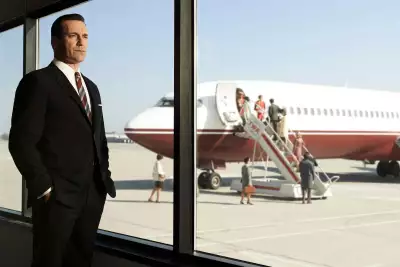
Max ponders the upcoming flight
Alamy
A funny thing happens following my sessions. I dream of planes – twice, I think, maybe three times – and yet no disaster occurs. This is an interesting development. Promising, if not the real quiz.
The real quiz takes place a fortnight later: a flight to Belfast. Heading to the airport, my primary emotion is curiosity, which is a new one and considerably better than dread. Here we go. Inevitably, the flight is delayed by ninety minutes. Then it’s cancelled. The countless prayers I’ve whispered for a flight cancellation over the years and the one time I want to board the bloody thing – mechanical issues! You have to laugh. (Reader: I didn’t laugh. Nor did anyone else. There were many emotions displayed by those clustering round the easyJet desk at gate six but mirth wasn’t prevalent among them.)
I’m rebooked on a late evening flight with a mere five hours to kill. Through a combination of self-discipline and an awful lot of walking I avoid spending all of it at the pub. Some departure lounges are practically small towns; Luton Airport is not one of those departure lounges. It’s barely a shopping centre. You do not understand time until you’ve spent five hours shuffling between WH Smith and the Lego store in the vague hope there might be an arcade bar you somehow missed the previous 14 laps.
Anyway. We board, some fifteen years later. The pilot cheerfully warns us the descent into Belfast might get a little bit tasty. (Or words to that effect.) The plane wheezes away from the gate. The old negative thoughts start to encircle my mind, mentally squeezing me like a very anxious boa constrictor. “God, this will be awful…”
Except this time I shrug them off. No – ‘shrug’ makes it sound too casual, like something out of a perfume advert. (He shrugs, he smiles, he winks at the camera. “Aviation: The New Aftershave For High Fliers.) I don’t shrug off the thoughts, nor do I fight them off – too active. In fact I don’t do anything. That’s the trick. The thoughts are still there, trying to jabber me into a state of panic, but I choose to ignore them. I look the other way.
I’m on an aisle seat, the window to my left an empty black square. There’s no outside world to leave behind, no horizons to conquer. My existence is plane. The plane and the various rattles and creaks and bumps that soundtrack its journey to the runway. Then the frustrated growl of engines that almost certainly have seen better days, the acceleration down a strip that appears to be paved with cobble, any second now something will go bang, oh God we’re up, there goes any hope once catastrophe inevitably strikes…
In football parlance, the atmosphere is letting us know it's there
I know the drill. And rather than follow it like a good little aerophobe, I take a deep breath and remind myself that I’m relaxed. It’s all good. And then I do something remarkable, something I’ve never done during takeoff for decades, almost certainly my entire life.
I close my eyes.
Big whoop, so what? Half the flight has their eyes closed. Dude the row in front is literally asleep. You don’t understand: I have to be present during takeoff. Not in the “hello birds, hello trees” way, more the conviction that if I’m not attuned to every single noise and movement then something will go disastrously wrong. Illogical, I know, but fear and logic rarely gel. Put it like this: if you find yourself trapped in a lion enclosure, it’s hard not to focus on the lion.
I close my eyes and attempt to nap while the plane lurches into the sky. It doesn't happen – let's not go crazy – but compared to my typical state, I'm not relaxed so much as zen. This despite everyone's favourite combination of small aircraft and strong winds! We aren't talking the opening scene of Flight but, in football parlance, the atmosphere is letting us know it's there.
I aim to keep my eyes closed until the seatbelt sign goes off – and I would've done so if I weren’t confused by the bing of someone summoning a stewardess. Whatever, I’m navigating a brave new world of the skies. No angst, no alarm. I might even be a little bored – what a thrill!
A few days later, I board the return flight in the early afternoon. I do a quick spot of havening on the runway – rub my shoulders, think calming thoughts – and assure myself all is well. I have a window seat so eyes open this time, watching the Irish landscape curve beneath me. Flying hasn’t suddenly become my new favourite pastime, I doubt it ever will be, but it’s hard to overstate the difference. Coffee isn’t my favourite ice cream flavour but I’m not violently allergic to it.
James Mallinson has a simple message for those uncertain about hypnotherapy: don’t do hypnotherapy. “If you're on the fence, don't do it,” he says. “Don't reach out to any therapist.” He refers to the "threshold moment”, the point where somebody is motivated and ready to commit. “When you're at that point, then smash the emergency glass and reach out to whatever kind of therapist that you require.”
According to studies, says Mallinson, “ten to 15% of the population can be very profoundly hypnotised. Those are the people who do look like they're sleepy. About ten to 15% of people can't be hypnotised at all, and the rest will experience hypnosis to some degree.” Don’t read anything into susceptibility: “some people on the phone go, ‘I'm strong-willed. I can't be hypnotised.’ It's like, yeah, go and tell that to my billionaire client.”
I have no idea whether hypnotherapy will benefit you or not. However I can say with assurance that it might. It certainly benefited me. Mallinson tackles all manner of issues: addictions, insomnia, public speaking, traumas past and present. As the man himself says, “if you have a fear, have hope. There is a way to be better.”
Because when it comes to your mind, the sky really is the limit.
Postscript
I've flown four more times since my sessions with James. I still get a tad jittery on takeoff, although far less than before. It's much more controllable, too – I'm doing something I don't particularly enjoy rather than something that terrifies me. The difference is vast.
The biggest single difference has been the lack of anticipatory dread. I don't fret for days in advance, and even at the airport I'm chilled. I'm off to New York next month and the thought of ten hours airborne doesn't bother me in the slightest. I can't be certain but I suspect these improvements will continue as I cease to associate flying with terror.
Hypnotherapy is one of a number of ways to cope with fear of flying. There are courses, alternative treatments. Medication. Booze, if you must. What works for somebody won't work for another. But I totally agree with Mallinson – help is out there. You just need to back yourself to find it.
For more information, see Fix My Mind