As one of the most popular travel destinations among the younger generation, people flock to Seoul to experience K-culture, Korean food and the rich cultural heritage of the South Korean capital.
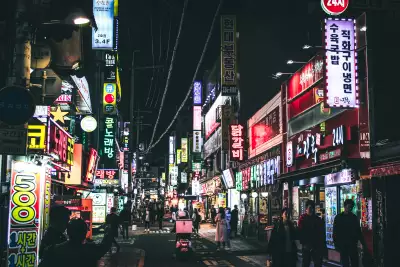
In recent years, Seoul has also gained a growing reputation for its buzzing nightlife, with some of the most innovative and exciting bars in the world. The restaurant and bar scene in Seoul can be like a chameleon – it quickly adapts and changes to appeal to social media and consumer trends.
However, despite many establishments chasing the latest trends, some of the best are able to show cutting-edge innovation while also keeping traditional Korean culture and craftsmanship at the heart of everything they do.
With an estimated 15,000 bars and 125,000 restaurants across Seoul, one of the hardest parts about writing a drinks guide to the city is the overwhelming choice. To put that in context, despite London having a larger land area than Seoul, there are an estimated 3,500 pubs and 11,000 restaurants in the English capital.
Therefore, as I sat on board my Finnair flight to Seoul, sipping its signature cocktail, Northern Blush – gin mixed with the juice of Finnish lingonberries – I had to carefully craft my plan of action for which bars to visit during my upcoming two months in Seoul.
However, before I even started to think about which bars to visit, I had to become accustomed to the etiquette, rituals and traditions that underpin the drinking culture across South Korea.
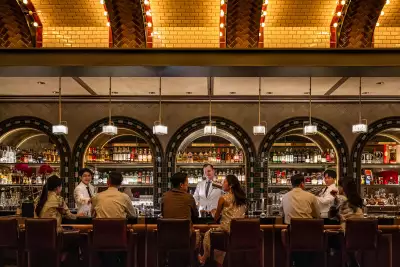
Charles H – a hidden cocktail bar in the lower level of Four Seasons Hotel Seoul.
During the Joseon Dynasty, Confucianism shaped Korean society and ideology for more than 500 years. Focusing on morality and virtue, the belief system was also used to provide a framework to limit the potentially immoral effects of alcohol.
Despite the shift away from Confucianism in the early 20th century, many rituals and traditions still remain a big part of Korean drinking culture. For example, the youngest in the group must pour drinks for others with both hands. It is bad manners to pour your own drink; instead, you must wait until someone else pours yours.
It must be said that one of the underlying principles of Confucianism is self-control and moderation. However, if you ever find yourself walking through Hongdae or Itaewon at night, you will soon realise that these traditions aren’t always closely observed.
To start my alcoholic odyssey across Seoul, I met a friend and we took a short taxi ride through the busy streets of Itaewon on a Friday night to the backstreets of Hangang-daero near Yongsan Station, one of the major railway stations in Korea, which handles around 39 million commuters each year.
One of the underlying principles of Confucianism is self-control and moderation. You will soon realise these traditions aren’t always closely observed
In search of something authentically Korean, we stumbled across Hay, a bar situated inside a traditional hanok building. Hay encapsulates the vibrant energy of the neighbourhood: during the day, it opens as a quaint coffee shop frequented by locals, office workers and remote workers looking for somewhere peaceful. At night, the lights are dimmed and it takes on a new lease of life as a bar.
There wasn’t a cocktail menu with more than 100 items, there wasn’t an avant-garde theme, and there weren’t theatrical bartenders. Instead, Hay had a cosy ambience that gave the sensation of time fading away. As I sat nursing a Campari for almost three hours while Japanese jazz fusion played softly in the background, it felt as though only 30 minutes had passed. This experience reinforced that simplicity is often the best policy.
One of my favourite things to do while in Seoul is to walk from the Seongbukcheon Stream towards the Cheonggyecheon Stream, a 10.9km walkway that flows through the city. During one such occasion, I was walking along the stream with a friend when they spontaneously recommended a nearby bar called Gabby’s Cottage.
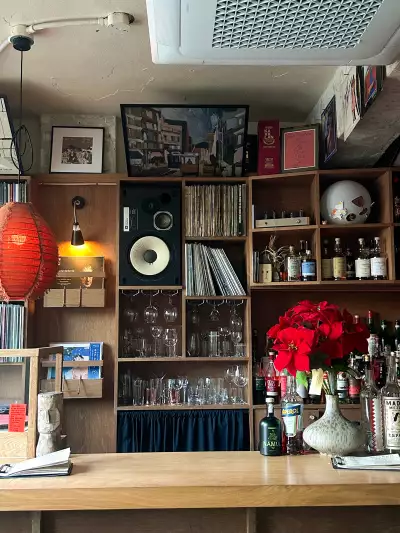
Admittedly, I had walked past the bar several times but had never noticed it before, as it is in an unassuming location in the Jongno District, just steps away from Gwangjang Market.
Opening the door to the intimate vinyl bar, it feels as though you’re discovering a hidden gem that only people in the know are aware of. It has a relaxing ambience and cool vibe, but its true charm comes from the talented bar staff, who craft incredible cocktails.
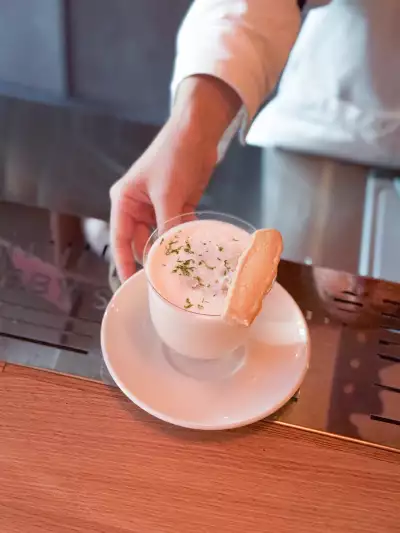
As someone with a big sweet tooth, my mind was instantly drawn to a cocktail called “Who Stole My Lime Pie?” The cocktail contained kaffir lime-infused gin, fresh lime, vegan egg white and heavy cream, alongside a brown butter and vodka cookie. Had I not watched the bartender craft the cocktail with such care and precision, I would have sworn they had blended a lime pie and poured it into a glass. From the taste of the cookie to the aromas of the lime, and the creaminess and light citrus tang of the cocktail, the likeness was uncanny.
During another night walk along the Cheonggyecheon, I walked to Dongdaemun Square to see the Great East Gate under the lights. The landmark is one of the Eight Gates of Seoul in the Seoul City Wall and was built during the Joseon period by King Taejo to protect the city against invaders.

CJNattanai / iStock
Rather than getting a history lesson, I was tempted by a sign for Eastman, a bar located a stone’s throw from Dongdaemun Square.
The bar, which had only been open for three weeks when I visited, was dimly lit and Brazilian samba was emanating from two big hi-fi speakers at the back of the room. As I sat down at the bar, I made light conversation with the bartenders and mentioned that I was visiting from the UK. In response, they asked if I’d like to try a cocktail they had been working on.
It was a Korean twist on Soho House’s signature Picante de la Casa, which is similar to a Tommy’s Margarita. At Eastman, the spirits were infused with Korean shishito peppers and kelp, and instead of the traditional coriander, fresh cucumber was added before shaking. It toed the line perfectly between sharp and warming, but also light and refreshing – exactly what I needed after a hot spring day in Seoul. It was also a joy to see the passion radiating from the bartenders, in the way they wanted to create something innovative and personalised while telling a story at the same time.
While in Seoul, I spent a night at the Four Seasons Hotel. During my stay, I was invited to visit H. Bar, an intimate eight-seat venue hidden within Charles H. Bar, for a cocktail tasting course accompanied by light bites.
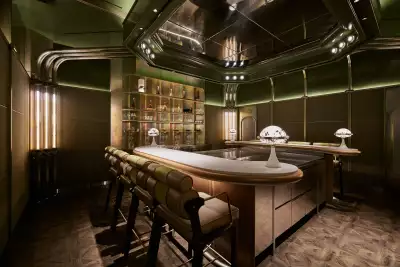
H. Bar, an intimate eight-seat venue hidden within Charles H. Bar at the Four Seasons.
It was far more than a drinking experience; it was a sensory journey. With a front-row seat to the action, I watched the bartenders showcase hyper-seasonal Korean produce while sharing the history and cultural significance behind each ingredient. These flavours were used to elevate cocktails, including a Korean twist on the classic Sgroppino and the Champagne.
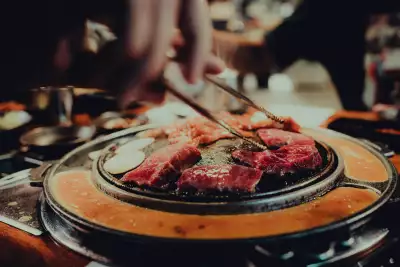
To celebrate – or rather, commiserate – my final night in Seoul, I took a friend to Geumdwaeji Sikdang, AKA Gold Pig, which is widely considered one of the best Korean BBQ spots in the city. With celebrity diners including members of BTS, David Beckham, Zac Efron and Chris Hemsworth, Gold Pig is effectively the Seoul equivalent of Dorsia in American Psycho, with people queuing outside for up to three hours just to get a table.
Korean BBQ holds an important place in Korean culture as a regular meeting place for social gatherings and after-work meals with colleagues and bosses. It is a way in which people strengthen relationships and build emotional connections while sharing food and drink.
Unsplash
There are few better feelings in the world than spending time with friends while indulging in succulent pork belly, juicy Hanwoo beef, spicy soup and plentiful banchan (side dishes). Perhaps the only thing that could make it better is alcohol.
My drink of choice while having K-BBQ is usually soju, a distilled Korean liquor traditionally made with rice. It is the perfect accompaniment to a meal, as it cuts through salty and spicy flavours and cleanses the palate before your next bite.
Many Koreans mix soju with beer in a concoction called somaek. As a European, I have previously resisted the idea of mixing anything with beer. I’m not particularly defensive about protecting the traditions of lager; I just don’t see the appeal when it comes to highballs and the like.
However, I let my guard down for the night and ordered somaek. Even before taking my first sip, I enjoyed the theatrics involved in the pouring of the drink. As displayed by our waiter, Koreans take great pride in pouring somaek and adding flair and excitement to the process, whether that’s creating a soju tornado or clashing two spoons inside the glass to create a foamy head. The drink has the refreshing, crisp taste of a cold pint of beer, with a slightly sweet tinge of sharpness from the soju.
One of the best ways to immerse yourself in Korean culture is through Seoul’s food and drink scene. While sitting at bars across the city, I was able to experience the ingenuity and craftsmanship of sommeliers and bartenders while spending time with warm-hearted locals who take pride in sharing their rich culture and heritage.
Finnair offers year-round flights from London Heathrow to Seoul via Helsinki, with multiple daily services between London and Helsinki providing flexible onward connections to the South Korean capital. For more details, and to book, visit finnair.com or call 0330 808 1188.
Geumdwaeji Sikdang, 149 Dasan-ro, Jung-gu, Seoul; Eastman, 284 Jong-ro, Jongno-gu, Seoul; Gabby’s Cottage, 405-1, 2F, Dongho-ro, Jongno-gu, Seoul; Hay – Coffee & Bar, 36 Hangang-daero 15-gil, Seoul