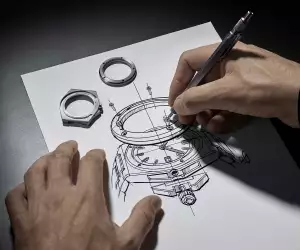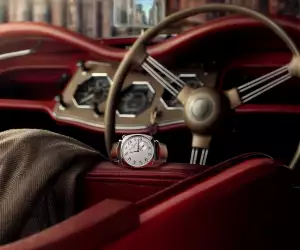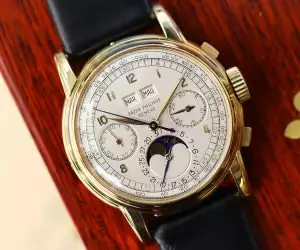
Two hundred years is a long time in watchmaking. Long enough to survive world wars, the quartz crisis, countless changes in fashion and, in Gallet’s case, a prolonged spell largely outside the horological spotlight.
Founded in La Chaux-de-Fonds in 1826, the Swiss marque made its name producing serious timing instruments for aviation, motorsport and exploration. Now Gallet is returning for its bicentenary, backed by Breitling and armed with a collection that digs deep into that considerable archive.
The revived marque is being positioned as a more accessible sibling to Breitling and Universal Genève, with every watch manufactured using Breitling’s infrastructure.
That means Gallet can lean on the parent brand for production expertise, servicing and distribution rather than attempting to rebuild all of that from scratch.
“Gallet has a remarkable history and a distinct identity,” says Breitling CEO Jean-Marc Pontroué. “By manufacturing every watch within Breitling’s infrastructure, we’re able to honour that heritage while ensuring the quality, reliability, and service expected from a modern Swiss watch brand.”
Gone wandering

Rather than attempting to make Gallet into Breitling-lite, its new custodians have built the brand around ‘wanderlust’. Yes, the watch industry has found another lifestyle concept to hang its hat on, but at least this one has some historical substance behind it.
Gallet’s archive is packed with watches designed for travelling, flying, racing and sailing, so positioning it as the foot-loose and fancy-free member of the family makes a lot of sense. The launch comprises four collections across three families: Flying Officer, Multichron Pilot, Multichron Sport and Classics.
The latter is particularly enticing for heritage buffs. Three manually wound chronographs have been created to celebrate the bicentenary, taking inspiration from historical Gallet references but using the new Gallet G09 – a customised version of Breitling’s excellent B09 hand-wound chronograph calibre – at their core.
“A great chronograph starts with its movement,” says Gallet managing director Erwan Rossignol. “The Caliber G09 combines proven performance with refinements developed specifically for Gallet, reinforcing the watchmaking credentials at the heart of the brand.”

Elsewhere, Gallet is using Sellita-based movements: the Gallet 23 chronograph calibre offers around 65 hours of power reserve, while the three-hand Gallet 17 manages approximately 41 hours.
It makes for an intriguing proposition. You get the historical name, designs informed by an unusually rich archive and the reassurance of Breitling sitting behind the curtain.
Gallet is also being given physical space inside selected Breitling boutiques, complete with dedicated safari-inspired areas. Meanwhile, an interchangeable quick-release strap system runs throughout the range, with leather, rubber, fabric and wraparound options alongside steel bracelets for certain models.
The challenge will be making a new generation care about a name many of them won’t recognise. But that’s also the opportunity. Unlike some revivals, Gallet isn’t attempting to conjure a history from a logo found in a filing cabinet. There’s genuine material here to work with.
“Gallet was born in an age of exploration and has followed that path ever since,” says Georges Kern, CEO of House of Brands, which encompasses Breitling, Gallet and Universal Genève. “We’re proud to bring Gallet back for a new generation.”
Two centuries after the adventure began, Gallet has another chance to see where it leads.
Flying Officer






The Flying Officer dates back to 1939, when its rotating bezel allowed pilots to keep tabs on the time at forthcoming refuelling stops. Harry S. Truman famously owned one; the former US president described it as “the most elaborate watch [he] ever saw”.
The modern version measures 40mm and updates the concept with a GMT city ring reflecting contemporary global destinations. Chronograph models use the 65-hour Gallet 23 and come in light blue or black, while automatic versions use the Gallet 17 and are offered in orange or dark blue. The former takes its inspiration from the patina of an oxidised vintage example.
Multichron Pilot

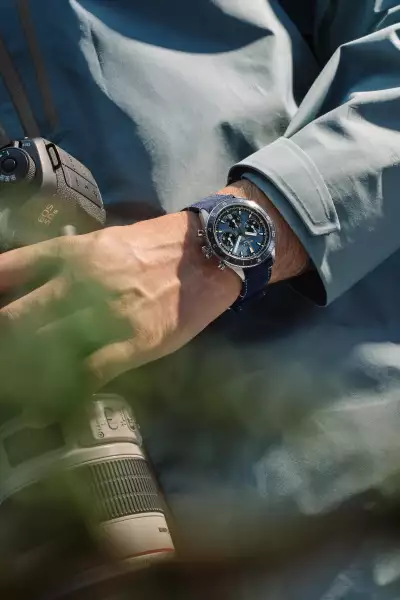
Introduced in 1969, the original Multichron Pilot combined chronograph functionality with the ability to monitor another time zone. The new interpretation grows to 42mm and uses the automatic Gallet 23 chronograph calibre.
There’s a telemeter scale, date at six o’clock and plenty of lume, while colour choices comprise black with white subdials or blue with black subdials. Gallet describes it as its go-anywhere, do-anything watch. In other words, this is the one designed to take the knocks.
Multichron Sport


The motorsport-flavoured member of the family is a 41mm chronograph inspired by Gallet’s performance watches of the 1960s, including the Multichron 12 Scientific.
Again, power comes from the Gallet 23, while a tachymeter provides the appropriate speed-measuring credentials. A bidirectional bezel, orange hands and date window at six complete the package. Choose between dark blue with black subdials or anthracite with contrasting white registers.
Classics

Gallet Tribute to Multichron 45
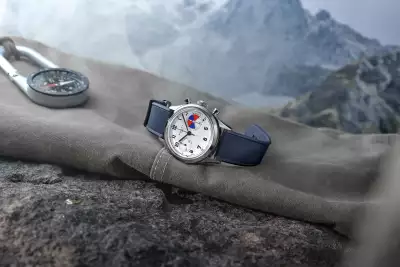
Gallet Tribute to Yachting Big Eye

Gallet Tribute to Silverlight
This is where things get particularly interesting. The three bicentenary Classics are all powered by the manually wound G09 and revisit some of Gallet’s greatest hits.
The Tribute to Yachting Big Eye resurrects a 1960s regatta chronograph, complete with its oversized blue-and-red countdown register. The Tribute to Multichron 45 is arguably the purist’s choice: compact, black-dialled and derived from a chronograph originally intended for interval timing in aviation and motorsport.
Finally, the Tribute to Silverlight draws upon the Multichron Navigator, adopting a silver-toned dial, unusual flowing numerals and a distinctly vintage character.
Of the three, the Multichron 45 gets our vote. Sometimes a 200-year history is best celebrated by keeping things simple.
See more at gallet.com