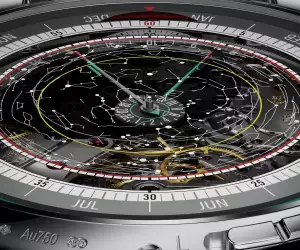
There was a time when the chronograph was a tool first and a flex second – built for timing laps, calculating speed and, occasionally, surviving the odd knock in the pit lane. These days, it does something slightly different. It still measures time, of course, but more importantly, it signals taste.
Because if the three-hand watch is the purist’s choice, the chronograph is where things get interesting. More mechanics, more personality, more room for a brand to show what it can really do. From heritage reissues that lean heavily into mid-century motorsport to high-complication pieces pushing the limits of modern watchmaking, this is where form and function meet – and occasionally show off a little.
What’s particularly striking right now is the breadth. You can spend under two grand on a handsome, well-built chronograph with genuine pedigree, or head deep into six-figure territory for something bordering on horological theatre. Steel, gold, titanium; panda dials, skeletonised cases, denim straps – the category has never been more diverse.
So whether you’re after a daily wearer with racing roots or a statement piece with serious mechanical clout, these are the chronographs worth your time.
Rolex
Cosmograph Daytona “Rolesium” Reference 126502



Introduced in 1963, Rolex’s Cosmograph Daytona has subsequently become – arguably – Rolex’s most desired watch and has reached a hallowed status among watch collectors and consumers.
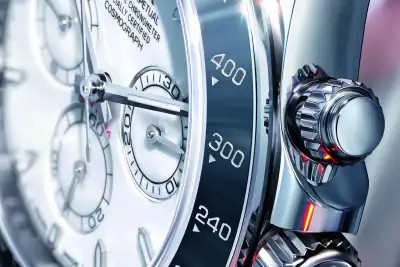
Designed as a racing driver’s timing tool, its chronograph complication is capable of measuring elapsed time from one eighth of a second up to 12 hours and, in conjunction with a ceramic-bezel tachymeter scale, a user’s average speed over distance travelled.
Graduated to 400 units per hour, the scale is applicable to miles, kilometres or whatever your preferred system of measurement may be.
Unveiled at Watches & Wonders 2026, the Rolex Cosmograph Daytona Ref 126502 has to be one of the most significant Daytona releases in years.
Offered in the proprietary metal Rolesium (pairing Oystersteel with platinum accents) it represents the first time this material combination has appeared on a Daytona having previously found home in the Yacht-Master collection.
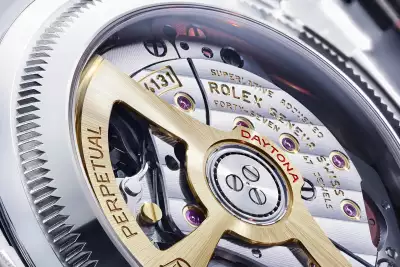
The watch also introduces an anthracite Cerachrom bezel with a redesigned vintage-inspired tachymetre scale, as well as a sapphire exhibition caseback – marking it as only the third Daytona to show off the Calibre 4131 movement.
The defining feature, and certainly the biggest talking point in the watch community, is its white enamel ‘albino’ dial. Despite contrary reports calling it grand feu enamel, Rolex has achieved the enamel finish by fusing powdered glass to four ceramic bases, which are then fixed to a brass plate after firing. Since the glass is not fused directly to metal as the grand feu technique requires (a much more meticulous process that results in a greater chance of wastage), it’s more accurately described as a high-tech ceramic glaze.
Positioned as an off-catalogue piece, the Daytona Ref 126502 won’t reinvent the wheel for the collection, but in the metal it’s one of the best looking examples we’ve seen in a long time.
£48,250; rolex.com
Tudor
Black Bay Chrono “Carbon 26”

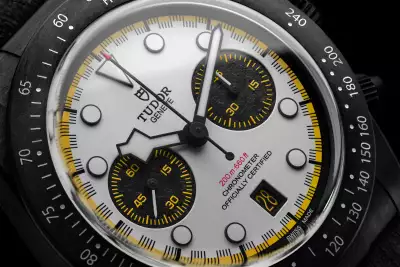
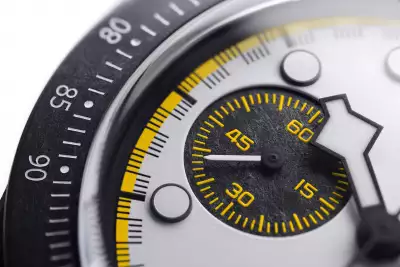
Back in 2021, Tudor celebrated the 50th anniversary of its first chronograph with a much-lauded reboot of its Chrono model. It came with a refined design, new movement and monochrome ‘panda’ and ‘reverse panda’ colourways. For those not versed in watch-speak, that means black-on-white and white-on-black dials with contrasting subcounters.
Since then, steel and gold have entered the fold, with Miami pink, Boutique blue and Flamingo blue all joining the party.
And for those after sporty meets stealth, there's Carbon black – with carbon composite case and carbon fibre bezels.
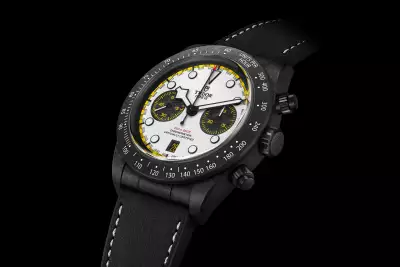
The latest release to join the fold is the limited-edition Black Bay Chrono “Carbon 26” – an hommage to the 2026 season car from the Visa Cash App Racing Bulls Formula 1 team.
Tudor has a long history of going wheel-to-wheel with racing teams, starting with the Tudor Watches Racing Team back in the 1960s.
This new release nods to the yellow accents of the F1 car’s livery, and comes on a hybrid leather and rubber strap finished with a tyre pattern.
It’s loaded with the COSC-certified Manufacture Chronograph Calibre MT5813 that boasts a silicon balance spring, 70-hour power reserve, column wheel construction and vertical clutch.
There’s also a five-year transferable guarantee – though we suspect you won’t need to call on it.
£6,750, tudorwatch.com
Patek Philippe
Nautilus 5980/60G
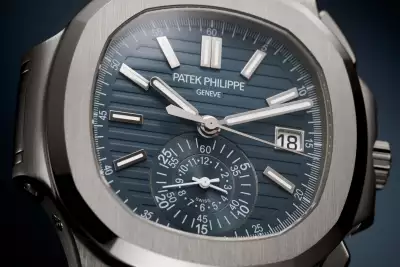



Patek Philippe’s Nautilus has become something of a totemic trophy in the luxury end of today’s cultural zeitgeist.
And while Patek may have discontinued the Nautilus collection’s founding model, the steel 5711 (in, one surmises, a shrewd move to prevent any one actor becoming bigger than the whole play and to allow refocusing of audience attention), it is still releasing new versions.
Top of out wish list is the automatic flyback-chronograph Nautilus with a tonal denim inspired design to (one surmises, again) cater to its new breed of younger audience members.
In keeping with high-end standards, the ‘denim’ strap is in fact calfskin, finished with a denim pattern, replete with contrast jean stitching. A colour matched dial completes the watch’s ‘double denim’ look.
See more at patek.com
Vacheron Constantin
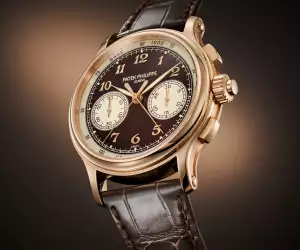
Historiques Cornes de vache 1955



Forming a part of Vacheron Constantin’s beloved Historiques collection, the Cornes de vache 1955 is (as its name and membership of Historiques suggests) a pretty faithful reissue of a mid-century watch from VC’s archives.
The size has been increased to 38.5mm, in line with more modern tastes, and the proprietary Calibre 1142, with 48-hours of power reserve, now drives the show.
You’ll note flared ‘cow horn’ style lugs, a pink gold case, an opaline finish dial, two-register ‘side by side’ sub-dials, chronograph-function hands finished in contrasting blued-steel, and a tachymeter scale to the edge of the dial.
See more at vacheron-constantin.com
Girard-Perregaux
Laureato Chronograph 42mm

In 1975, Girard-Perregaux launched the Laureato – a watch that captured the geometric confidence of the era and went on to become one of the maison’s defining designs.
Now, the new Laureato Chronograph 42mm pays tribute to the decade that made it, revisiting the 1970s love affair with two-tone watches in suitably refined fashion.
The tonneau-shaped case is crafted from 904L steel, with warm rose-gold accents on the octagonal bezel, crown and chronograph pushers. It’s a handsome contrast – sporty, but with just enough glow to remind you this is still very much Haute Horlogerie.
The brown Clou de Paris dial keeps things rooted in Laureato tradition, its hobnail motif echoed on the integrated rubber strap. The latter replaces the usual bracelet, giving the watch a more contemporary feel while hugging the wrist with the sort of comfort you’d hope for from a 42mm chronograph measuring just 12.16mm thick.
Inside, the story is all Girard-Perregaux: design, movement and finishing brought together by an integrated manufacture whose watchmaking credentials date back to 1791.
The Laureato has always been about balance – angular lines and polished curves, sportiness and sophistication, heritage and modernity. This latest chronograph doesn’t reinvent the formula so much as remind us why it worked so well in the first place.
See more at girard-perregaux.com
Zenith
CHRONOMASTER Revival A384 Tropical




Before 1969, the chronograph came with homework: if you wanted one, you wound it yourself. Then Zenith launched the El Primero, the world’s first automatic, integrated high-frequency chronograph movement, and changed the category almost overnight.
Among those first references was the A384, a sharply tonneau-cased watch whose late-1960s geometry still looks pleasingly assertive today. The new Chronomaster Revival A384 Tropical returns to that template, but with a dial inspired by vintage watches whose original tones have mellowed into rich browns after decades of sunlight and oxidation.
Here, the effect is more controlled than accidental: a white lacquered base, brown sub-dials, matching tachymeter scale and old-radium Super-LumiNova, lifted by a red chronograph seconds hand. The 37mm stainless-steel case follows the original blueprints, while the El Primero 400 calibre beats inside at 5Hz. Finished on the period-correct ladder bracelet, it’s nostalgia with a properly functioning engine.
See more at zenith-watches.com
Audemars Piguet
Royal Oak Selfwinding Chronograph

Helping prove the Royal Oak’s ‘Midas touch’ is far from over, Audemars Piguet has introduced a yellow gold with golden ombré hue dial version of its Royal Oak Selfwinding Chronograph.
Featuring a 41mm case, water-resistant to 50m, the watch employs AP’s in-house Calibre 4410 movement with flyback function and column wheel with vertical clutch system; which (basically) provides smoother, improved chronograph functioning.
A discreet date window is found nestled between the 4 and 5 o’clock positions and, notably, the 12 o’clock AP signature is black rhodium-electroplated, galvanically grown 24ct gold.
See more at audemarspiguet.com
Breitling
Navitimer B19 Perpetual Calendar Chronograph



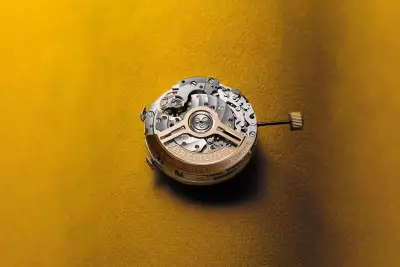
Breitling’s latest B19 pair represent the iconic Navitimer at its most technically ambitious – a perpetual-calendar chronograph housed within one of watchmaking’s most recognisable designs.
The headline is the Manufacture Calibre B19, introduced for the brand’s 140th anniversary and now making its way into the core collection. It combines a full perpetual calendar – leap years and all – with a chronograph, moonphase and a hefty 96-hour power reserve.
There are two takes. A 75-piece full platinum edition leans into deep, stratospheric blue, while a steel case with platinum bezel opts for a darker, more cosmic anthracite dial. Both retain the Navitimer’s signature slide rule – a nod to its 1952 origins as a cockpit tool for the Aircraft Owners and Pilots Association – but elevate it with a more dimensional, contemporary finish.
The Navitimer has always straddled instrument and icon; here, it adds genuine high complication to the mix – without losing the plot.
From £27,800, breitling.com
Tissot
PR516 Valjoux Chronograph



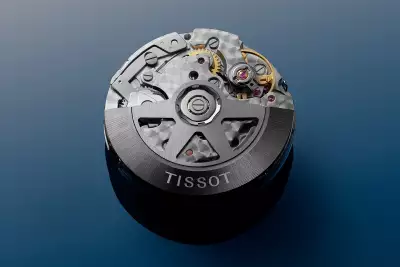
Tissot reintroduced the PR516 in 2024, a classic from the 1960s given the 2020s treatment. We were big fans of this reboot – you’d have to have a heart of stone not to like a Sixties watch designed for the racetrack and worn by Roger Moore in Live and Let Die.
The chronograph version, with its tachymeter scale and rugged construction, was our favourite from the new line-up. And then came the elevated Valjoux version.
The self-winding Valjoux A05 movement has sub-dials at 3, 6, and 9 o’clock – for the best symmetry – and packs respectable power reserve of 68 hours. Best of all, there’s no fiddly date window ruining the clean aesthetic.
The crisp white dial with striking blue accents offers a clear and intuitive display – one that would look just as at home in the Alps as it would on the Cote D’Azure.
The Jubilee-style bracelet is beautiful, the 68 hours of power reserve admirable, and the price an absolute steal.
£1,935, tissotwatches.com
IWC
Portugieser Chronograph
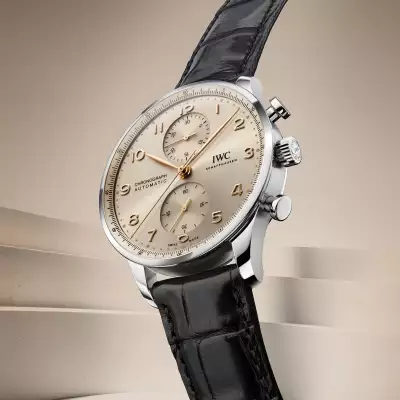
Boasting another tonal colour scheme, IWC’s Portugieser Chronograph ‘Dune’ was, in fact, named in reference to its gold/buff hues.
Best described as an everyday watch, with ‘over/under’ configuration sub-dial display, the Dune Ref. IW371624 was released earlier this year in an aesthetic update to the brand’s evergreen Portugieser Chronograph.
The Portugieser can trace its roots back to the 1930s and a request from two Portuguese merchants, for a wristwatch with the accuracy of a marine chronometer pocket watch.
Housed in a 41mm stainless steel case the contemporary Portugieser in question is driven using a self-wound movement visible through a sapphire crystal caseback.
See more at iwc.com
Frederique Constant
Highlife Chronograph

In 1999, Frederique Constant launched the Highlife collection to fill a gap in the market for a luxury Swiss sports watch at a more accessible price point.
With an interchangeable, integrated bracelet and a distinctive case, it was ahead of its time – if you consider the current clamour for exactly this watch style.
Having laid dormant for a number of years, the Highlife returned in 2020 with a much more modern design.To celebrate 25 years of the collection, the brand launched two sporty chrono versions, including this dapper panda-like version finished in dark green and matte silver.
It features the FC-391 automatic calibre movement, featuring 60 hours of power reserve, as well as chronograph and date complications.
Longines
Avigation BigEye
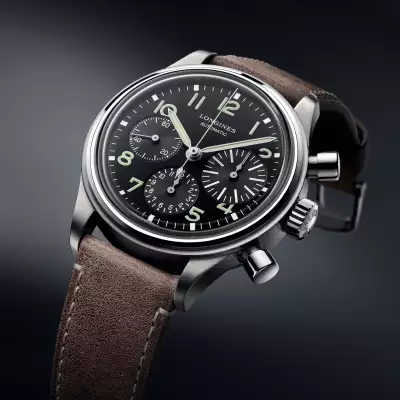
Launched in 2017, Longines’ Avigation BigEye is a modern reinterpretation of an old early-20th century watch residing in the brand’s museum.
As such, the watch features a host of charming vintage elements so beloved by collectors, including - large pump pushers; snailed sub-dials; a box (sapphire) crystal; and the oversized asymmetric 3 o’clock sub dial, from which the BigEye takes its name.
The modernised touches include a 41mm case size and a self-wound column wheel movement with 54 hours of power reserve, beating at a standard 4hz frequency. The BigEye even went on to win 2017’s GPHG “Revival” award.
See more at longines.com
Grand Seiko
Caliber 9R 20th Anniversary Limited Edition SBGC275

Employing one of Grand Seiko’s venerable Spring Dive movements – in essence, a combination of quartz and mechanical technology – the SBGC275 combines 12-hour chronograph and GMT complications within its 44.5mm titanium case.
The signature ultra-smooth gliding Spring Drive seconds hand and ‘Zaratsu’ polishing are, of course, all here, but it's the dial that’s the real talking point.
Changing colour depending on the angle from which it’s viewed, a patented process called ‘Optical Multilayer Coating’, which sees the layering of multiple coats of PVD-applied nanoscale film to the dial, has been used to create the remarkable polymorphous effect.
See more at grand-seiko.com
Zenith
Chronomaster Original Triple Calendar

No article about chronographs could be considered complete with inclusion of a Zenith El Primero.
Announced in January 1969, the El Primero is a true horological harbinger: the world’s debut automatic chronograph movement.
Looking to build on its innovation, a year later Zenith internally trialed an El Primero with triple calendar and moonphase complications, but it was decided focus was best kept on the flagship El Primero models and the prototypes remained a concept.
Until now. Making its way to commercial production 50-odd years later, comes the Chronomaster Original Triple Calendar – a handsome, throwback design which finally realises a little known piece of Zenith’s heritage.
See more at zenith-watches.com
TAG Heuer
Monaco Chronograph
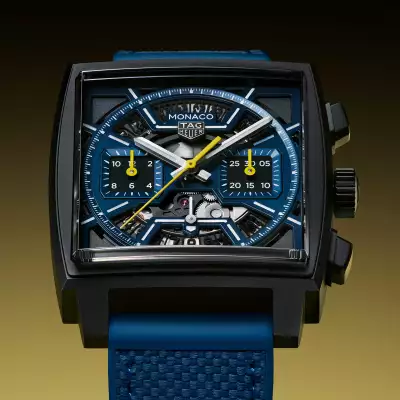
Two days before this year’s Monaco Grand Prix, TAG Heuer released a new skeletonised iteration of its legendary ‘Monaco’-namesake racing chronograph.
Housed in a sandblasted-PVD titanium case, its cutout dial employs a dark blue, against yellow-accent chronograph hands, colour scheme with generous amounts of Super-LumiNova, for good measure.
An embossed blue-dial matched calfskin/rubber strap is also supplied with the watch. Immortalised by Steve McQueen in his racing movie Le Mans (1971), the Monaco has been worn by individuals as diverse as Stanley Kubrick, Sammy Davis Jr. and, naturally, F1 driver Max Verstappen.
See more at tagheuer.com
Cartier
Tortue Monopoussoir Chronograph
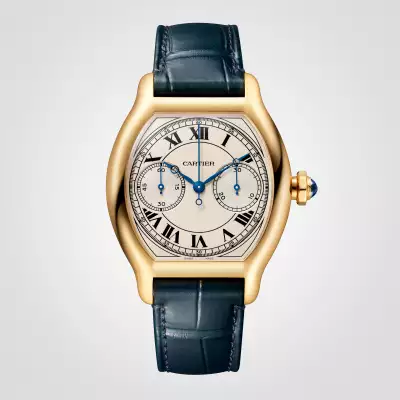
The likes of Longines, Zenith and Vacheron aren't the only ones looking back to go forward. Cartier enjoys a regular rerelease from its esteemed archives.
This single-button, or monopusher, chronograph – the Tortue Monopoussoir – is based on a 1928 watch and was launched as a limited edition in platinum or yellow gold, numbering 200 pieces of each metal.
Its 4.3mm thick movement, Cartier’s thinnest chronograph movement, is manually wound and decorated with Côtes de Genève finishing.
The Monopoussoir sits under Cartier’s Collection Privée Cartier Paris (CPCP) collection, a forum the Maison uses to reissue some of its most coveted vintage designs.
See more at ablogtowatch.com