"I’d always wanted to tell a cancer story,” says George Jaques on a beautiful Friday afternoon in Battersea Park. “I just didn’t know how to do it.”
The ambition stemmed from his mother’s breast cancer diagnosis when Jaques was a teenager. A decade later, his mother is still with us and the 26-year-old Jaques’s cancer story Sunny Dancer hits cinemas on 14 August.
Except Sunny Dancer isn’t a cancer story – or rather, it isn’t just a cancer story. The premise is simple: 17-year-old Ivy (Bella Ramsey) is unwillingly dispatched to “chemo camp” to spend a summer with a group of fellow teenagers also in remission. There she finds romance, friendship, adventure, and the realisation the world is perhaps a more complicated place than she thought. No, it is not a cancer story: it is a story about teenagers who have experienced cancer and would now like to crack on with being teenagers.
“Cancer is the least interesting thing about them,” says Jaques. He refers not only to his characters but also to the hundreds of young people he’s encountered as an ambassador for the Teenage Cancer Trust. He started writing Sunny Dancer a few years ago, inspired by his own experiences and his editor Caitlin Spiller, who herself attended camps for kids affected by cancer.
Sunny Dancer was shot in Scotland last summer. Earlier this year, the film had its world premiere at the Berlin Film Festival (more on that later). Jaques has all sorts of madcap ideas for the August release, most of which I’m not allowed to share.
It’s going to be wild and it’s going to be feral and we’re going to make the most amount of FOMO
“If you think we’re going to go right, we’re going to go left,” he says gleefully. “It’s going to be wild and it’s going to be feral and we’re going to make the most amount of FOMO. This is a film made by young people, for young people. Watch us do our campaign that way.”
He tells me this sitting on a park bench in glorious sunshine. He wears a white T-shirt, sunglasses, the most affable force of nature you could encounter. Battersea is very much his haunt – his office is round the corner. We met at the park café, treated ourselves to a beer (me) and canned cocktail (him), and plonked ourselves down on a table by the lake. After ten minutes, someone realised there was a danger people could hear themselves think and duly cranked up the speakers. Jaques and I relocated to a bench, drinks in hand.
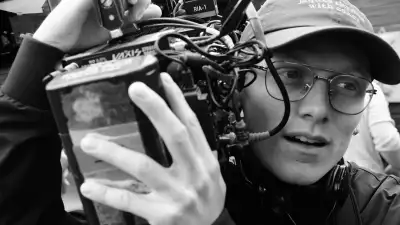
Exactly a year ago he was filming Sunny Dancer with a cast and crew stacked with young British talent: Ramsey, Ruby Stokes, Conrad Khan, Earl Cave. Jaques is an actor himself. He grew up with these people. Going into production, he had a clear ambition: “I’m going to give them the summer of their lives. Because you’re going to feel that in the film.” (Mission accomplished: Ramsey told the Hollywood Reporter the Sunny Dancer shoot was “probably the best six weeks of my life”.)
Jaques has always been a creative in a hurry. He set up his own production company as a teenager, staging live shows in various pubs and theatres. Major TV roles followed, most notably A Town Called Malice and The Serpent Queen. His debut directorial feature Black Dog premiered at the 2023 London Film Festival and was nominated for the BFI’s Sutherland Award.
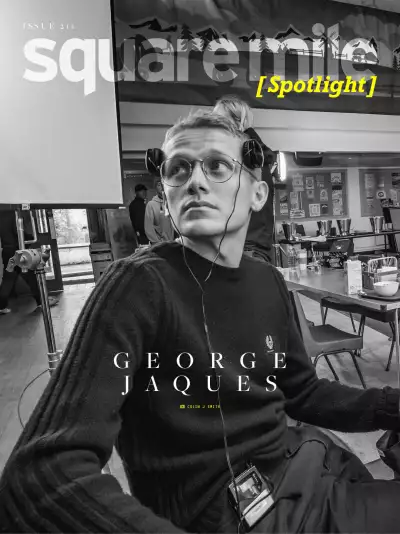
I first interviewed Jaques when he was doing press for Black Dog. We drank herbal tea in the Ham Yard Hotel while I tried to size up this articulate, thoughtful young man who looked like a uni student and spoke with visionary conviction. I left the hotel convinced I’d just met someone with the capacity to become one of the biggest names in British film.
We stayed in touch. He sent me updates on Sunny Dancer – such as the casting announcement of Neil Patrick Harris. Neil Patrick Harris! Of course Jaques landed one of the most famous actors in America for his second movie, someone who hosted the Oscars and picked up his fifth Emmy the same year George sat his GCSEs.
Naturally, we wanted to do another feature for Sunny Dancer. Once I heard about the Berlinale premiere, the move was obvious: fly out there. Getting access to the premiere itself might be tricky but who cares? Ultimately it’s just people sitting in an auditorium. Besides, Jaques hates watching his films with an audience so there seemed a solid chance he’d relocate to a nearby bar once it started. (As he did in London for Black Dog.)
I’m just so interested in normal people, but in abnormal situations
I did, however, attend a screening in Soho ahead of the festival. Guardian critic Peter Bradshaw was there; so was Jaques, who delivered a brief speech and duly buggered off. “Make sure you laugh a lot,” he told me jokingly the day before. Of course. Except at the sad bits, right?
“Yes, don’t laugh at those.”
Not to worry: it’s a truly lovely film, moving, tender and beautifully shot. Ramsey is predictably brilliant as the rebellious Ivy; Harris’s camp supervisor delivers a heart-wrenching speech; there’s an unexpected twist, and also one of the most delightful cameos I’ve seen in a while. Watching it, I was spirited back to one of those eternal adolescent summers where the world seems to open up before you and everything feels possible.
“I’m just so interested in normal people, but in abnormal situations,” says Jaques. Whatever the setting, he wants the emotion of his work to feel timeless. One of his mentors, Irish director Lenny Abrahamson, once offered some advice: “Just look at your monitor and go, ‘Does it still feel human?’”
For Jaques, the humanity is what matters. “There are so many moments where you’re freaking out about a button or someone’s got the bunting wrong – and you’re like, ‘But does it feel human?’”
It’s Friday morning in Berlin. I sit in the press centre at the Grand Hyatt while Jaques and the cast do the photocalls just outside. A barrier and a phalanx of photographers stop me from getting close but I can follow the action on a TV screen while waiting for the conference to start. Jaques looks dapper in a white jumper, alternating between cool director and boyish enthusiasm – the photocall lasts a while so he gets plenty of opportunities to try both. I pop outside at one point and see a queue of photographers waiting for their turn. No wonder it’s taking a while.
Eventually we get going. The cast is introduced, Jaques says a few words, and questions are opened to the floor. Berlin has long carried a reputation as one of the world’s most political film festivals. It takes until the second question for a journalist to ask whether movies can fight the rise of fascism in Europe and America.
For a man whose film involves a teenage cancer survivor attending holiday camp, Jaques gives a remarkably composed answer. “I think sometimes the most rebellious thing you can do is be optimistic. We wanted to make a movie about joy. There’s so much going on in the world right now, and I wanted to make something that takes you somewhere else.”
Many in the room are reluctant to be taken somewhere else. A German journalist says it’s “embarrassing” to say the film isn’t political – “without proper health insurance I wouldn’t be here; I had cancer myself” – and then asks Este Haim about her upcoming projects. “Making more music and having fun,” says Haim.
Next question. Does Neil Patrick Harris think US democracy is under threat? “I’m really here in honour of Sunny Dancer,” says Harris, before noting, “I never read this script as a political statement.”
It is such a big step up from my first to my second feature
Feeling I should probably ask something, I raise my hand and receive the microphone. Question for Neil – how was his experience working with Jaques? “He is just the loveliest human,” says Harris with the relieved air of a man who feared he might have been interrogated for his views on the situation in Gaza.
“He likes to have everyone together. He doesn’t like casts that go off into their motor homes or dressing rooms and only come in when they’re needed. He wanted a group vibe.” The result was a happy set, totally free from conflict. “It was really a joy to be doing this.”
Harris is a specialist at comedic cameos; he’s the man you call when you need a scene stolen. In his own words: “I’ve often been in movies where I’m not really in the movie – I film for five days and then I’ll leave. I would be in the movie but not really feel like I was part of the ensemble of it all.”
Sunny Dancer was different. Not just the substance of the role but his own involvement. “It was really lovely to be considered one of the gang,” he says. “We all hung out together, sat on benches and shared stories. I was very impressed by all of that.”
The rest of the press conference passes without incident. I message Jaques afterwards, noting their fondness for political questions. Will he escape the premiere? “I’m having to watch it!!! Fuming!!!” Over text it’s hard to tell if he’s joking but I expect not.
Two days later, I catch up with Jaques at the Berlinale Palast for a quick chat. We’re both a little weary: the premiere was followed by an afterparty in the basement of some nightclub. The dance floor rotated at random intervals, quite disconcerting if you’re trying to grab a pizza from the buffet table and the room literally starts moving around you. For a moment, I thought there was something funky in my cocktail. Well, we are in Berlin.
For Jaques, the weekend has been a bleary, brilliant kaleidoscope of red carpets, press conferences, afterparties and interviews. “You’re seeing all these people but you’re not really having much time because you’re being dragged somewhere else. And then you’re trying to make the photographer turn the flash off because it’s too bright.” He smiles. “I got back to my hotel room last night and just sat down and was like, ‘I don’t want to talk.’”
This is all new to him. “It is such a big step up from my first to my second feature,” he says. The premiere was surreal, more than a thousand people watching and laughing and crying along. He loved every second. He also realised it wasn’t his film anymore. It belonged to the audience – to the individual viewer and whatever it might say to them. As Jaques puts it: “This is a film made for young people, by young people, and I’m sort of handing it over.”
He tells me about the people who have reached out. The cancer survivor who told him, “I wish I had this film when I was going through chemo.” A woman → → who attended the premiere sent him a DM yesterday, saying how the film made her finally feel seen. “That’s sort of a pretty special reaction,” says Jaques with characteristic understatement. Expect many more such reactions when the film goes on general release.
He’s off skiing next week, finally getting some downtime – literally, assuming he points in the right direction. And then? “I want to let this settle, smash the release as I’m giving it everything, and then get back to work.” He grins, perhaps realising the extent he’s giving go-getter. “I love what I do. I always take the work seriously but not myself. I just can’t wait to be back on set.”
Spring turns to summer. We agree to catch up ahead of the film’s release. Before I speak to Jaques, I want to get an actor’s perspective on working with him. Neil Patrick Harris would be ideal but obviously he won’t be available, the man’s preparing for the Tony Awards and doubtless has about 15 projects on the go. Not a chance he’ll find the time to chat to some random British journalist about an indie film he did last year. Is there?
I send Jaques a text just in case. A fortnight later, I’m sitting on a Zoom call with Neil Patrick Harris while he explains how he came to be cast in Sunny Dancer. Serendipity, basically. “I had a desire to do more independent film work to diversify my acting portfolio,” says Harris. “I’m a real, proper Anglophile and have such a hard-on for the UK at the moment. Anything that I can film there, I’m anxious to do.”
His manager Jason Weinberg had just started representing a promising young British director… The pair spoke over Zoom, a planned 20 minutes turning into two hours. “At the end of the call, he said, ‘I’ve got this project. Would you like to read it?’ And I said, ‘I’d like to be in it.’ And he said, ‘Well, you should probably read it first.’ And I said, ‘Fine.’ And I did, and it was a beautiful script. He’s the most effective wunderkind.”
Of course Harris was a wunderkind himself, the child star of Doogie Howser, MD who later portrayed one of the great sitcom characters, Barney Stinson, in How I Met Your Mother. On our call, he is softly spoken, thoughtful and measured. He’ll often smile as he revisits another memory from a summer that clearly means a lot to him.
Was it strange being directed by someone nearly 30 years his junior? “I’m relatively indifferent to age,” says Harris. “I’m just more interested in skill set and drive and veracity and authenticity. He has that in spades.”
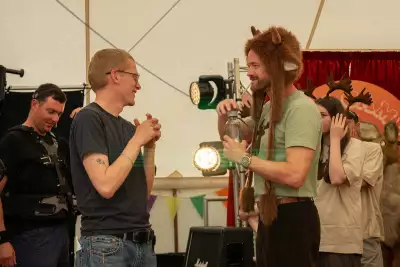
George Jaques and Neil Patrick Harris filming Sunny Dancer
What makes Jaques special? “The fact that he is a writer-director means he knows what he wants – so his notes are sound. Couple that with the fact that he’s also an actor, then his notes are very nuanced and specific. He’s very conscientious of the actor and respectful of how an actor has individual processes. He knows how to give notes to Bella and myself in different ways at different times for the same emotional scene. He’s very intuitive.
“When you’re making an independent film, it’s a group of gypsy people and it’s group alchemy.” He used the exact same word in Berlin – alchemy. “It’s so accurate, I think,” he says. “It’s almost like creating a magical potion. You’re not quite sure if you add some of this, which seems like it tastes delicious, what happens when it’s mixed with this? And this?”
As Harris notes, you have no idea if the cast will click. Or the crew will stay motivated. Or will the weather hold – they were shooting in Scotland, after all. “George and his whole team were so enthusiastic creatively that it was just infectious. It made everyone want to stay on set and not wander to your dressing room to sit and stare at your phone. It made everyone want to talk to each other.”
Is there a favourite memory from his time on Sunny Dancer? He takes a moment, chuckles, and starts telling me about a weekend hike involving him, Earl Cave in a black trench coat, Jaques and Jaques’s girlfriend. The foursome walked along Loch Lomond and ended up in a pub in the middle of nowhere. “I had fish and chips and we ate and had a pint and listened to some hilarious, random person playing tunes by request at a keyboard. And I was just looking around thinking, ‘This is so singular and lovely and kind of analogue.’”
Neil could have been anywhere in the world – and he chose to be with us
Harris the Anglophile had found heaven. A proper country pub, populated by a mixture of locals and fellow hikers. And on one table sat “four people who really didn’t know each other, sharing a single experience in the middle of the countryside. It was just so moving. It sort of encapsulated the entire experience – not only of making Sunny Dancer but watching it.”
I get further details from Jaques a fortnight later in Battersea Park. He shows me a video of the keyboard player, a large grey-haired Scottish gentleman belting out ‘Fireball’ by Pitbull at full volume. Harris was recognised a lot – people were understandably surprised to encounter Hollywood royalty in a Loch Lomond pub. “Neil gets a lot of young kids going, ‘Wow, you saved the Smurfs!’” says Jaques. “Then this one kid came up and in the deepest Glaswegian accent went, ‘ah youse Doogie?’ He was about eight!”
Along with dance-pop-covering keyboardists, and Glaswegian children strangely versed in early 1990s American sitcoms, the day was a wonderful bonding experience. Jaques feels responsible for ensuring everyone is having a good time. “Neil gave me two weeks of his life,” he says. “He could have been anywhere in the world – and he chose to be with us.”
When it comes to shooting scenes, Jaques adapts to the individuals involved. “Every actor needs different ways of giving notes,” says Jaques. Some need more cajoling than others. Some can be told bluntly: “That’s just wrong.”
But he’ll always keep it relaxed. “I don’t take myself too seriously. I take the work really seriously. I make a really safe environment for people to make mistakes and get things wrong and try things.” Nor does he allow his own stresses to manifest. “You will not know if we are on fire and there’s an hour to go. That’s not helpful.”
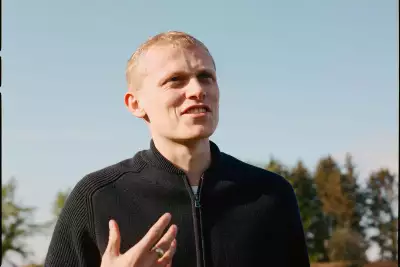
On the set of Sunny Dancer
He paid for everyone involved in Sunny Dancer to have access to therapy should they need it. “There’s an amazing company called Solace Mind which I work with a lot. We stuck QR codes up and I preloaded an account with them for hours and hours of therapy.” Work hard, play hard. As Jaques says, “I want to make safe environments, inclusive environments and I want to make really fucking fun environments.”
On Friday evenings, he’d buy everyone at the pub a round of shots and then depart. “They need a moment to bitch about me if they want to.” When Kylie Minogue played Glasgow, the entire cast not only attended her show but met the singer backstage. “She’s the nicest person,” says Jaques. Minogue, a cancer survivor herself, stayed in touch. She watched the Sunny Dancer trailer the other day.
The film has some way to travel yet – into cinemas, onto streaming, perhaps even some awards shows. It will hopefully impact millions of people in years to come, from teenagers to pop stars. Yet Jaques is already looking ahead. He has multiple TV shows in the works. Casting for his third film will shortly commence. Can he share any details? “All I can say is it’s the best bits of Black Dog and the best bits of Sunny Dancer in a much bigger world.”
He’ll always have the memories, though – those will never leave. Here’s another: “We were doing the talent show scene,” he says, “There’s Neil Patrick Harris, Jess [Gunning], James [Norton], all the young cast. I just had a moment. I was like, ‘Do you fucking know how I pulled this off?’”
He did pull it off, of course. And the real trick was making it all look like sunshine.
Sunny Dancer is out now