First, an apology. To all the Swifties out there, I’m sorry for not believing. For years, I fell firmly on the ‘vanilla’ side of the Taylor Swift ice-cream debate. To be fair, I’m a middle-aged man from Buckinghamshire – I’m not really meant to like Taylor Swift, am I?
My daughter, on the other hand, worships her. She’s eight years old, intelligent beyond her years, and has been performing Shake It Off in front of the mirror since the moment she could shout ‘Alexa’.
Now, for some added context. I also have a 12-year-old son. I have no trouble bonding with him. All I have to do is throw something – a ball, a frisbee, an amusing insult – and we’re off. My daughter, on the other hand, is far more interested in things like craft and women’s fashion.
Well, apparently paper airplanes “don’t count” as origami, priming an Airflix Land Rover Series 1 is not the same as “real painting”, and I still don’t really understand the difference between leggings, tights and stockings. But obviously I want to have a close bond with my daughter – one that transcends driving her to and from school.
Enter Taylor.
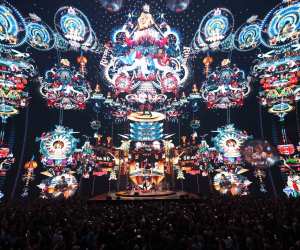
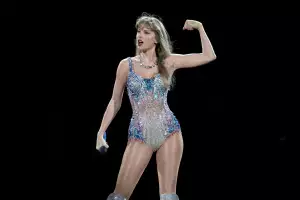
As a human being living on planet Earth, I obviously heard about the Eras tour. By cultural osmosis, I learnt of its sheer scale, the Herculean duration (of each show and the tour as a whole), and her incredibly generous bonuses to her crew (some reports have the total of $197m gifted to her crew across the tour’s full run). Dancing in Seattle caused a 2.3 magnitude earthquake; the London stretch alone generated £300m for our local economy; there’s even a proposed ‘Taylor Swift Law’ (Bill PL 3115/23) in Brazil to curb ticket scalping. Stars don't shine much brighter.
Even if you don’t like her music, at this point you have to respect her. And so, The Life of a Showgirl was released. The internet was broken, the charts were toppled, and my daughter was playing Opalite on repeat. It was finally time for me to dive in.
As a student of English Literature (2:1, University of Leeds – should have been a 1st, but I discovered Snake Bite), I was immediately sucked in by The Fate of Ophelia.
Not because it’s clever – though it is – but because it signals one of the key tenets of The Life of a Showgirl: the cost of being watched. Ophelia, after all, is literature’s most famous casualty of other people’s expectations – a young woman flattened by duty, performance and silence, surrounded by men who instruct, surveil, and instrumentalise her.
Of course, the song is primarily about Taylor being saved from a tragic drowning by her lover (shout out to Travis.) But in Swift’s hands, the figure of Ophelia also becomes something else entirely: not a victim, but a warning label. This is an album that knows exactly what it means to exist in costume.
That idea – life as spectacle, identity as choreography – runs right through the record. A “showgirl” isn’t just a performer; she’s a professional illusion. Smile fixed, posture perfect, inner life politely irrelevant. Swift has been accused for years of playing versions of herself for public consumption, and here she leans into it, almost daring the listener to spot the joins.
What struck me most, listening properly for the first time in a rare moment of peace once the kids had gone to bed, was how controlled the chaos feels. There’s drama everywhere – romantic, existential, reputational – but it’s meticulously staged. Even moments of apparent confession are framed, lit, and timed. This isn’t diary-entry Swift; it’s Swift as auteur, fully aware that authenticity itself has become part of the act.
Listening with my daughter hovering nearby – half dancing, half listening, fully invested – I realise the album’s greatest trick. Beneath the meta-commentary and literary references, it’s doing something far simpler and far more powerful: mapping the emotional terrain between being a girl and being a woman, in full view of the crowd. For my daughter, it’s melody and mood. For me, it’s subtext and structure. We’re both getting what we need.
Which is, I think, the real genius here. The Life of a Showgirl works on multiple frequencies at once. You can take it as pop spectacle, as self-aware performance art, or as a surprisingly tender study of how identity hardens under applause. It doesn’t demand belief – we’ll leave the fans to do that – but it rewards attention.
I still wouldn’t call myself a Swiftie. (Again, many apologies.) But I get it now. And more importantly, I get why my daughter does.
If liking Taylor Swift is a gateway to conversations, shared references, and the occasional impromptu kitchen dance routine, then I’m happy to admit I was wrong.
View on Instagram