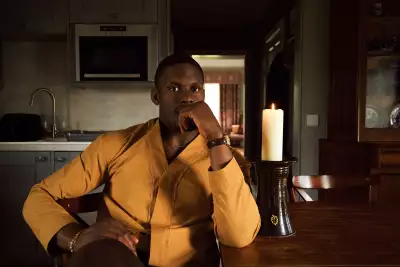
There is a sentiment out there, as archaic and patronising as is now considered, that athletes should stick to sport. If there’s an antithesis to that sentiment, it might be Maro Itoje. Widely considered one of the best rugby players in the world, Itoje is captain of England and Saracens, reached 100 caps for the country earlier this year, and is a three-time tourist with The Lions, and yet his CV off the pitch is equally impressive. (He's also a Square Mile cover star.)
Itoje has embraced a variety of off-pitch activities, starting a charity, The Pearl Fund, walking catwalks at fashion shows, and he even appeared on The Rest is Politics podcast with the title: “Maro Itoje: The Next Prime Minister”. However, it’s art that is closest to his heart, a passion that started with a trip to his parents’ native Nigeria, and has burned into something much bigger.
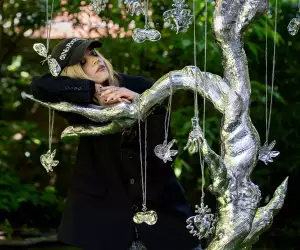
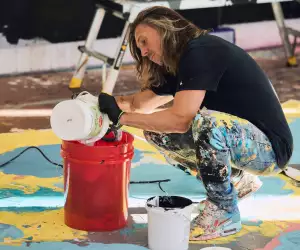
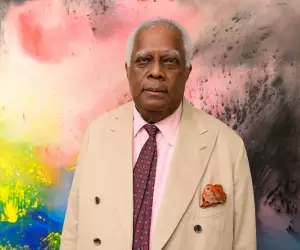
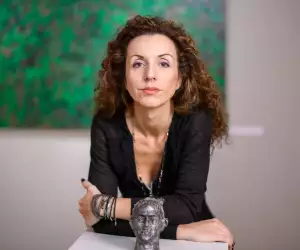
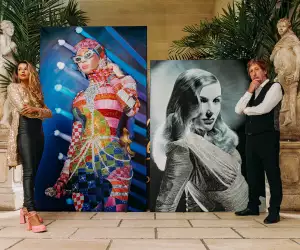
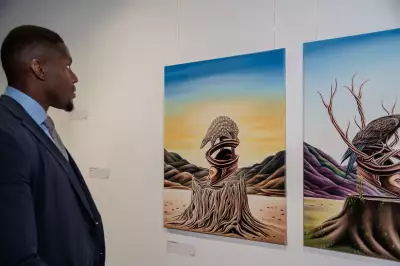
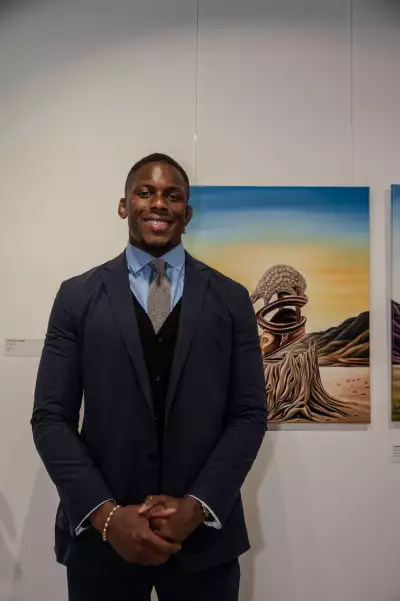
After years dabbling in collecting and the success of a first exhibition, he launched the Akoje Gallery with co-founder Khalil Akar in 2024, aiming to give artists from the African and Caribbean diaspora a larger platform and opportunity to elevate their voices. The residency at Dumfries House provided thirteen artists dedicated time and space to develop their practice with access to interdisciplinary workshops in fashion, gardening, wellbeing, and heritage crafts.
In June, in collaboration with The Kings Foundation, the residency programme held its inaugural exhibition at 31 Saint George Street. We caught up with Itoje to discuss the exhibition and residency, his introduction to art, the residency’s ambitious plans, and a bit of rugby, just for good measure.
Square Mile: Congratulations on the exhibition. Where does this rank alongside some of your rugby achievements?
Maro Itoje: It’s hard to compare. Rugby brings the adrenaline and emotion of competition, whereas this is something that has developed over time. I’m always excited about off-field projects, particularly those related to African art. I’m very happy to be involved and to see it come together.
SM: Art is a big passion of yours – how did you get interested in it?
MI: In 2015, I moved into my first apartment, and for the first time I had these white walls I could play with, so I wanted to jazz it up, and I thought it would be nice to decorate it with African art. So I went out looking, but at that time in London, there weren’t many places, and the places that were there were completely outside a 20-year-old’s budget.
Eventually, I asked my mum where I could find some, and she said: “I don’t know about London, but when we go back to Nigeria, I’ll take you to the galleries and art markets there”. And when we went, I was taken aback by what was there – the colour, the dynamism, the texture. I just felt it spoke to my soul in a unique way. And that’s when the love affair really started.
I do think it’s very dangerous for athletes to get swept up in their identity as an athlete
SM: Was it a way of reconnecting with your roots?
MI: I think so. There was probably a subconscious connection there, that the Nigerian art and African art connected to me in a unique way, and it was probably me subconsciously desiring to be connected to it, and stay connected to my background.
That’s the beauty of art, though. It can say something you didn’t realise could be said, make you feel emotions you didn’t know you had.
SM: How did you start getting involved in the professional art world?
MI: So initially, as my interest increased, it was purely as a collector. Then, as I began to collect a little bit more, I started to really think about how I could get involved in the industry, and at that time, there was a bit of a wave – that is still going on now – in the arts more generally, whether that’s music as well, around African culture. And so African art was becoming a bit more widely known around the world.
Fortunately, I got connected to Khalil (Akar, co-founder of Akoje Gallery). We first put on an exhibition in 2020, all about African art and trying to tell stories that we weren’t taught about in school. That really opened the door – after that, we started having conversations about what we could do next.
SM: Was it always important that there was a philanthropic element?
MI: Absolutely. In most things I’m involved with, philanthropy is a major part. While obviously we also have the commercial side to the business, this is a major part of it and really what this exhibition is here to do: celebrating the artists, allowing them to have an opportunity to grow in their careers, and hopefully giving them a better platform than they would have previously had.
SM: You have a charity, The Pearl Fund?
MI: Yes, it is primarily an education charity. In Lagos, we support orphaned, fatherless and extremely disadvantaged children through scholarships that cover their education from start to finish, alongside wider support such as food, travel and extracurricular activities.
The programme in London launched in October, and it’s a STEM tuition programme. We’ve focused on Tower Hamlets – the poorest borough in London – and these are kids where the majority, if not all of them, are on free school meals, from low-income households with a number of different disadvantages. So the kids who really do need the support. We have a UK charity partner helping us deliver the programme, and it’s been so rewarding to see it come to life.
SM: On the website, it says the goal for the Akoje Gallery is to become “the largest art residency in the world”. What would that look like to you?
MI: At the moment, we have one residency in Dumfries House in Scotland, so the ambition is to expand to different parts of the world. An Akoje Residency in Lagos, in Nairobi, in New York – in all these art capitals of the world. That would be the dream and the long-term vision of the residency, but it takes certain steps to go through first before that is a reality.
Right now, we need to consolidate what we have in the UK, but naturally, we’ll be looking globally. Of course, navigating the industry can be challenging, with things like fundraising, but all the time we’re actively looking at ways in which we can consolidate all those things so that we can start expanding.
My only issue was worrying if I was going to start laughing halfway through the catwalk
SM: Coming from rugby, did you run into any pushback, or were you ever told you should stick to sport?
MI: It becomes a lot easier once you become more established. When you’re coming up, that was definitely one of the things that was levied against me, but my view on it is you kind of just need to be who you are. Obviously, you need to keep the main thing the main thing. I think that’s really important. First and foremost, I’m a rugby player, and for as long as I play rugby, that will be the number one. But all these other things are important as well for me, and they nourish me.
SM: Looking into the future, do you think there’s a public-facing version of yourself that’s not defined by, or primarily known for rugby?
MI: That would be cool. I do think, this is perhaps a different conversation, but I do think it’s very dangerous for athletes to get swept up in their identity as an athlete. I guess it’s the same with anybody with any job, but particularly with athletes, because it’s all so all-consuming, it’s very easy to only see yourself as what you do and I hope that isn’t and won’t ever be me.
SM: Have you gotten any of your teammates interested in art yet?
MI: Some are, you’d be surprised. I think some have a few art pieces. Some of my England teammates have a few pieces scattered around the house, but sometimes it’s more driven by their partners as opposed to them.
SM: Fashion is another area of interest of yours. What is more nerve-racking: playing a World Cup final, or walking a catwalk?
MI: Haha! I haven’t done that many catwalks, to be honest, but when I did do one, I felt that while everyone else was super nervous and tight, I was quite relaxed. My only issue was worrying if I was going to start laughing halfway through the catwalk or not. That was the only thing I was worried about – if I was going to be able to keep a straight face throughout the whole process. So the World Cup is definitely more nerve-racking.
SM: You recently appeared on The Rest is Politics. They titled the episode “Maro Itoje: The Next Prime Minister”. Any chance?
MI: Who knows? If you look at some politicians, you wonder how they got there. I did study politics at university, and I am interested in it…
SM: You’re probably more qualified than a lot at the moment…
MI: I guess again, for me, I think it’s just about being myself and exploring the interests I have in those worlds and fields. I’m a big believer that athletes, as well as any other person, we’re not monoliths. We don’t just do one thing. We’re just not interested in just one thing. Some people maybe, but I think for most of society that tends not to be the case.
SM: True – although I must ask a couple of rugby questions, too. The last Six Nations ended in that epic match against France. Does the excitement being involved in such a match help supersede the disappointment of losing it?
MI: Oh, the disappointment of losing always overrides that for me. I’m the type of player who would much rather lose playing badly, than win playing well. In some ways, sometimes it’s even more satisfying when you know you’re not playing well, you need to find a way to win.
But I think from a neutral’s point of view, the Six Nations was great. Everyone had the opportunity to beat everyone, and everyone lost a game here or there. So in terms of competitiveness, I thought it was really good.
You want to be a part of a team that goes out there and does something special.
SM: You also reached 100 caps during the campaign – how special was that?
MI: Yeah, it was amazing. To get to a hundred caps, it’s a bit surreal to be honest and I feel very fortunate and privileged that I’ve been able to play for England so many times. Yeah, I look forward to however many more caps I can rack up, but it was definitely a humbling moment.
SM: There’s more than a year to go, but how much focus is already on the next World Cup? Are you optimistic about England’s chances?
MI: I’ve been through a couple of World Cup cycles now, and it’s always the big goal that you want to be a part of. You want to be a part of a team that goes out there and does something special.
We’ve got close a few times, but it’s the ultimate goal in rugby and it’s the ultimate goal of myself. So all roads lead to the World Cup, but as with all goals and all objectives, it’s difficult to focus fully on that because you can use sight of what’s in front of you today.
Despite the recent results in the Six Nations, I think we’ve got a very good team. We’ve got a good support group as well. With the way things will pan out in the World Cup, I fancy our chances. I think we can go on a run and surprise a few people.
For more info, see maroitoje.co.uk