There is something refreshingly unfashion-y about Mamnick. Not unfashionable, you understand – quite the opposite – but unfashion-y in the sense that it has little interest in the usual circus of seasons, trends and choreographed desirability.
It is a brand built less around the catwalk than the workshop, the hillside, the chip shop and the road out of Sheffield.
Founded by Rotherham-born Thom Barnett in 2012, Mamnick takes its name from a road near Mam Tor and its spirit from the surrounding landscape: steel, stone, coal, rain, and Northern grit.
What began with a single shirt has developed into a compelling world of outerwear, knitwear, accessories and beautifully made objects – including a Sheffield-steel chip fork, which may be the most charmingly specific brand symbol in menswear.
From LOFT, its shop and studio in an old cutlery works near Bramall Lane, Barnett has built Mamnick on his own terms: slow, exacting, local, and sincere. The result is clothing designed to be worn hard, repaired, remembered and loved – which is precisely what clothing should be.
Square Mile: What was the first piece of clothing you remember truly caring about – and what did it say about you at the time?
Thom Barnett: It was a fake D&G wool jumper, ironically. I cared about it because it represented aspiration. The fact it was counterfeit is probably lost on people who grew up around money, but for me it symbolised a world that felt a long way away.
SM: Mamnick is rooted in Sheffield, Rotherham, mining, steel and the surrounding hills. How much does place shape the way you design?
TB: Completely. Mamnick couldn't exist anywhere else. The landscape, industry and people have all shaped the way I see quality, utility and beauty.
SM: You didn’t come from a fashion background. Has that made it easier to build Mamnick on your own terms?
TB: Definitely. I never learned the rules, so I never felt obliged to follow them.
SM: The brand began with a shirt. What did that first piece teach you about making something properly?
TB: That every detail matters, and that making something properly is much harder than it looks.
SM: What does “well made” mean to you beyond the obvious quality of fabric, stitching and finish?
TB: Honesty. A product should be exactly what it claims to be, with no shortcuts hidden beneath the surface.
SM: Mamnick seems to sit outside the normal fashion cycle. Is ignoring seasons a creative decision, a commercial one, or both?
TB: Both. I've always been more interested in making things people will want in five years than five weeks. Menswear doesn't need reinventing every season – the classics have already been figured out.
The other reason is simpler: we're a small independent business. I design the products, create much of the imagery and tell the stories around them. Chasing the fashion calendar would mean producing more, but not necessarily producing better. I'd rather make fewer things and spend longer getting them right.
SM: How do you decide when an idea is worth turning into a product?
TB: If I still care about it six weeks after the initial idea, it's probably worth pursuing.
SM: How important is Sheffield steel to the brand – not just materially, but emotionally?
TB: Very. It represents skill, pride and a way of making things that values substance over show. It’s also about family and friends to me too, as my family worked with the industry and I still have friends making and working with the stuff.
SM: What’s a detail you obsess over that most people wouldn’t notice?
TB: Proportion. The relationship between things is often more important than the things themselves.
SM: Cycling runs through the Mamnick story, from the name to the logo to the wider sense of escape. What does the bike give you creatively?
TB: Space. Most of my best ideas arrive somewhere between Sheffield and nowhere in particular.
The relationship between things is often more important than the things themselves.
SM: What have you learned from Japanese customers and buyers about British craft and style?
TB: Often they appreciate British craftsmanship more than we do ourselves. They are very particular about origins and craft – we in the West could learn a lot from that.
SM: LOFT feels like more than a shop – almost a physical expression of your taste. What did you want people to feel when they walked in?
TB: Curious. Comfortable. Like they'd discovered something rather than been sold something. My original idea was that it was a ‘magazine brought to life’.
SM: How do you balance nostalgia with making something that feels relevant now?
TB: By taking inspiration from the past without simply trying to recreate or copy it.
SM: What is the one Mamnick piece that best explains the brand to someone who has never heard of it?
TB: Probably the chip-fork. It's practical, local, slightly eccentric and unapologetically Sheffield.
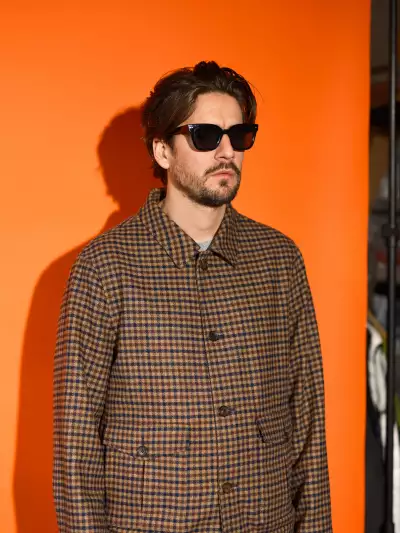
SM: What’s the item in your wardrobe you could never part with?
TB: An old Mamnick fishing jumper that's been worn hard and repaired several times. I’ve caught some of my biggest fish in that jumper and it’s become a tool that is now linked with great memories. Imagine if all clothing was like that?
SM: What’s your biggest fashion faux pas – what do you hate to see?
TB: People dressing for approval rather than dressing for themselves. I hate that ‘cosplay pantomime’ stuff.
SM: What’s your sartorial guilty pleasure?
TB: Commissioning beautiful suits made from some of the finest cloth in the world, despite them being well above my pay grade and having almost nowhere to wear them.
SM: If you weren’t doing this, what would you be doing instead?
TB: Probably spending too much time outdoors, trying to make music by hitting things, or working on some form of photo reportage.
For more information, see mamnick.com