It started, as many noble but perhaps ill-thought-out ideas do, with a wager. Not that Kyros Melas is unused to one of those – he comes with a shoot-from-the-hip attitude and a strength of conviction that may have been formed by his time as a banker and trader in the City for two decades. That, or it’s the part of an innate character that made him equally suited to City life – and later, to the world of fine wine.
The world of food and drink has had its share of stories of City workers getting bored and starting a brand. The history of La Tour Melas, however, has roots that run far deeper than that. Early into his time in London, around 2000, Melas had become enamoured with Bordeaux wines, especially the Right Bank and specifically Pomerol. When he claimed to a Swiss banker friend and fellow wine lover that he thought he could make a claret blend better than his beloved Château Lafleur, it was a moment that made him put his money where his mouth is.
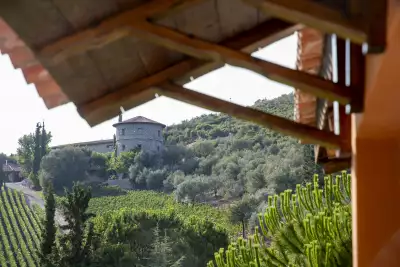
Melas looked into converting patches of family farmland in Achinos, a coastal region in the south-east of the Greek mainland, into Cabernet Franc and Merlot vineyards. In the research phase, discovering a terroir reminiscent of Bordeaux, and with a maritime climate not unlike that around the Gironde, he put plans into action. Surrounding himself with oenologists and collaborators intrigued by the prospect of this ‘First Growth of Greece’, the vines were laid, the winery was constructed (with a gravity-fed system Melas describes, wryly, as a response to his own laziness), and the project began in earnest. The bet was on.
The flagship wine
The most talked-about result of Melas’s efforts – and indeed the direct response to the original bet – is La Tour Melas Cabernet Franc-Merlot. To see it – a round-shouldered claret bottle, a lithograph of the winery apparently drawn by an English artist visiting the region in the 1800s – it’s only the phrase ‘Wine of Greece’ on the label that suggests this is anything other than a Right Bank blend.
At £120 or so a bottle, it’s also well in the territory of fine wine, and priced similarly to many of its Pomerol competitors. That sets high expectations. I’d never tried it before, but on first nosing of the 2022 at a lunch among Melas and sommeliers at Mediterranean restaurant Claro in St James’s, the stylistic similarities are there for all to see. A touch of smoke, graphite and a hint of sea breeze coming from alluvial, maritime soil with a fair bit of limestone; the fruit is secondary, but rich black fruits do come through, with a poised balance of alcohol and body. The tannins are robust and firm, but although this is younger than with the 6-7 years in bottle Melas would generally recommend before drinking his flagship cuvée, it still hints at the further development that will come with them softening. It’s a beautiful wine, and a definite contender to the Right Bank for those looking for its combination of punch and finesse in less discovered regions.
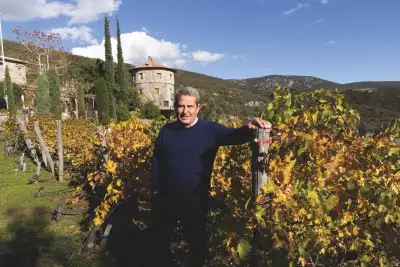
La Tour Melas founder Kyros Melas
The indigenous grape
Melas tells me there was pushback from the Greek wine community to him planting Bordeaux grapes in coastal Greece. Not to worry; I’d bet there was pushback from Tuscan winemakers to the same end in the early 1900s, and now we have Sassicaia. Some conventions benefit from being challenged.
But Melas’s generation of winemakers were generally making inexpensive wines from indigenous varieties, and barely exporting them. The advent of diners ordering single-varietal Assyrtiko and Malagousia wines from London wine lists is, in the scheme of things, a relatively new one.
The ultimate rebuttal, though, came when he found a tiny parcel of Agiogitiko vines in Fthiotida, around 300 miles away from the estate in the region of Nemea. Preserved thanks to their location on ancient archeological ground, they predate the phylloxera bug of the early 1900s and are therefore some of the oldest of their kind in the country at more than a century. Even across the whole of Europe, pre-phylloxera vines are a rare thing, and often make wines of enormous demand.
With it, Melas makes Palies Rizes, a single-varietal Agiorgitiko with the remarkable concentration that only very old vines can bring. We try the 2022 – the tannins significantly softer, the nose spicier, the palate muscular, intense but still with elegance, seeming more Mediterranean and less Atlantic in profile than the flagship. At around £150 at retail price, it’s aimed squarely at wine enthusiasts with a wallet to match, but a single-varietal Greek wine at this level – as evidenced by their importer and retailer Maltby & Greek, which doesn’t list anything else at its price point – is simply not something you see often.
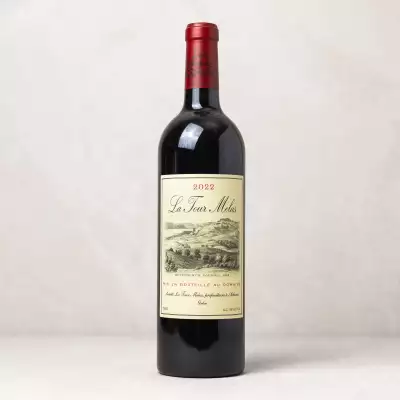
La Tour Melas's flagship Cabernet Franc-Merlot
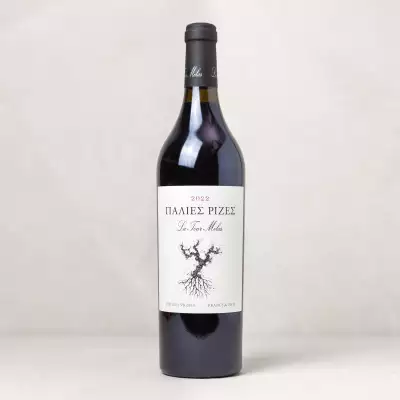
Palies Rizes, made from pre-phylloxera Agiortiko vines
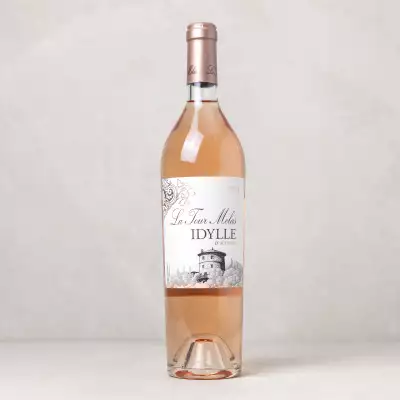
The Provence-inspired rosé Idylle d'Achinos
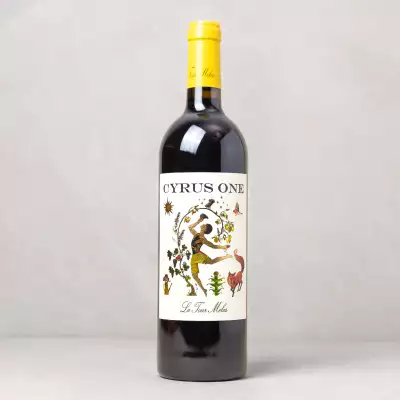
La Tour Melas's second wine, Cyrus One
The other wines
Melas set out to match a French wine stylistically and in terms of varieties, but wasn’t afraid of making a Greek wine either. Fitting, then, that his other wines find a middle ground. His ten hectares in Achinos also feature parcels of Agiorgitiko, Syrah and Grenache planted by Melas. They all combine in The Idylle d'Achinos, inspired partly by Melas’s French winemaker Elsa Picard’s love of Provence rosé. To those who didn’t know better, it could be just that: the 2024 jumps out of glass with red fruits, yoghurt, and a herbaceousness reminiscent of a type of Greek garrigue.
Cyrus One, meanwhile, is the second wine of La Tour Melas, in keeping with Bordeaux tradition, but using a small amount of Agiorgitiko in the blend for balance and richness. At a touch over £20, it’s less concentrated, more youthful, in less need of ageing (though it will happily go for a decade) and a great introduction.
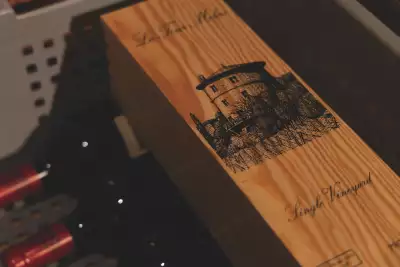
Wines in the cellar at La Tour Melas
The Judgement of Athens
What of the bet? It’s got slightly out of hand, with a small hotel newly installed in the winery and an army of workers creating Melas’s cuvées. The most significant milestone along the way, though, came in 2015, when Melas put his flagship up against wines from a host of Right Bank châteaux – including Château Lafleur – a decade and a half after he started production. Melas assembled more than 20 sommeliers and wine critics and, recalling Steven Spurrier, called the event the Judgement of Athens. Tasted blind, La Tour Melas won. Melas’s co-conspirator’s response? "Fair enough. But Lafleur will taste better in ten years."
That time has been and gone, but whether or not that argument holds, what’s obvious now is that whatever its origin story, La Tour Melas is by no means a simple carbon copy. Bordeaux varieties make some of the best wines in the Old and New Worlds; their roots may have originally been in the tradition of the region’s vignerons, but by now most of them – from Napa to Barossa, Tuscany to Stellenbosch – have their own distinct identities. In creating something that’s both claret and not claret, both French and Greek, Kyros Melas has carved one out for himself.