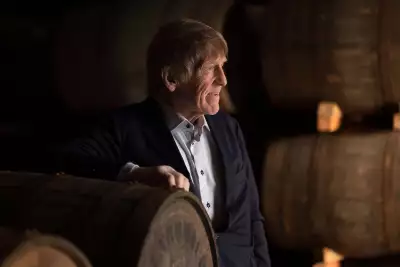
Sir Kenny Dalglish would be the last person to describe himself as an icon. However millions of Celtic and Liverpool fans would respectfully disagree, the 75-year-old Glaswegian arguably the greatest player to represent not one but two of the most storied institutions in British football.
Now Dalglish has partnered with Gordon & MacPhail to release a rather unique whisky collection. Five separate vintages, each distilled in a year selected by Dalglish as landmark one in his remarkable life. Considering he won three European Cups, countless league titles as player and manager, and travelled with Scotland to four World Cups, the only issue would be whittling them down.
Yet only one of his chosen vintages commemorates a trophy – the 1995 Premier League title he won as manager of Blackburn Rovers. Mostly, the collection celebrates the clubs and the people who made his journey possible.
We sat down with a true great of the game to reflect on his time within it.
Square Mile: So your first whisky is a Gordon & MacPhail 1951, the year of your birth. I wondered, how did the values instilled by your parents shape your approach to football in the years ahead?
Sir Kenny Dalglish: Well, I can't say much about 1951 – I can’t remember it! But I think whatever you've decided to do in your life is a reflection on your parents. Just reflecting on what your parents did.
For me, my dad was interested in football, and I think most young boys at that time had football as an interest. So I was just following the way people behaved back then, which was football. If you don't enjoy it, you don't enjoy it. But fortunately, I enjoyed it.
SM: Can you remember the first time you kicked a ball?
KD: I can't remember the first ball I kicked. But I know the enthusiasm my dad showed for football was because he enjoyed it as well. So it rubbed off on me.
SM: Quite a few legendary players and managers emerged from Glasgow around that era. Was there anything specific to the area and the time that made it such a fertile breeding ground?
KD: No, I don't think Glasgow was exclusive in that, was it? I think it had more to do with a time when people were just recovering a bit from the war. There was no real television – television only kicked in around the late 60s. So there wasn't much else to do to pass the time other than what your parents thought was good for you and what you did with friends outside: run about and enjoy yourself.
I don't know whether it's coincidental or what, but I think there were a lot of cities throughout the UK where football was dominant for kids. That was reflected in the numbers of people who were successful. But I don't think it had anything to do with your diet or where you were brought up. At that stage, there were an awful lot of people who went into football.
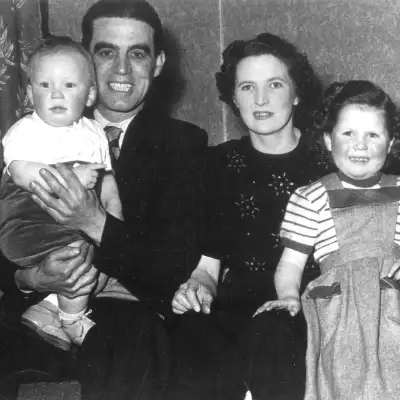
A young Dalglish with his parents and sister
Sir Kenny's Private Collection
SM: Your next vintage is 1967, the year you signed for Celtic right after they won the European Cup. They had the great Jock Stein as manager. What did he teach you about the responsibility of managing such a massive club?
KD: Any manager you play under, you take something from them. They're all different. Two of mine were hugely successful – Jock Stein being one, Bob Paisley another. I wouldn't say those two were similar.
The only similarity they had was the success they achieved in football, but they went about it in slightly different ways. I think the education you get from the better people, the better teachers you have, is hugely important.
SM: How did you find stepping into that dressing room full of legendary players who had just won the European Cup?
KD: We never stepped into their actual dressing room because they used the first-team dressing room. As kids and reserves, we used the away dressing room. But it was the humility those people had despite the success they'd achieved. I mean, it was the first British club side to win the European title, and for somebody who came from Glasgow, came from Scotland, and had just signed for them on paper, it didn’t get any better.
When you got there, it was a huge boost for all of us young lads joining the club and starting to train alongside the Lisbon Lions. They were so humble, helpful, and encouraging. If you made a mistake, it wasn't accepted, but you were encouraged. They'd teach you a few words to tell you how to correct it. They were just normal punters.
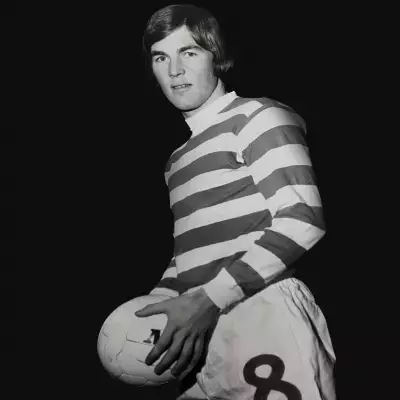
Dalglish signing for Celtic in 1967
Sir Kenny's Private Collection
SM: Next you’ve picked 1974, the year you married your wife, Marina. On her birthday, right? Great idea – you can never forget it…
KD: Or you forget both! Well, you might as well get in trouble for the same thing on the same day anyway.
SM: That's a really good point. I hadn't thought of that. How vital would you say your partnership with her has been throughout your career?
KD: To be perfectly honest, going into football management afterwards and looking back at what I'd done throughout my life, she was the best signing I ever made. I think it was £5 you had to pay for your marriage licence back then, so it was the best £5 I ever spent!
SM: Has she tried the whisky yet?
KD: Marina? No, but I know she'll enjoy it because I've tasted it!
SM: Do you think the importance of a stable family unit is sometimes overlooked in a sportsperson’s career?
KD: Well, if it's overlooked, you're not going to be successful. There are a lot of things that go into being successful, and one of them is the attention you pay to detail. Another is the way you look after yourself, and more importantly, how well you've been brought up by your family – and the family you look to bring into this world after getting married.
If you tick those boxes, you've got a much better chance of being successful. Marina understood a bit – not necessarily how to play football, but how you prepared for it, accepting that and being such a great help with the kids. That was hugely important as well.
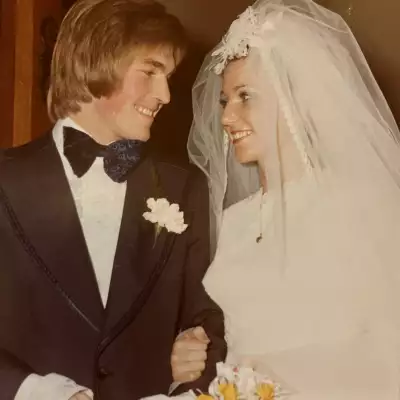
Dalglish marries Marina on her birthday at Glasgow Netherlee Church in 1974
Sir Kenny's Private Collection
SM: In 1977, you moved to Liverpool, which you’ve described as one of the hardest decisions you ever made. Were you ever close to turning Liverpool down, or were you committed to going?
KD: We played a pre-season game at Dunfermline. I received a phone call from Jock Stein telling me to come up to the ground if I still wanted to leave. I turned up at the ground, and Bob Paisley and Sir John Smith were there for Liverpool. I think it took me all of five minutes to agree to go. That was it.
Just before the end of the previous season, we were in the Home Internationals, and Liverpool played in the European Cup final. There was a little documentary about it showing the players in the dressing room. It looked like a place where I would be quite happy. With Kevin Keegan leaving and them looking for a replacement, I was very fortunate they chose me.
SM: Were you at all daunted by replacing Kevin Keegan, or did the challenge invigorate you?
KD: No, it wasn't a challenge to replace anybody. It was only a challenge for me to move from Celtic, who had done so much for my development as a footballer. They were great for me. Without them, I'd have been nowhere. And without the support of Jock, the backroom staff, the players, and the supporters, I wouldn't have been talking to Liverpool.
I had visited Liverpool when I was 15, so the idea was something I thought I would enjoy. The players there were very, very similar to Celtic's. They had been hugely successful by the time I got there, winning the European Cup and the league, but they were very humble – no arrogance, nobody trying to be big time. They just wanted to be successful, and that suited me fine.
SM: It's fair to say you were very successful there. Is there a particular achievement you're most proud of from your time at Liverpool?
KD: I don't know if there's a particular league table in your mind in terms of success. For me, the greatest thing that happened was signing for the club and meeting the people in and around it.
Similar to Celtic, it was the people in and around the football club – not just the players, but the staff, and going back to the crucial role the supporters play in helping make it successful.
If everybody chips in and does the job they're asked to do – not just on the playing or preparation side, but the backroom staff and the people upstairs – you'll find the club is going to be successful.
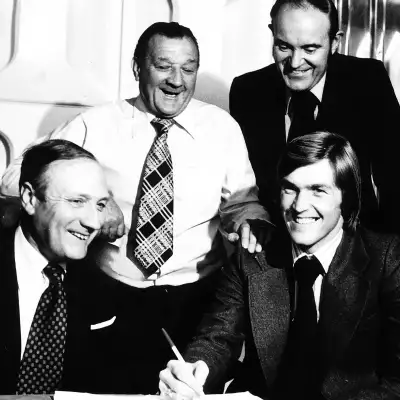
Dalglish signs for Liverpool in 1977 watched by Bob Paisley, John Smith and Peter Robinson
Photo by Mirrorpix via Getty Images
SM: In 1995 you won the title with Blackburn Rovers, which is the year of your final vintage. What made you choose that year rather than one of your many titles with Celtic or Liverpool?
KD: Because I think it was an achievement to win the league, knowing the contribution – not exclusively my own, but the role many other people played in getting Blackburn Rovers anywhere near that. Jack Walker was born and bred in Blackburn and wanted to give something back to the local people. He was a very wealthy man who wanted to share that wealth for people's enjoyment, and the best way he thought to do that was through Blackburn Rovers Football Club. So it started there.
They were second-bottom of the league when we arrived, and we just carried on from there. There were only two divisions you could have fallen into, so there was a lot of room for improvement! But the personalities of the people involved within the club were brilliant. I think it's important to work alongside people you can relate to, and that was the case for us.
We started off in 1991, I think. The first year we reached the playoffs and qualified for the Premier League when it was first formed. After that, we finished fourth, and then the next year we finished second. There's only one place to go when you finish second!
SM: Was there a specific moment or match where you truly believed you were going to win the title?
KD: No, there wasn't any single moment – just people's reactions and the contributions everyone made. It was a really friendly club: the directors, the backroom staff, and the players. When we were trying to sign players, people would ask, ‘Why would they go to Blackburn Rovers?’ You could see their point, so you tried your best to convince them it would be a good decision.
SM: Presumably playing under you would have been a major factor for many players.
KD: Might have been a deterrent as well, I don't know! We were fortunate that the lads who came in, alongside the players already there, all chipped in together. There was no arrogance. When Tim Sherwood came in for £3 million, it just showed you how serious it was.
The lad who played the biggest part in Blackburn reaching the playoffs in that first year was David Speedie. He made a huge contribution with the goals he scored. In fact, he scored three goals in the last game of the season against Plymouth to get us into the playoffs. Then we went to the playoff semi-final, got through that, and he made another huge contribution. When we got to the final against Leicester at Wembley, he got pulled down and won a penalty kick. Mike Newell, who had moved from Everton to join us, took the penalty and scored.
So the boys were standing up to be counted, and they all got their reward. Then, when you get into the Premier League, you have other players coming in, but no single player came in thinking he was more important than anybody else. That's vital for me.
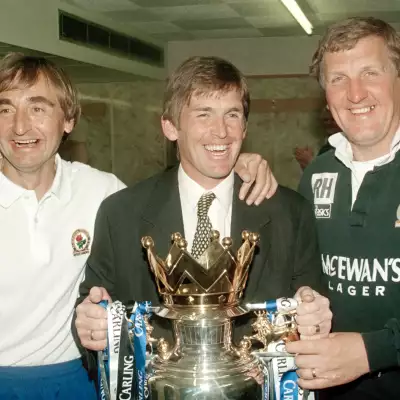
Dalglish celebrates with Ray Harford and Tony Parkes after Blackburn claim the 1995 Premier League
Professional Sport via Getty Images
SM: That sounds very similar to your teams at Celtic and Liverpool…
KD: Yeah, they weren't arrogant. They were successful, and they had every reason to be arrogant if they wanted to be, but they didn't. I think it's always more relaxed when everybody is on the same page. There will always be games you play or clubs you go to where certain people get more coverage than others, but as long as everybody makes the same contribution and commitment to winning, you've got a better chance of success. Throughout my football career, I wanted to be successful and I wanted to make a contribution. I wasn't any more important than anybody else.
SM: Did you ever interview a player about potentially signing and decide they wouldn’t be a good fit for the team ethos?
KD: Well, I wouldn't have gone to sign them if I thought that. I tried my best to do my homework. I think if you enter a group of lads who have already set the tone for what the dressing room is like, anyone coming in afterwards will be welcomed and will behave the way the rest of the players behave, because he wants to fit in.
SM: In 1995 you pipped Sir Alex Ferguson to the title. He's famously a wine lover, but I wondered: will you be sending him a sample of this whisky, or sharing a dram with him next time you see him?
KD: I don't think he's a whisky man, but then I'll never find out because I'm not offering him one! I'll stick to giving him Dairy Milk chocolate. No, listen – there was competition between myself and every other manager, but obviously with Fergie, who was hugely successful at Manchester United, we were great rivals. But the most important thing is that when the friendship is there, it's never broken. You move on in life, step away from managing while keeping an attachment to the game, but the respect remains.
He came from Glasgow too. I played against him when I was at Celtic and he was at Rangers, but there's a friendship that will be there for as long as we both live. There's an appreciation and a respect. Well, I've got respect for him – I don't know if he's got it for me!
You stand up for the football club you represent, and if somebody is quoted in a newspaper saying something detrimental about your club, you're going to defend the people you work for. Fergie was the same. But there has never been a case where we haven't acknowledged each other's success. The respect was always there, and being two boys from Glasgow, we were all right. We could look after ourselves.
SM: How hard was it to select those five particular years for the vintages?
KD: There were a few years you had to leave out, unfortunately. I'd love to have included the years my children were born, because that's vital to me – seeing how well they've done and how proud we are of them.
When you see your own children developing and you feel that pride, you start to realise what your parents felt. My dad especially, with the enjoyment he got watching me play football. It was difficult to pick just five years, but onwards and upwards.
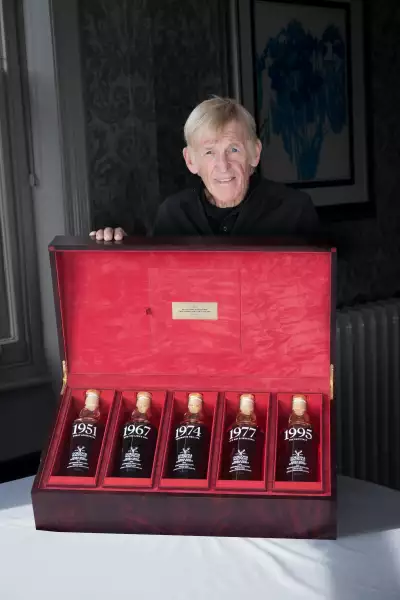
Sir Kenny Dalglish displaying the collection
SM: I noticed that none of your chosen years involve individual achievements – like being top goalscorer – and only one actually relates to winning a trophy, which is Blackburn in 1995. The rest are either about other people or joining new football clubs.
KD: You don't win a trophy without the help of other people.
SM: Was that a conscious choice – picking moments that weren't strictly about winning the European Cup, say, or your first league title?
KD: In a way. You're grateful for the success you had, but there are only five bottles. You're a lucky person if you get more than five great moments in life! As long as you don't get carried away and you retain your appreciation for what other people have done for you, that's what matters.
SM: How did you feel looking back and picking these years? Was it nostalgic? Did you feel proud?
KD: If somebody doesn't feel proud about being successful, I think there's a bit of a problem! You're proud, but you're also grateful to the people who helped you get there. For me, the proudest thing we have is family. That's more important than any football result.
Seeing your kids and grandkids do well – all you hope is for them to be happy and successful. If they have that same attitude and commitment, I'm sure they'll be brought up properly. Whatever walk of life they choose, you want them to succeed, but most importantly, you want them to be happy.
SM: Looking back on your remarkable journey, was there anything that surprised you when you took stock?
KD: No, you're just grateful. Grateful for everybody who made a contribution. Everywhere I've been, there have been great people looking after us. Newcastle in 1997 didn’t last very long, but it was a great football club and the people there were wonderful too. For me, it's simply about being appreciative of what anyone has ever done for you.
SM: If you could share a glass from this collection with anyone from your past – a teammate, a manager, a rival – who would you pick?
KD: So many years have passed that many of the people who did the most for me have passed away. I would sit down and have a drink with my dad. Without him, I wouldn't have been anywhere. He's the one who set it all off, even though he didn't drink whisky!
SM: Surely he'd make an exception for the 1951 vintage of your birth?
KD: Well, it's his fault I'm here! No, it's difficult to pick just one person because so many people made major contributions. As a parent, you understand how much pleasure my dad got watching his son play football. I understood it completely when I went to watch my son, Paul, play as well.
I've been very, very fortunate, and I'm grateful for everything and everyone that made a contribution to our lives. The people who matter most are the ones closest to us. You just hope that the good values Marina's mum and dad gave her, and my mum and dad gave me, are reflected through our own children and grandchildren.
Sir Kenny Dalglish’s Vintage Moments by Gordon & MacPhail Whiskies. Just 15 limited-edition, numbered box sets are available, priced at £100,000 each, via Gordon & MacPhail